Sarajevo Canton Prime Minister Nihad Uk announced his resignation on February 15, 2026, following three days of intense public protests sparked by a fatal tram accident that killed a young student and critically injured several others, marking one of the most significant political crises in Bosnia and Herzegovina since the country's democratic transition.
The tragedy unfolded on February 12, 2026, at 12:02 PM when a tram traveling from the Railway Station direction jumped tracks while making a left turn at the intersection of Prva transverzala and Ulica Zmaja od Bosne. The derailment killed 23-year-old Erdoan Morankić from Brčko, who was waiting at the tram station when the accident occurred. Four others were injured, including 17-year-old medical student Ella Jovanović from Sarajevo Medical High School, who required emergency surgical treatment.
Three Days of Sustained Protests
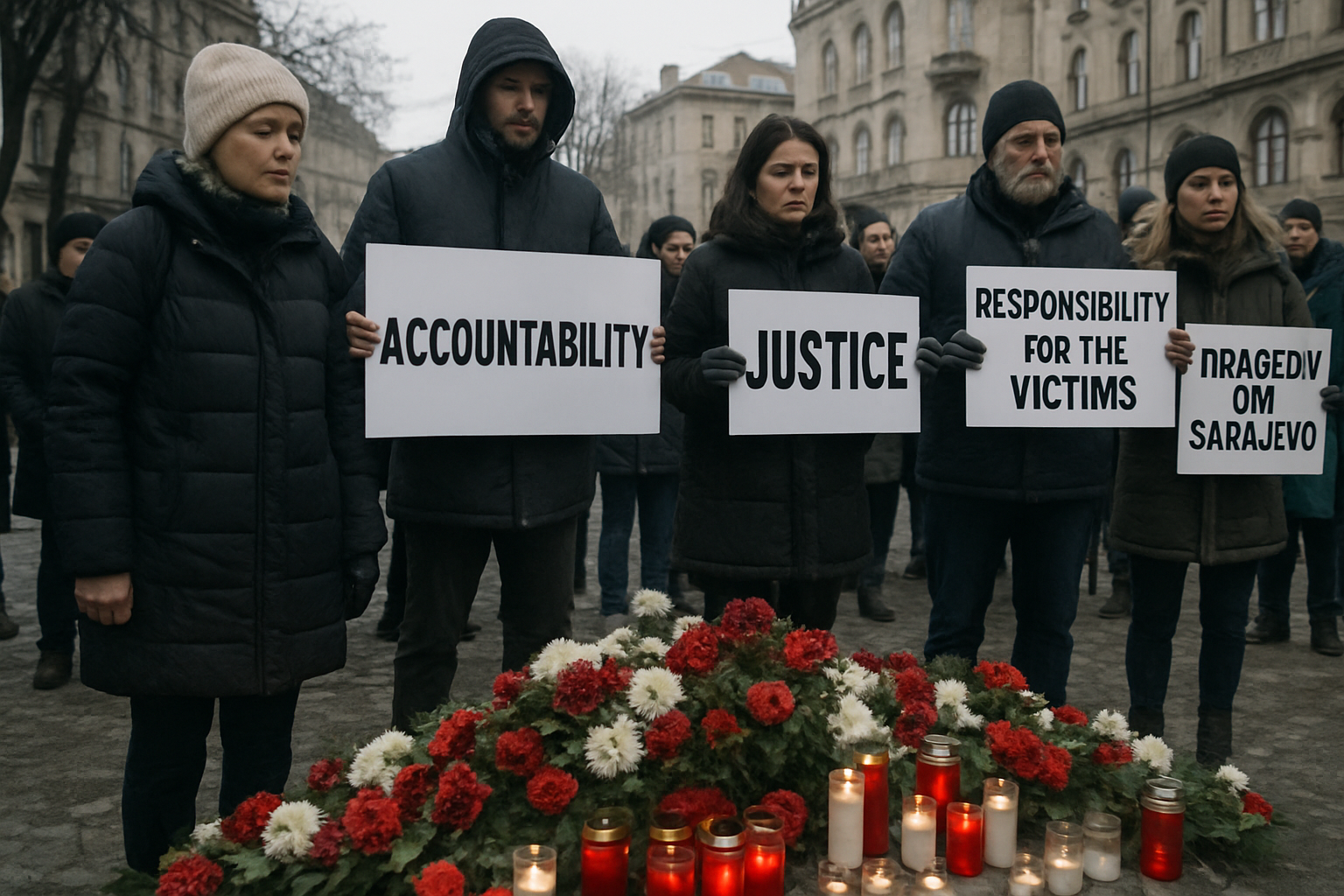
The accident immediately triggered widespread public outrage, with hundreds of students and citizens gathering at the scene near the National Museum of Bosnia and Herzegovina. Protesters laid flowers, lit candles, and displayed support banners reading "We are with you Ella Jovanović, stay strong" alongside black-and-white photos of the victim.
The protests, which began spontaneously on February 12, escalated over three consecutive days as citizens demanded answers about the aging tram infrastructure and accountability from public officials. An informal group called "Reci dosta" (Say Enough) organized the initial demonstration, though they later distanced themselves from subsequent protests as momentum grew beyond their control.
"We are starved, tortured, betrayed, deceived, disappointed, and one of our own has been killed."
— Student protesters' statement
Driver Released, Political Crisis Deepens
On February 15, Kantonalni Sud u Sarajevu (Sarajevo Canton Court) refused to order detention for Adnan Kasapović, the 47-year-old tram driver who was operating the vehicle during the accident. Despite prosecution requests for custody, the court released Kasapović, who was greeted by supportive colleagues from GRAS (the public transport company) outside the courthouse.
The court's decision came as a shock to many protesters who had demanded stricter accountability measures. Ministry of Interior spokesperson Mersiha Novalić had earlier provided a detailed chronology of the accident at a press conference, but questions remained about whether technical failure or human error caused the derailment.
Prime Minister's Dramatic Resignation
Facing mounting pressure and sustained protests, Prime Minister Nihad Uk announced his resignation in an emotional statement that directly addressed the young demonstrators:
"When I took office as Prime Minister of Sarajevo Canton, I spoke primarily about young people - how to support them and focus on their future rather than our past. Young people have taken to the streets. We in our party have always called for young people in Bosnia and Herzegovina to get involved and raise their voices. They did exactly that."
— Nihad Uk, outgoing Sarajevo Canton Prime Minister
Uk's resignation statement emphasized that the protesters' message was more important than his political position: "The voice of my fellow citizens, the voice of young people, is important to me. It is certainly more important than my function. When I choose between the voice and courage of young people on one side and my function on the other, the choice is clear."
Transportation Safety Under Scrutiny
The accident has highlighted serious concerns about Sarajevo's aging tram infrastructure, which serves as a vital transportation lifeline for the city's residents, particularly students. The tram system, parts of which date back decades, has faced chronic underinvestment and maintenance challenges common throughout post-war Bosnia and Herzegovina.
Transport officials have launched a comprehensive investigation examining both technical and human factors that may have contributed to the derailment. The GRAS public transport company pledged full cooperation with authorities, emphasizing that "every fact must be established" before conclusions can be drawn.
The incident has drawn uncomfortable parallels to the broader pattern of transportation safety challenges across the Balkans and Europe in early 2026, where aging infrastructure has struggled to meet modern safety standards amid resource constraints.
Community Response and Solidarity
The tragedy demonstrated Sarajevo's enduring traditions of community solidarity during crisis. The peaceful memorial gatherings were praised by authorities for their dignified approach to grieving and demanding accountability. Citizens from across the cantonal area participated in the demonstrations, reflecting broad-based concern about public safety and government responsiveness.
Ella Jovanović, the critically injured student, has become a symbol of resilience for the protest movement. Medical officials at the Clinical Center University of Sarajevo (KCUS) have provided regular updates on her condition, with the community rallying around her recovery.
Political Ramifications
Uk's resignation represents more than a single political casualty—it signals a broader shift in how young people in Bosnia and Herzegovina are willing to hold their leaders accountable. The Prime Minister's acknowledgment that youth voices matter more than political careers has been seen as a rare moment of genuine political responsibility in the region.
The crisis comes at a sensitive time for Bosnia and Herzegovina, which continues to navigate EU accession processes while addressing internal governance challenges. The government's response to the transportation crisis will likely influence public trust in institutions for years to come.
Ongoing Investigation and Reform Calls
Multiple agencies continue investigating the February 12 accident, examining everything from track conditions and vehicle maintenance to driver training protocols. The Sarajevo Canton Prosecutor's Office has opened a formal investigation into potential criminal negligence, while transport authorities are conducting parallel safety reviews.
Protesters and civil society organizations have called for comprehensive reforms including enhanced safety protocols, rigorous vehicle inspection procedures, improved driver certification programs, and transparent reporting mechanisms for transportation incidents.
The tragedy has also sparked broader discussions about infrastructure investment priorities in Bosnia and Herzegovina, where competing demands for limited public resources often leave critical systems like public transportation underfunded.
As the investigation continues and political leadership transitions, the February 12 tram accident in Sarajevo stands as a watershed moment—a tragedy that galvanized public demand for accountability and ultimately led to significant political consequences. The incident underscores the vital importance of maintaining safe, reliable public transportation in a city where students and workers depend on these systems for their daily mobility and economic opportunities.