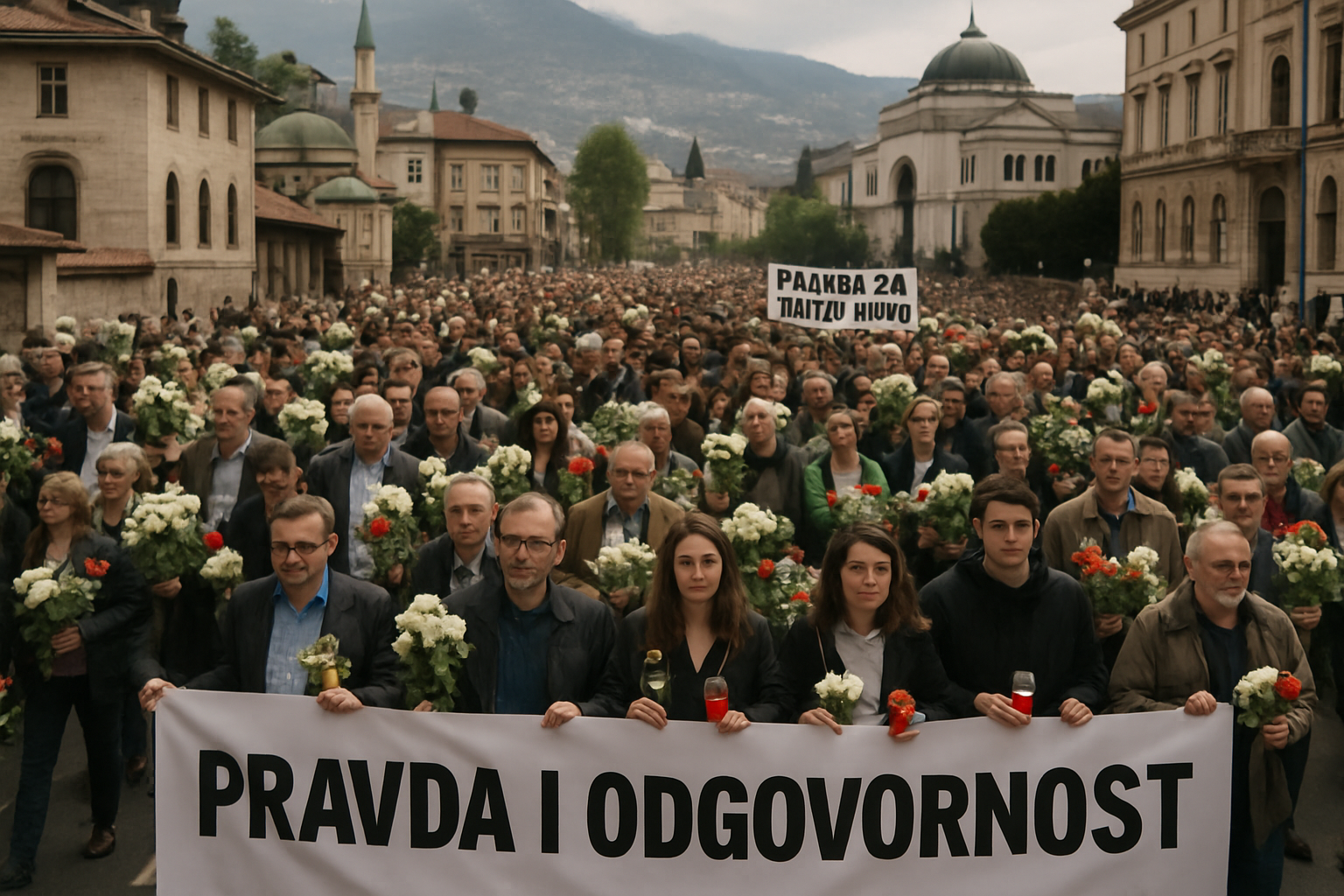
Thousands of protesters filled the streets of Sarajevo on Saturday for the seventh consecutive demonstration following the tragic February 12 tram derailment that killed 23-year-old Erdoan Morankić and severely injured four others, marking the largest and most sustained civil action in post-war Bosnia and Herzegovina.
The peaceful march began at the intersection near the National Museum of Bosnia and Herzegovina at noon, with participants walking along the main thoroughfare past the Sarajevo Canton Prosecutor's Office and the memorial to murdered children of Sarajevo, where their demands were formally read aloud before returning to the starting point.
Expanding Demands for Systemic Change
The protesters, predominantly students and young people joined by citizens from across Sarajevo, presented an expanded set of demands that go beyond the immediate tragedy to address broader issues of governance and public safety. Their key demands include:
- Constitutional guarantee of freedom of assembly and the right to peaceful protest without institutional pressure
- Complete investigation of the tram accident with international experts involved in the inquiry
- Urgent parliamentary session within seven days to address government accountability
- Resignation of the current Sarajevo Canton government and formation of a new administration
- Comprehensive renewal of public transportation infrastructure and services
The movement has successfully maintained momentum since the February 12 accident, when a tram derailed at 12:02 PM at the intersection of Prva transverzala and Ulica Zmaja od Bosne. The tram, traveling from the Railway Station direction, jumped tracks while making a left turn, striking a passenger vehicle, metal pole, and protective barrier before coming to rest.
Political Impact and Government Response
The sustained protests have already achieved significant political change. Sarajevo Canton Prime Minister Nihad Uk resigned on February 15, stating: "When I choose between the voice and courage of young people on one side and my function on the other, the choice is clear."
"We will not give up. This is about more than just one accident – this is about systemic change and making sure something like this never happens again."
— Student protester at Saturday's demonstration
The informal protest group "Reci dosta" (Say Enough) has organized gatherings at the National Museum site, with participants bringing flowers, candles, and support banners, particularly for 17-year-old medical student Ella Jovanović, who remains in critical condition after requiring leg amputation surgery.
Solidarity Spreads Beyond Sarajevo
The movement's influence has extended beyond the capital, with solidarity demonstrations emerging in other Bosnian cities. Zenica held a supportive protest under the banner "Young Zenica for Young Sarajevo," drawing approximately 70 participants in a silent demonstration carrying banners asking "How many more lives?"
This cross-city support demonstrates the broader resonance of the movement's demands for improved public safety and government accountability throughout Bosnia and Herzegovina.
Investigation and Legal Proceedings
The investigation into the February 12 accident continues, with authorities examining both technical failure and human error as potential causes. Tram driver Adnan Kasapović, 47, was initially detained but released on February 15 when the Sarajevo Canton Court refused the prosecution's custody request. His colleagues from GRAS (the public transport company) greeted him supportively upon his release.
Protesters have specifically called for international experts to be included in the investigation to ensure transparency and credibility, reflecting broader concerns about institutional capacity and independence in post-war Bosnia and Herzegovina.
Infrastructure Challenges and Systemic Issues
The tragedy has highlighted the aging state of Sarajevo's tram infrastructure, which relies heavily on decades-old equipment and deferred maintenance typical of transportation systems across the Western Balkans. The student population, which depends heavily on public transport, has been particularly vocal about safety concerns.
Beyond immediate infrastructure issues, the protests have evolved to address broader governance challenges, including the need for more responsive democratic institutions and greater government accountability to citizens' safety concerns.
Historical Context and Democratic Significance
The sustained nature of these protests represents one of the most significant civic actions in post-war Bosnia and Herzegovina. The movement has demonstrated the power of peaceful demonstration to effect political change, with Prime Minister Uk's resignation serving as a concrete example of democratic accountability.
The protests have also showcased traditional Sarajevo solidarity, with the community coming together during crisis while maintaining demands for institutional responsibility and systemic reform.
Looking Forward
Saturday's demonstration was described by organizers and participants as the largest and most determined yet, suggesting the movement maintains strong public support despite achieving its first major political victory with the prime minister's resignation.
The protesters' demands for a new government within seven days and comprehensive transportation reform indicate the movement's evolution from immediate crisis response to broader democratic reform advocacy. The inclusion of international oversight in their demands reflects awareness of the need for external validation in building public trust.
As the investigation continues and the political response develops, the Sarajevo protests have established a template for civic engagement in the region, demonstrating how sustained, peaceful pressure can achieve meaningful political change while honoring victims and demanding systemic improvements to prevent future tragedies.
The movement's success in maintaining both local focus and broader democratic vision suggests it may continue to influence Bosnia and Herzegovina's political landscape well beyond the immediate aftermath of the February 12 tragedy.