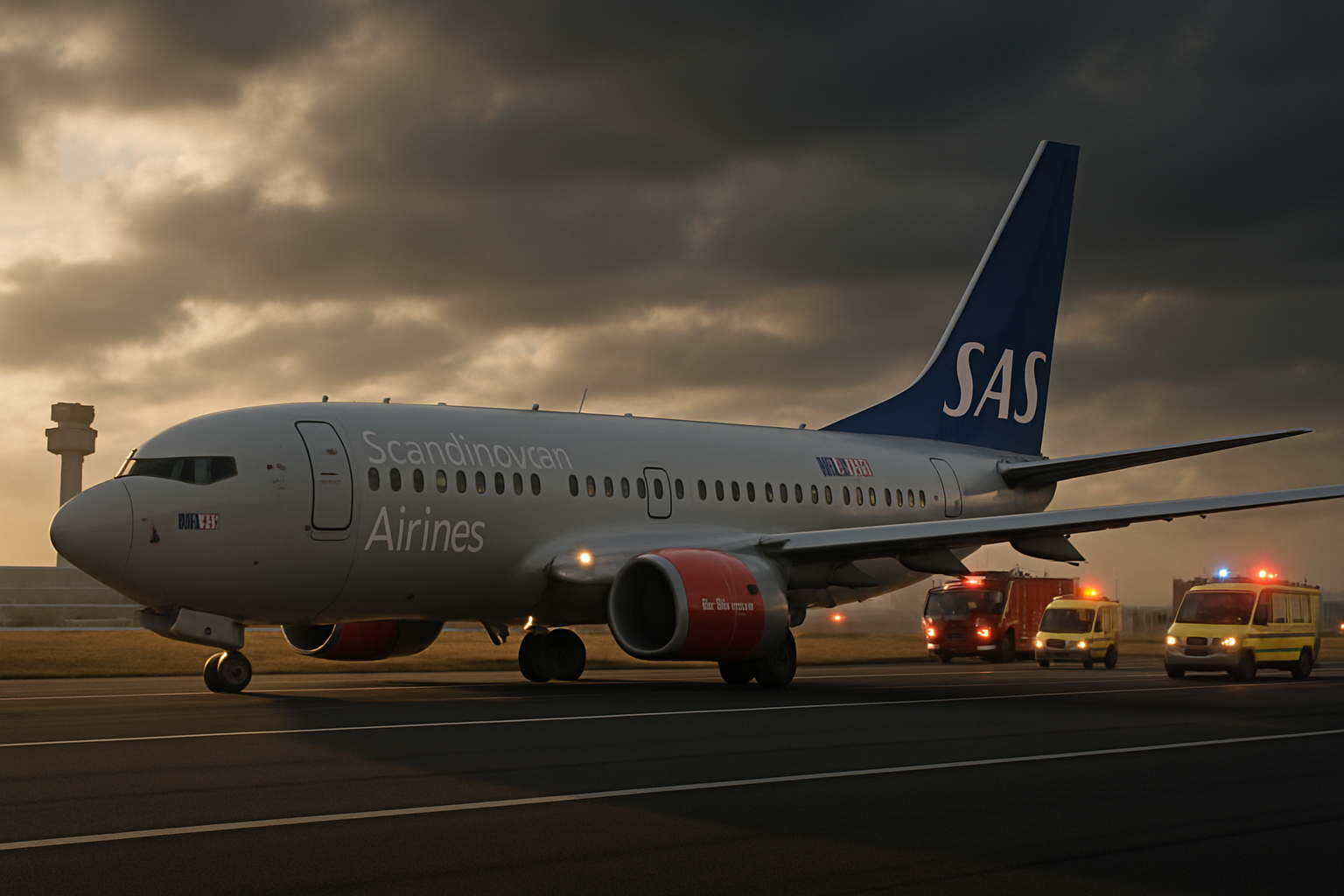
A Scandinavian Airlines (SAS) flight bound for Stavanger was forced to make an emergency return to Aberdeen Airport on April 26, 2026, shortly after takeoff when smoke appeared in the aircraft cabin, marking another concerning incident in what aviation experts are calling the most challenging year for airline safety since the COVID-19 pandemic.
The aircraft returned to Aberdeen Airport a short time after departure, according to Norwegian media reports, with Swedish authorities confirming the incident involved smoke in the passenger cabin during the journey to Norway. Emergency protocols were immediately activated, and the flight crew executed standard procedures for dealing with cabin smoke emergencies.
Emergency Response and Safety Protocols
Aviation safety experts emphasize that cabin smoke represents one of the most serious in-flight emergencies, requiring immediate action from flight crews. The SAS incident demonstrates the effectiveness of modern aviation safety protocols, with pilots trained to handle such situations through rapid descent, emergency landing procedures, and coordination with air traffic control.
Aberdeen Airport emergency services would have been placed on standby as the aircraft returned, following established protocols that have proven successful in numerous similar incidents throughout 2026. The quick response time and successful landing highlight the importance of comprehensive crew training and established emergency procedures.
2026: A Year of Unprecedented Aviation Challenges
This latest SAS incident occurs within the context of what industry analysts describe as the most challenging year for global aviation safety since the pandemic. The year has been marked by a series of significant events that have tested the resilience of international aviation networks and safety systems.
Historical context shows this is not SAS's first cabin smoke emergency in recent years. In February 2015, SAS flight SK4416 from Oslo to Tromsø was forced to make an emergency landing at Trondheim Airport after a power bank overheated in the cabin, exposing crew members to toxic smoke. That incident highlighted growing concerns about lithium-ion battery safety in personal electronic devices aboard aircraft.
Systematic Vulnerabilities Exposed
The aviation industry has faced an unprecedented convergence of challenges throughout 2026, including the tragic LaGuardia Airport collision in March that killed Air Canada Express pilots Antoine Forest and Mackenzie Gunther. That incident revealed serious concerns about air traffic control coordination during midnight shifts, with controllers "juggling additional roles beyond primary responsibilities."
Military aviation has also experienced significant challenges, including the Colombian Air Force C-130 Hercules crash in Puerto Leguízamo that killed 69 personnel, and the Bolivian Air Force crash at El Alto Airport that resulted in 22 fatalities. These incidents have highlighted the challenges facing aging aircraft fleets operating in demanding geographic conditions.
Global Aviation Crisis Context
The SAS emergency landing comes as the aviation industry grapples with an unprecedented crisis that has seen over 18,000 flights cancelled worldwide since March 2026 - the most extensive disruption since the COVID-19 pandemic. The Middle East crisis has created an "aviation black hole" with eight countries maintaining simultaneous airspace closures.
Jet fuel costs have surged 122% from $85-90 to $150-200 per barrel due to the Strait of Hormuz closure affecting 40% of global oil transit. This has forced airlines to implement emergency measures, with Lufthansa permanently closing its CityLine subsidiary and SAS cancelling over 1,000 flights in April alone due to unsustainable fuel costs.
"The convergence of safety incidents, geopolitical tensions, and operational challenges represents the most complex crisis facing aviation since the pandemic."
— International Aviation Safety Expert
Technology and Safety Evolution
The incident underscores the critical importance of advanced safety systems and crew training. Modern aircraft are equipped with sophisticated smoke detection systems, and flight crews undergo extensive training in emergency procedures. However, the frequency of incidents in 2026 has prompted calls for enhanced safety measures and international cooperation.
Japan implemented the world's most restrictive battery policy in April 2026, banning portable power banks on all flights following multiple thermal runaway incidents. This represents a shift toward predictive rather than reactive safety management, addressing potential risks before they become critical incidents.
International Response and Future Implications
The International Civil Aviation Organization (ICAO) is actively reviewing emergency vehicle coordination protocols at airports worldwide following the series of incidents in 2026. These reviews are expected to influence global airport safety procedures for years to come, particularly regarding coordination between air traffic control and emergency response services.
Industry experts emphasize that while statistical safety records remain exceptional, each incident provides crucial lessons for preventing future tragedies. The goal is continuously raising safety standards in an industry where millions of lives depend on getting protocols right daily.
Enhanced Safety Measures
Airlines are investing heavily in predictive maintenance systems, enhanced crew training, and improved emergency response coordination. Technology integration is accelerating, with AI-powered maintenance systems and advanced weather prediction helping identify potential issues before they become critical.
The industry is also implementing enhanced international cooperation frameworks, with aviation authorities sharing safety data and best practices to address emerging threats. This includes improved communication systems between air traffic control and emergency services, and standardized emergency response procedures across international borders.
Economic and Operational Impact
The cumulative effect of safety challenges throughout 2026 extends beyond immediate operational disruptions, affecting long-term industry economics and passenger confidence. Building resilient aviation networks requires comprehensive approaches addressing multiple risk factors simultaneously.
Airlines are facing increased insurance costs, enhanced security screening requirements, and substantial investments in safety infrastructure and training programs. Government support measures, such as Nigeria's temporary helicopter landing fee suspension, provide some relief while maintaining essential safety standards.
Looking Forward
The SAS emergency landing, while successfully resolved, represents part of a broader pattern that is fundamentally reshaping aviation safety protocols and international cooperation frameworks. The aviation community remains committed to the principle that every incident provides crucial lessons for preventing future tragedies.
As the industry adapts to these challenges, the focus continues to be on maintaining the exceptional safety record that has made commercial aviation the safest form of transportation, while addressing new and evolving risks in an increasingly complex operational environment.
The lessons learned from the April 2026 aviation challenges, including incidents like the SAS emergency landing, will likely influence aviation safety policies and procedures for decades to come, contributing to a safer and more resilient global transportation network that better protects millions of travelers worldwide.