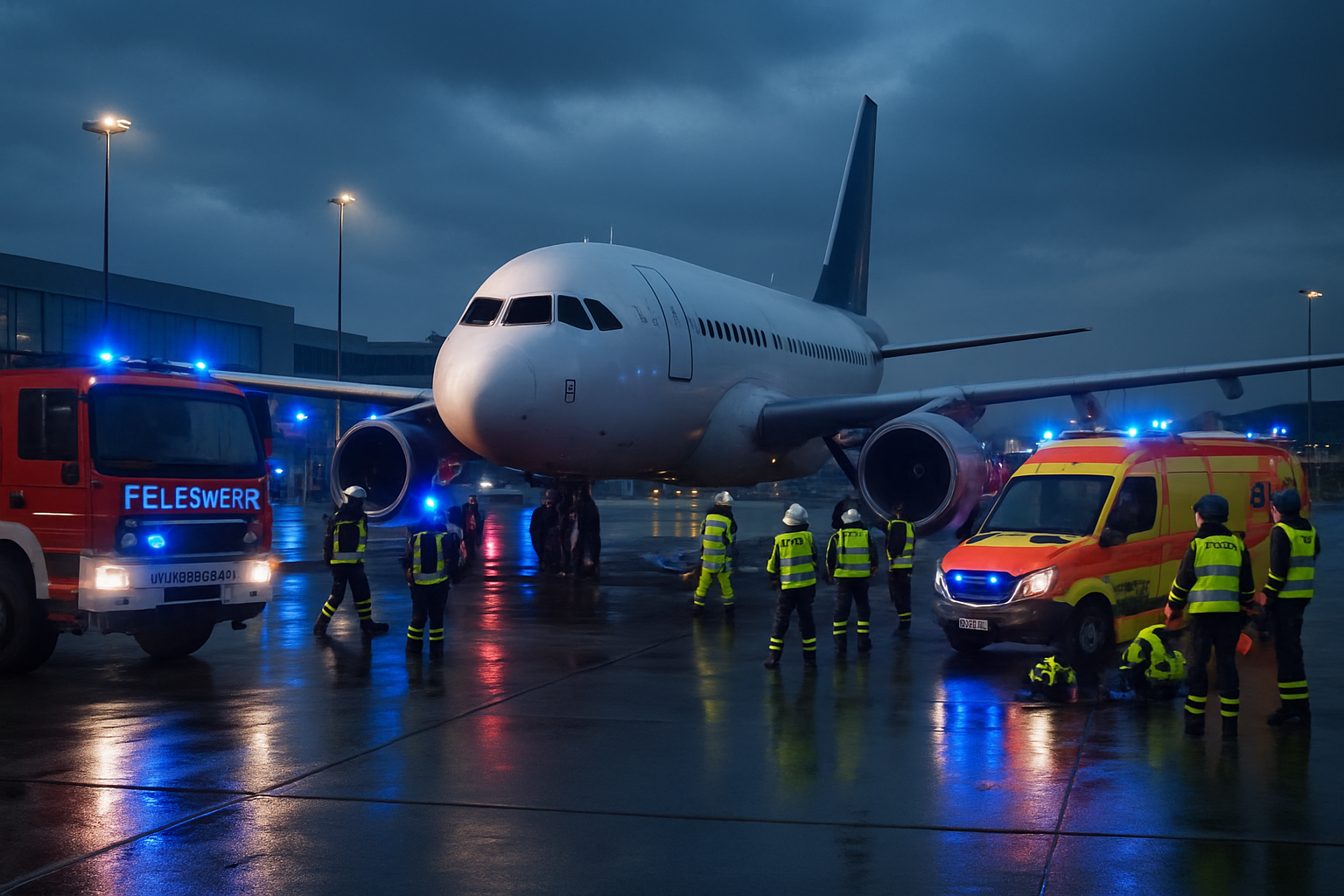
A SAS flight from Oslo to Tromsø was forced to make an emergency landing at Trondheim Airport Værnes on Sunday after a powerbank device overheated in the cabin, exposing at least four crew members to smoke inhalation.
Flight SK4416, operated by SAS, departed from Oslo Gardermoen Airport bound for Tromsø when the incident occurred. According to Norwegian authorities, the aircraft made an emergency diversion to Værnes Airport at approximately 12:00 local time on February 15, 2026, after reports of a burning object in the cabin.
Emergency Response and Investigation
Police received notification shortly after noon about an aircraft with cabin fire development. Emergency services, including fire departments, police, and medical personnel, were immediately dispatched to Værnes Airport and were on scene when the aircraft landed safely.
"At least four people were exposed to smoke. It was a powerbank that overheated," confirmed sources from VG, one of Norway's leading news outlets. The burning device was quickly removed from the aircraft by emergency personnel.
All crew members who were exposed to smoke were examined by medical personnel and later cleared by physicians. The Health Service was present on site to provide care for those who required assistance, according to police statements.
By 13:20 local time, police confirmed that all affected individuals had been medically examined and discharged. The incident resulted in no serious injuries, though several personnel inhaled smoke during the emergency response.
Growing Concerns About Lithium Battery Safety
This incident adds to mounting concerns within the aviation industry about the safety risks posed by lithium-ion batteries in personal electronic devices. Powerbanks, which contain lithium batteries, can overheat and potentially ignite when damaged or defective, creating dangerous situations in the confined space of an aircraft cabin.
The Federal Aviation Administration and other international aviation authorities have implemented strict guidelines regarding lithium battery-powered devices on aircraft. Passengers are generally required to carry such devices in carry-on luggage rather than checked baggage, precisely to enable quick response to incidents like thermal runaway events.
Aviation safety experts note that while such incidents are relatively rare, they pose significant risks due to the toxic smoke produced and the potential for fire in an enclosed environment with limited escape routes.
Pattern of Aviation Safety Challenges
The Værnes incident occurs amid broader scrutiny of aviation safety protocols across Europe. Recent aviation incidents have highlighted various safety challenges, from extreme weather disruptions to technical failures and emergency procedures.
In recent weeks, European airports have faced significant weather-related disruptions, with Schiphol Airport in the Netherlands canceling over 150 flights due to snow and ice conditions. The aviation industry has also dealt with infrastructure challenges and the need for enhanced emergency response coordination.
The SAS incident demonstrates both the potential risks of everyday consumer electronics in aviation environments and the effectiveness of crew training and emergency response protocols. The swift identification of the problem and successful emergency landing showcase the importance of comprehensive safety procedures.
Industry Response and Protocols
SAS and aviation authorities are conducting a thorough investigation into the incident to determine the exact cause of the powerbank malfunction and to assess whether additional safety measures are needed.
The airline industry continues to balance the practical needs of passengers who rely on portable electronic devices during flights with the safety requirements necessary to prevent incidents. Current regulations require that passengers inform crew members immediately if they notice any device overheating, producing smoke, or exhibiting other signs of malfunction.
Emergency response protocols proved effective in this case, with crew members quickly identifying the hazard, removing the dangerous device, and successfully executing an emergency landing procedure. The coordinated response between the flight crew, air traffic control, and ground emergency services ensured passenger safety throughout the incident.
Ongoing Safety Measures
Norwegian police confirmed they are conducting a comprehensive investigation to fully understand the circumstances of the incident. This investigation will likely include examination of the device that overheated, review of emergency procedures, and assessment of response protocols.
The incident serves as a reminder of the critical importance of passenger awareness regarding electronic device safety on aircraft. Aviation authorities regularly update guidance for travelers regarding the proper handling and storage of lithium battery-powered devices.
As the investigation continues, the aviation industry will likely review current protocols and consider whether additional measures are needed to address the evolving landscape of personal electronic devices and their associated risks in aviation environments.