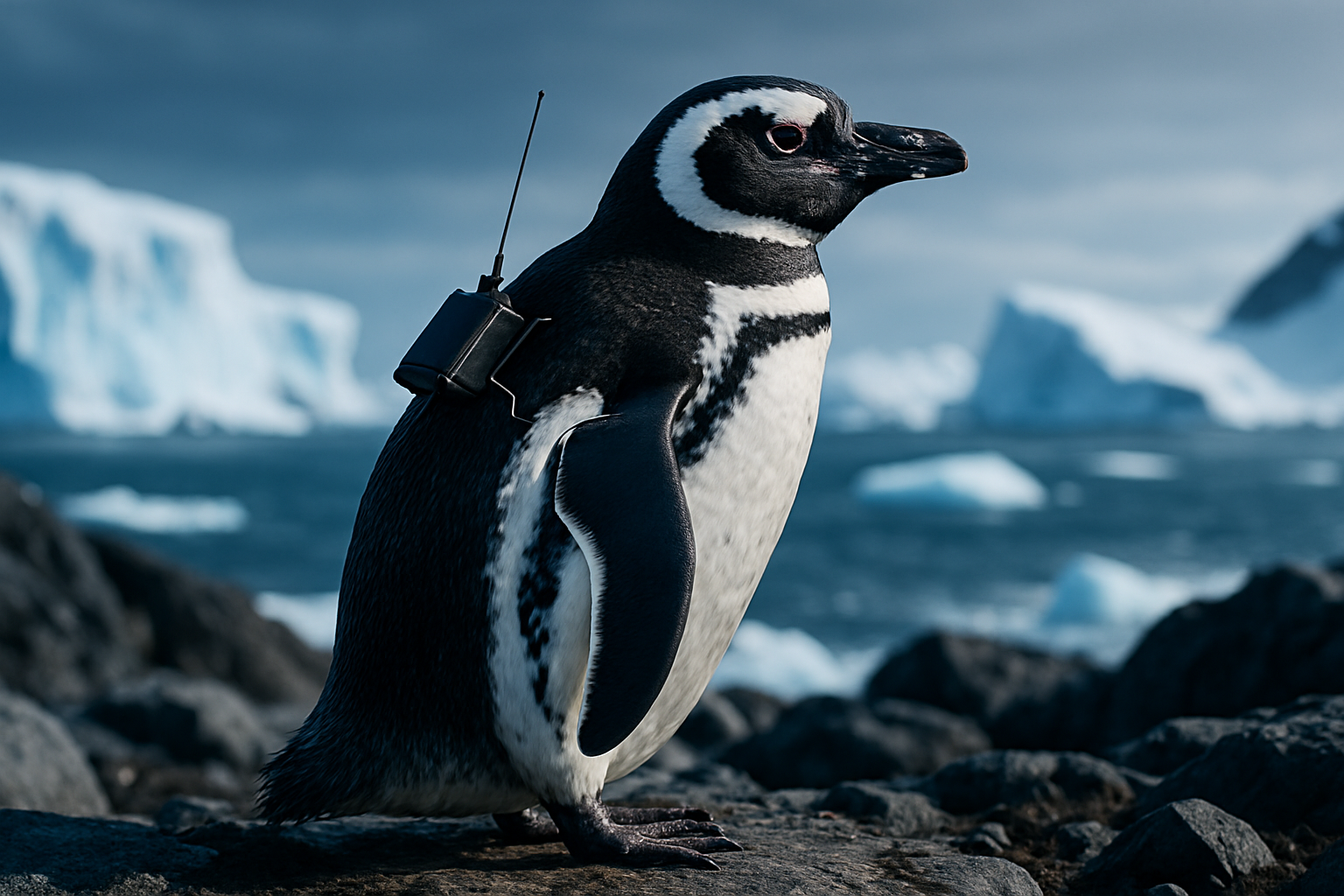
Argentina is launching an unprecedented satellite tracking program that will monitor half a million magellanic penguins, providing essential data to guide fishing and shipping decisions in Antarctic waters while advancing global marine conservation during the most challenging environmental period in recorded history.
The ambitious project, revealed by Pablo García Borboroglu, president and scientific director of the Global Penguin Society, represents the largest penguin tracking initiative ever undertaken. The program specifically targets what researchers call "VIP" penguins - "Very Important Penguins" - whose movements and behavior patterns will offer crucial insights into Southern Ocean ecosystem health during this critical conservation moment.
Revolutionary Scale of Monitoring
The satellite transmitter program marks a fundamental evolution from traditional penguin research approaches. While previous studies typically monitored dozens of individuals, this initiative will track an unprecedented 500,000 magellanic penguins across their vast South American range. Each satellite transmitter, weighing less than 3% of a penguin's body weight, will provide real-time location data, diving patterns, feeding behaviors, and migration routes without interfering with natural activities.
"We are calling certain individuals VIP - Very Important Penguins - because their data will be absolutely critical for understanding how climate change and human activities are affecting these remarkable ecosystem indicators," García Borboroglu explained during the program's announcement.
Direct Impact on Maritime Industries
The penguin tracking data will directly influence fishing quotas, shipping lane designations, and seasonal restrictions in Antarctic and sub-Antarctic waters. Maritime authorities will use real-time penguin location information to implement dynamic protection zones, preventing vessel interference during critical feeding and breeding periods.
Commercial fishing fleets operating in the Southern Ocean will receive updated penguin density maps, allowing them to avoid areas of high biological activity that could result in accidental bycatch or ecosystem disruption. Similarly, shipping companies will access penguin migration corridor data to modify routes during peak movement periods, reducing collision risks and engine noise disturbance.
"This technology transforms conservation from reactive protection to proactive ecosystem service management. We're moving beyond protecting individual animals to understanding entire marine ecosystem dynamics."
— Dr. Pablo García Borboroglu, Global Penguin Society
Climate Crisis Context
The initiative launches during the 24th consecutive month of global temperatures exceeding 1.5°C above pre-industrial levels - the longest sustained warming streak in recorded history. January 2026 marked the hottest month ever documented, creating compound environmental effects that traditional conservation approaches struggle to address effectively.
Magellanic penguins serve as critical indicators of Southern Ocean health, with their feeding patterns reflecting broader marine ecosystem changes. As climate change alters ocean currents, sea ice coverage, and prey distribution, penguin behavior data provides early warnings of ecosystem stress that affects global climate regulation and food security.
The timing proves particularly crucial as emperor penguins were recently classified as endangered by the IUCN, with Antarctic ice platforms becoming increasingly unstable and breaking under colony weight during traditional nesting seasons. Dr. Christophe Barbraud from the French Antarctic Research Program describes this as a "complete breakdown of systems that have functioned for millennia."
Advanced Technology Integration
The satellite transmitters represent sophisticated integration of cutting-edge technology with traditional ecological knowledge accumulated by coastal communities over generations. Each device employs advanced GPS tracking, environmental sensors, and artificial intelligence analysis while respecting penguin behavioral patterns understood through decades of fieldwork.
The program utilizes environmental DNA sampling from penguin feeding areas, satellite monitoring of ocean conditions, and AI-powered analysis of movement patterns. This comprehensive approach enables researchers to correlate penguin behavior with real-time oceanographic data, creating predictive models for ecosystem health assessment.
Real-time data transmission allows immediate response to environmental threats or unusual penguin behavior patterns. If satellite data indicates penguins avoiding traditional feeding areas, marine authorities can rapidly investigate potential pollution incidents, harmful algal blooms, or illegal fishing activities.
Conservation Renaissance Context
This Argentine initiative forms part of a global "conservation renaissance" characterized by unprecedented international cooperation and technological innovation. Recent successes include Ecuador's reintroduction of 158 giant tortoises to Floreana Island after 150 years, Zimbabwe's world-first DNA forensic wildlife prosecutions, and Croatia's record griffon vulture populations in the northern Adriatic.
The evolution represents a fundamental shift from reactive crisis management to proactive ecosystem service management, emphasizing community participation, technological integration, and economic viability as essential conservation components. Argentina's penguin program exemplifies this comprehensive approach by integrating scientific research, industry cooperation, and policy implementation.
Economic Development Strategy
Environmental protection increasingly functions as an economic development strategy rather than a regulatory burden. Countries implementing comprehensive wildlife protection demonstrate greater economic resilience and attract sustainable investment across eco-tourism, environmental technology, and green services sectors.
Argentina's penguin conservation supports a multi-billion-dollar eco-tourism industry while positioning the country as a regional environmental leader. The Patagonian penguin colonies attract hundreds of thousands of international visitors annually, generating substantial revenue for coastal communities while funding ongoing conservation research.
Ecosystem services provided by intact marine systems deliver greater long-term economic value than resource extraction activities. Healthy penguin populations indicate productive marine ecosystems that support sustainable fisheries worth hundreds of billions annually, while their role as ecosystem engineers maintains ocean productivity patterns essential for global food security.
International Cooperation Framework
The success of penguin conservation depends on unprecedented international cooperation, as ocean currents, atmospheric systems, and species migrations connect ecosystems globally, making unilateral efforts insufficient. The Argentine program includes partnerships with research institutions across Chile, the United Kingdom, South Africa, and Antarctica, creating coordinated monitoring networks.
Knowledge sharing creates global conservation networks that strengthen local capacity while contributing to planetary sustainability. The penguin tracking data will be shared with the International Whaling Commission, Convention on Migratory Species, and Antarctic Treaty System, informing international marine protection policies.
This represents an evolution from traditional North-South aid toward peer-to-peer cooperation, with Argentina emerging as an environmental solution provider leveraging local innovation and indigenous knowledge systems for global conservation benefits.
Implementation Challenges and Solutions
The program faces significant implementation challenges, including funding sustainability for developing nations where economic pressures often override environmental considerations. Technical capacity building requires sustained investment in education, training, and institutional development while climate change continues disrupting research timelines, demanding adaptive management approaches.
Success factors include community ownership and engagement, transparent governance frameworks, economic incentives that make protection financially viable, and sophisticated integration of traditional ecological knowledge with modern conservation science. The diversity of approaches provides resilience against single-solution dependencies, offering multiple adaptation pathways for complex environmental challenges.
Critical Action Window
Environmental scientists warn that the action window for effective conservation is narrowing rapidly as ecological systems approach critical thresholds that could trigger irreversible changes affecting global food security, climate stability, and human settlements. The choice facing the international community lies between reactive crisis management and proactive ecosystem service management.
April 2026 represents a critical juncture for global environmental protection, with tools, knowledge, and cooperation frameworks existing for comprehensive conservation, but success depending on sustained international cooperation, enhanced coordination, and financial commitments that recognize environmental protection as essential infrastructure for human prosperity and planetary sustainability.
Future Implications
The Argentine penguin tracking program provides practical templates for scaling environmental protection globally through coordinated approaches that address multiple challenges while building local capacity and fostering international cooperation. The integration of cutting-edge technology with traditional ecological wisdom creates adaptable frameworks that respect cultural diversity while leveraging global capabilities for maximum conservation impact.
Success in maintaining planetary habitability during this unprecedented environmental challenge period depends on humanity's ability to organize and implement solutions rapidly enough to match the pace of environmental change while protecting the natural systems upon which all life depends. The penguin conservation renaissance offers hope and practical guidance for the massive coordinated effort required to maintain planetary habitability during Earth's most environmentally challenging period in recorded history.
As the conservation window narrows during this decisive climate action decade, Argentina's pioneering penguin satellite program demonstrates that remarkable environmental achievements remain possible through scientific excellence, community engagement, and international cooperation, providing a foundation for the urgent environmental action crucial for our planet's future.