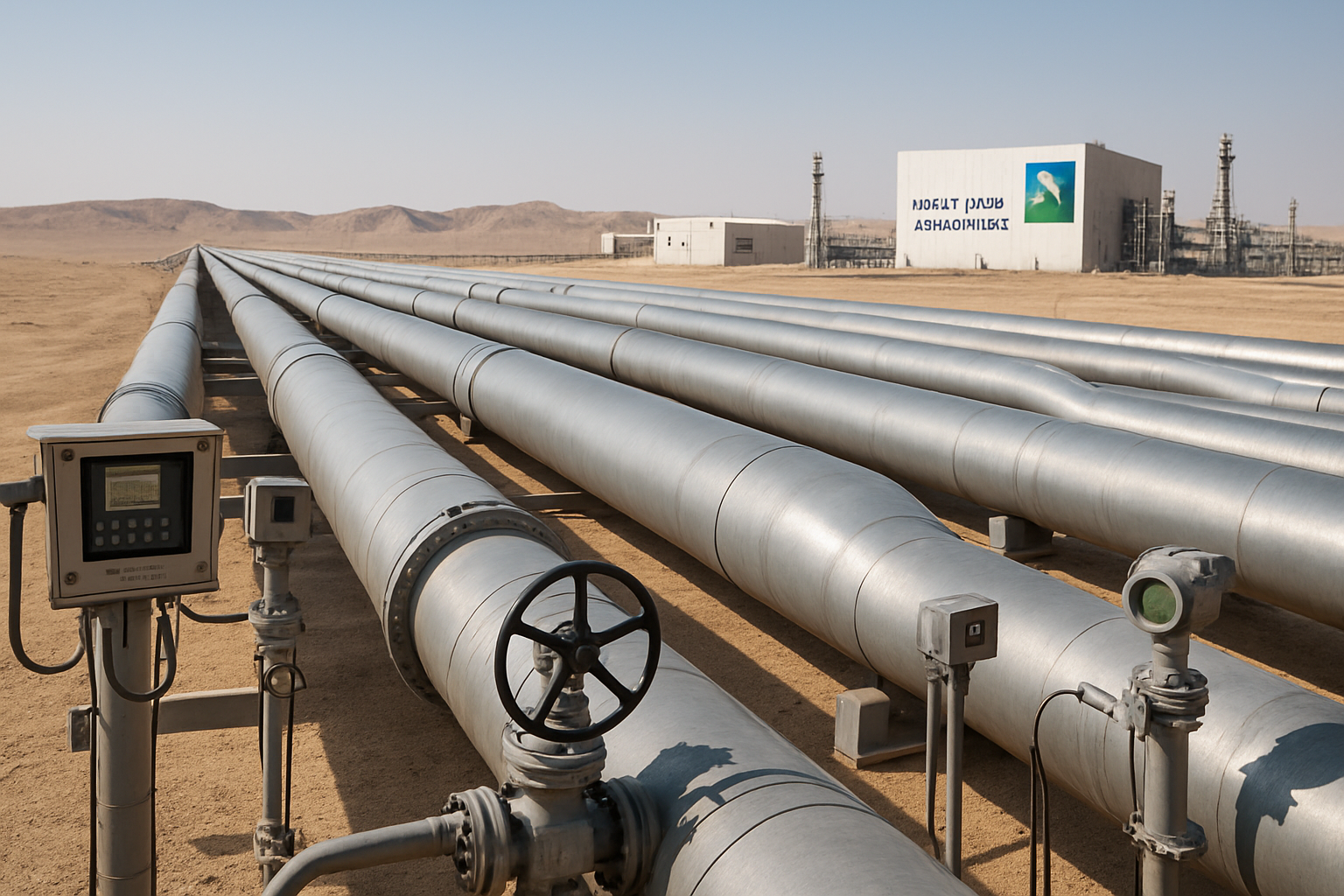
Saudi Arabia announced Sunday the complete restoration of its East-West pipeline and affected energy facilities to full operational capacity following devastating attacks on April 9, marking a significant milestone in the Kingdom's rapid recovery efforts amid ongoing regional tensions.
The Saudi Ministry of Energy confirmed that the East-West pipeline has been fully restored to its operational capacity of approximately 7 million barrels per day, representing a critical achievement in maintaining global energy security during one of the most severe crises since the 1970s oil shocks.
Critical Infrastructure Damage and Recovery
The April 9 attacks had severely crippled Saudi Arabia's energy infrastructure, causing approximately 700,000 barrels per day loss in pumping capacity through the East-West pipeline. The Manifa oil field suffered a reduction of about 300,000 barrels per day, while the Khurais field experienced an impact on output of roughly 300,000 barrels per day.
According to the Ministry of Energy statement, the rapid recovery efforts have enhanced supply reliability across the Kingdom's energy sector. The ministry emphasized that production at the Manifa field has been fully restored to around 300,000 barrels per day within a remarkably short period, demonstrating Saudi Arabia's resilience and technical expertise.
Strategic Importance of the East-West Pipeline
The East-West pipeline represents one of the world's most critical energy transit routes, capable of transporting crude oil from Saudi Arabia's eastern oil fields to western ports on the Red Sea. This infrastructure allows the Kingdom to bypass the potentially vulnerable Strait of Hormuz route, providing crucial flexibility during periods of regional instability.
"The East-West pipeline is back in operation following recent attacks and is critical for crude oil exports in a region facing unprecedented challenges."
— Greek Maritime Sources
The pipeline's restoration comes at a crucial time when global energy markets continue to face severe disruptions. Oil prices have surged past $100 per barrel for the second time in 2026, with Brent crude reaching $106.04 and WTI climbing to $104.29, reflecting persistent concerns over regional stability despite ceasefire agreements.
Broader Regional Energy Crisis Context
The attacks on Saudi infrastructure occurred during what experts describe as the most severe global energy crisis since the 1970s oil shocks. Iran's ongoing control of the Strait of Hormuz, which handles 40% of global oil transit, has created unprecedented disruptions to international energy supplies.
The International Energy Agency (IEA) deployed its largest strategic petroleum reserve release in 50 years, releasing 400 million barrels from 32 countries to stabilize global markets. This coordinated response highlights the critical nature of maintaining Saudi Arabia's production capacity during the current crisis.
Impact on Global Energy Security
Saudi Arabia's rapid infrastructure recovery demonstrates the Kingdom's commitment to maintaining its role as a reliable energy supplier during global uncertainty. The restoration of the East-West pipeline and associated facilities significantly reduces pressure on alternative supply routes and provides crucial stability to international oil markets.
The attacks had initially raised serious concerns about the vulnerability of critical energy infrastructure in the Persian Gulf region. However, the swift recovery showcases the resilience of Saudi Arabia's energy sector and its ability to maintain production despite external threats.
Regional Coalition and Diplomatic Efforts
The infrastructure attacks occurred against the backdrop of severe strain on the regional coalition comprising Saudi Arabia, UAE, Qatar, and Egypt. These nations had previously maintained unprecedented consensus in supporting diplomatic processes, but direct attacks on member territories have tested this unity.
Egyptian President Abdel Fattah el-Sisi condemned the attacks on "sisterly Arab countries," warning of "comprehensive chaos" spreading throughout the region. The restoration of Saudi facilities provides some relief to coalition partners who depend on stable energy supplies.
Technical Achievement and Future Preparedness
The Ministry of Energy's statement highlighted that restoration efforts at the Khurais field are ongoing, with full production capacity expected to be achieved shortly. This phased approach demonstrates Saudi Arabia's methodical and comprehensive response to infrastructure damage.
The rapid recovery timeline suggests that Saudi Aramco and associated contractors had well-developed contingency plans for infrastructure attacks. This preparedness reflects lessons learned from previous regional conflicts and investments in resilient energy infrastructure.
Global Economic Implications
The restoration of Saudi energy facilities provides crucial relief to global markets already strained by multiple disruptions. With over 18,000 flights cancelled worldwide and Dubai International Airport remaining closed due to missile damage, maintaining energy supply stability becomes even more critical for economic recovery.
Natural gas prices had surged 24% in Europe and 78% in the United States during the crisis, while Qatar's LNG production remained halted, affecting 20% of global exports. Saudi Arabia's reliable oil production helps offset some of these supply constraints.
Looking Forward
The successful restoration of the East-West pipeline and energy facilities demonstrates Saudi Arabia's resilience and technical capabilities in the face of external threats. As regional tensions continue, the Kingdom's ability to maintain critical energy infrastructure operations provides stability for both domestic needs and international obligations.
While challenges remain in the broader Middle East region, Saudi Arabia's rapid recovery from the April 9 attacks offers hope for continued energy security during uncertain times. The restoration achievements serve as a testament to the Kingdom's commitment to its role as a dependable global energy supplier.