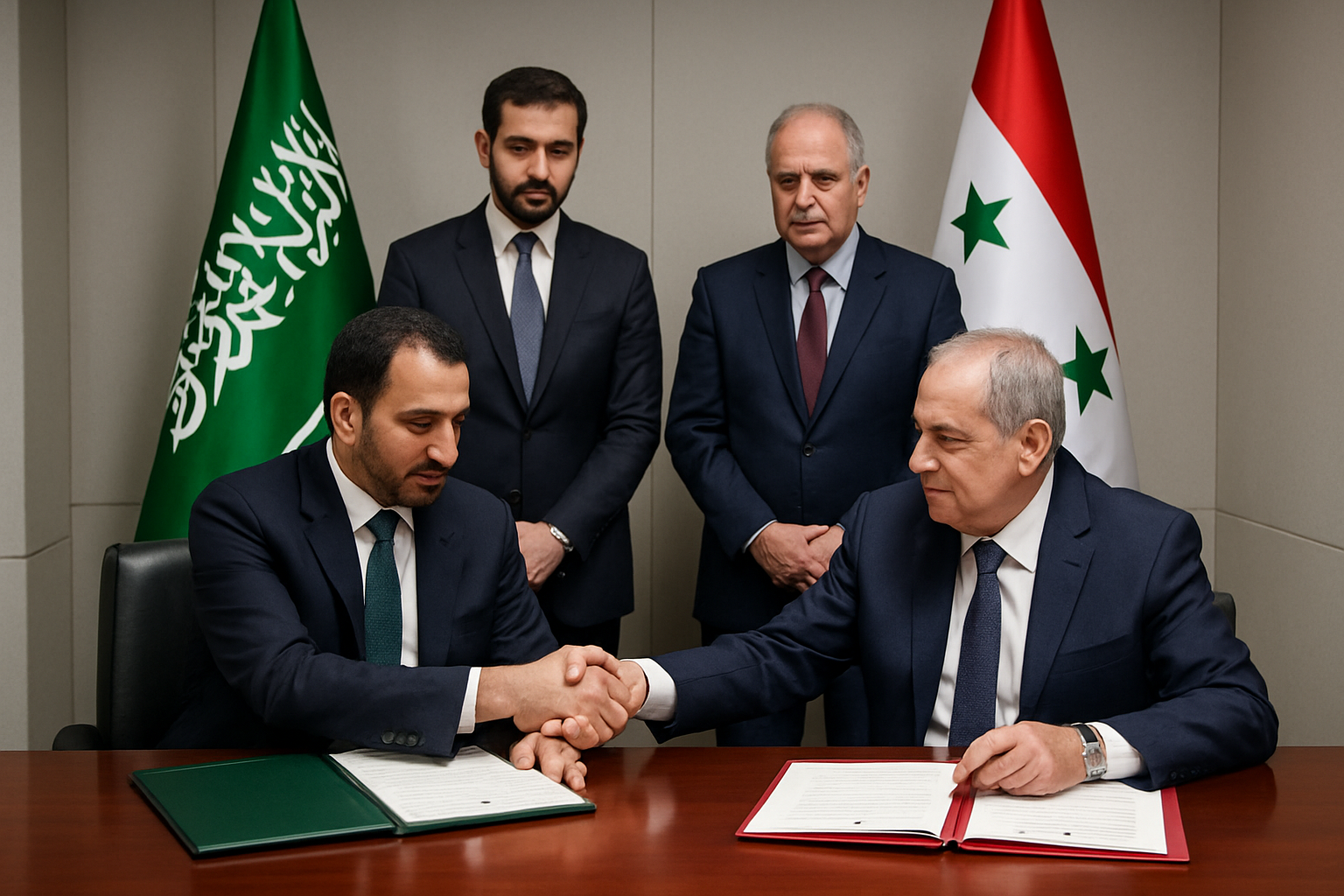
Saudi Arabia and Syria signed a comprehensive investment package worth over SR40 billion ($10.6 billion) on Saturday, marking the largest foreign investment commitment to Syria since the fall of Bashar al-Assad in December 2024, as the war-torn nation seeks international support for its massive reconstruction efforts.
The historic agreements, signed in Damascus during a high-level Saudi delegation visit led by Minister of Investment Khalid Al-Falih, include the establishment of a joint Saudi-Syrian airline, a $1 billion telecommunications infrastructure project, and major airport development initiatives that signal Saudi Arabia's emergence as a leading backer of Syria's new Islamist authorities.
Joint Airline and Aviation Infrastructure
The centerpiece of the agreements is the creation of "Nas Syria," a joint Saudi-Syrian budget airline aimed at enhancing regional and international air connectivity. The new carrier represents a partnership between Saudi aviation interests and Syrian authorities to rebuild the country's aviation sector, which was severely damaged during 14 years of conflict.
Additionally, Saudi investors will develop Aleppo's airport infrastructure through a $2 billion project managed by a consortium led by the BinDawood Investment Group. The agreement includes both the construction of a new Aleppo International Airport and improvements to existing facilities during the development phase, along with financing for an integrated navigation radar system covering all of Syria.
"This agreement represents the first investment by the Elaf Fund and aims to develop the new Aleppo International Airport, operate and improve the existing airport during the development phase,"
— Saudi Ministry of Investment Statement
Telecommunications Revolution: The Silklink Project
Saudi telecommunications giant stc Group announced its commitment to implement the ambitious "Silklink" project, representing an investment of over SR3 billion ($800 million). The project aims to dramatically enhance Syria's telecommunications infrastructure and reconnect the country to regional and international networks through a fiber-optic network extending over 4,500 kilometers.
The Silklink initiative will establish data centers and international submarine cable landing stations, providing high data transfer capacities and improved reliability for telecommunications operators throughout Syria and the broader region. The project is designed to support advanced communication services, digital applications, cloud services, and Internet of Things capabilities while significantly improving internet quality and digital infrastructure efficiency within Syria.
Talal Al-Hilali, head of the Syrian Investment Authority, described the telecommunications agreement as a crucial step toward rebuilding Syria's digital connectivity, which was severely compromised during years of conflict and international sanctions.
Economic Context and Regional Implications
The investment package comes at a critical time for Syria's new leadership, which has been actively seeking international investment to rebuild the country's shattered economy. The Islamist authorities who took power after Assad's fall have prioritized attracting foreign capital and have signed several major agreements with various companies and governments, with Saudi Arabia emerging as the most significant partner.
Saudi Arabia's substantial commitment reflects the kingdom's Vision 2030 strategy to diversify its economy and expand regional influence. The investment also positions Riyadh as a key player in Syria's reconstruction, potentially yielding significant economic returns while strengthening Saudi influence in the Levant.
Broader Investment Framework
The Saturday agreements represent just a portion of a larger investment framework between the two countries. Saudi officials indicated that the 80 agreements and memoranda of understanding signed encompass multiple sectors beyond aviation and telecommunications, including energy, infrastructure, and trade facilitation.
The comprehensive nature of the partnership suggests Saudi Arabia's long-term commitment to Syria's reconstruction and economic development. This approach aligns with similar investment strategies Saudi Arabia has pursued in other regional markets as part of its economic diversification efforts.
International Response and Market Impact
The announcement of the Saudi-Syrian investment deals has drawn attention from international observers monitoring Syria's post-Assad transition. The substantial Saudi commitment may encourage other Gulf states and international partners to consider similar investments in Syrian reconstruction projects.
Regional powers have generally welcomed diplomatic and economic engagement with Syria's new authorities, viewing stability in the country as crucial for regional security and economic development. The Saudi investment package represents the most significant foreign economic commitment to date.
Implementation Challenges and Timeline
While the agreements represent significant progress, implementation will face numerous challenges including infrastructure rebuilding, regulatory framework development, and coordination with international sanctions regimes. The telecommunications project, in particular, will require extensive infrastructure development in areas that suffered significant damage during the conflict.
The joint airline project will need to address aviation safety standards, route development, and integration with regional air traffic systems. Airport infrastructure development will require substantial construction and technological upgrades to meet international standards.
Saudi officials indicated that implementation would begin immediately, with phased rollouts for different project components. The telecommunications infrastructure is expected to show initial results within 18-24 months, while aviation projects may require longer development timelines.
Strategic Significance for Regional Reconstruction
The Saudi-Syrian investment package sets a precedent for international economic engagement with Syria's new leadership. The comprehensive nature of the agreements, spanning aviation, telecommunications, and infrastructure development, suggests a coordinated approach to rebuilding Syria's economy and reconnecting it to regional markets.
For Syria, the Saudi investment provides crucial capital and expertise needed for reconstruction efforts. For Saudi Arabia, the partnership offers opportunities for economic expansion and regional influence while supporting stability in a strategically important neighbor.
The success of these initial agreements could pave the way for additional international investment in Syria, potentially accelerating the country's economic recovery and integration into regional economic networks. The telecommunications and aviation projects, in particular, could serve as foundations for broader economic development initiatives.