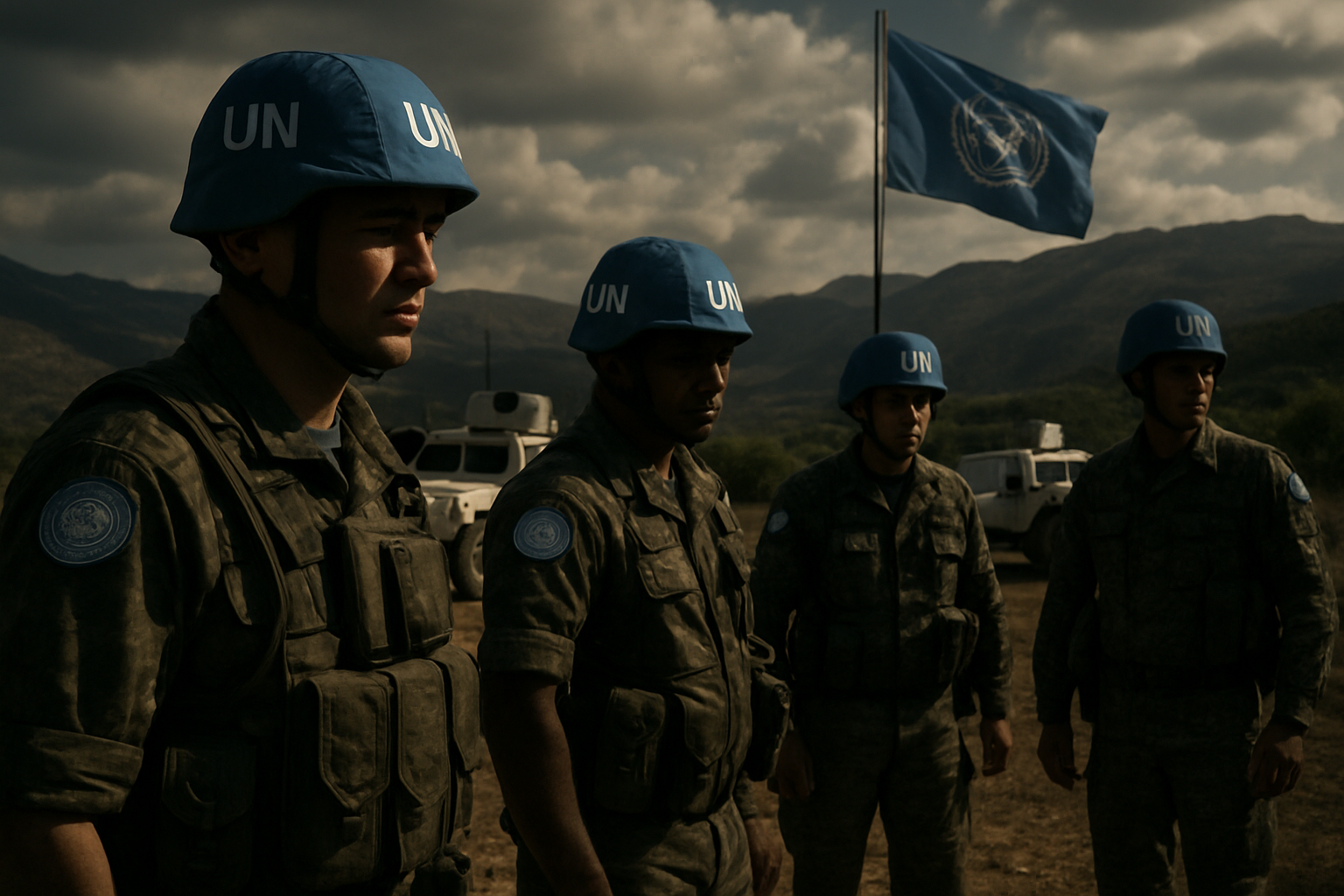
A second French soldier serving with UN peacekeeping forces in Lebanon died Wednesday from wounds sustained in last week's attack on UNIFIL personnel, French President Emmanuel Macron announced, bringing the death toll from the April 19 incident to two.
Corporal Anicet Girardin, who was evacuated to France on Monday after suffering severe injuries in the attack in southern Lebanon, "died this morning of the consequences of his wounds," Macron posted on social media platform X. The 28-year-old soldier had been receiving intensive medical care at a French military hospital since his repatriation.
Deadliest Attack on UN Forces
Girardin's death follows that of Staff Sergeant Florian Montorio, who was killed immediately in the April 19 attack while conducting road clearance operations in southern Lebanon. The incident marks the deadliest assault on international peacekeeping forces since the complete collapse of the November 2024 US-French brokered ceasefire between Israel and Hezbollah in March 2026.
President Macron has directly blamed Hezbollah for the attack, stating that "everything suggests that the responsibility for this attack lies with Hezbollah." However, the Iran-backed militant organization has categorically denied involvement in the incident.
"Corporal Anicet Girardin... brought home yesterday from Lebanon, where he was badly wounded by Hezbollah fighters, died this morning of the consequences of his wounds."
— President Emmanuel Macron
Escalating Violence Against Peacekeepers
The deaths are part of a disturbing pattern of attacks on UN peacekeeping personnel amid the broader regional conflict. Indonesian UNIFIL peacekeepers have also been killed in separate incidents, with three casualties reported in late March when projectiles exploded at peacekeeping positions near Bani Hayyan and Adchit al-Qusayr villages.
UNIFIL spokesperson Kandice Ardiel has described the situation as "precarious and volatile," noting that peacekeeping operations have been severely compromised by the deteriorating security environment in southern Lebanon.
Context of Regional Crisis
The attacks on peacekeepers occur within the framework of an unprecedented humanitarian catastrophe in Lebanon. Since March 2026, over 1.2 million Lebanese—representing 25% of the country's population—have been displaced from their homes. The systematic targeting of medical personnel has resulted in 26 paramedics killed and 51 wounded, including the devastating attack on the Burj Qalaouiyah healthcare center that claimed 12 medical workers' lives.
The violence stems from the complete breakdown of the November 2024 ceasefire agreement, which had successfully maintained peace for over a year. The accord collapsed when Hezbollah faced what observers described as an "impossible choice" between maintaining the ceasefire and responding to Iranian pressure following the death of Supreme Leader Ali Khamenei on March 1, 2026.
International Response Intensifies
France has demanded an urgent UN Security Council meeting in response to the attacks on its peacekeepers. The international community has condemned the targeting of UN personnel, with Italy pressing for changes to UNIFIL rules of engagement to better protect peacekeepers operating in the volatile region.
The World Health Organization has issued a $30.3 million emergency appeal to support healthcare systems across five Middle Eastern countries, warning that medical infrastructure is "under severe strain" due to the ongoing conflict.
Diplomatic Efforts Continue
Despite the escalating violence, diplomatic initiatives persist. President Macron has offered to host direct Israel-Lebanon talks in Paris—the first such negotiations since the ceasefire collapse. These efforts come as the international community grapples with what UN Secretary-General António Guterres has called "the greatest test of multilateral cooperation in the modern era."
The attacks on French peacekeepers have also highlighted critical gaps in current ceasefire frameworks. A "Lebanon loophole" exists in the Pakistan-mediated "Islamabad Accord" US-Iran ceasefire, as Israeli Prime Minister Benjamin Netanyahu explicitly excluded Lebanon from the broader peace agreement, creating what US officials acknowledge as a "legitimate misunderstanding" with Iran.
Template-Setting Crisis
The systematic targeting of UN peacekeepers represents a fundamental challenge to international peacekeeping operations in the 21st century. The success or failure of holding perpetrators accountable will establish precedents for international law enforcement and multilateral conflict resolution approaches globally.
As France mourns its second fallen peacekeeper in less than a week, the incident underscores the extreme dangers faced by international forces attempting to maintain stability in one of the world's most volatile regions. The deaths of Montorio and Girardin serve as a stark reminder of the human cost of regional conflicts and the courage of those who serve in the cause of international peace.
The international community now faces the critical task of preventing further escalation while ensuring the protection of peacekeeping personnel who remain committed to their mission despite the growing risks. The coming weeks will be crucial in determining whether diplomatic solutions can prevail over the trajectory toward broader regional warfare.