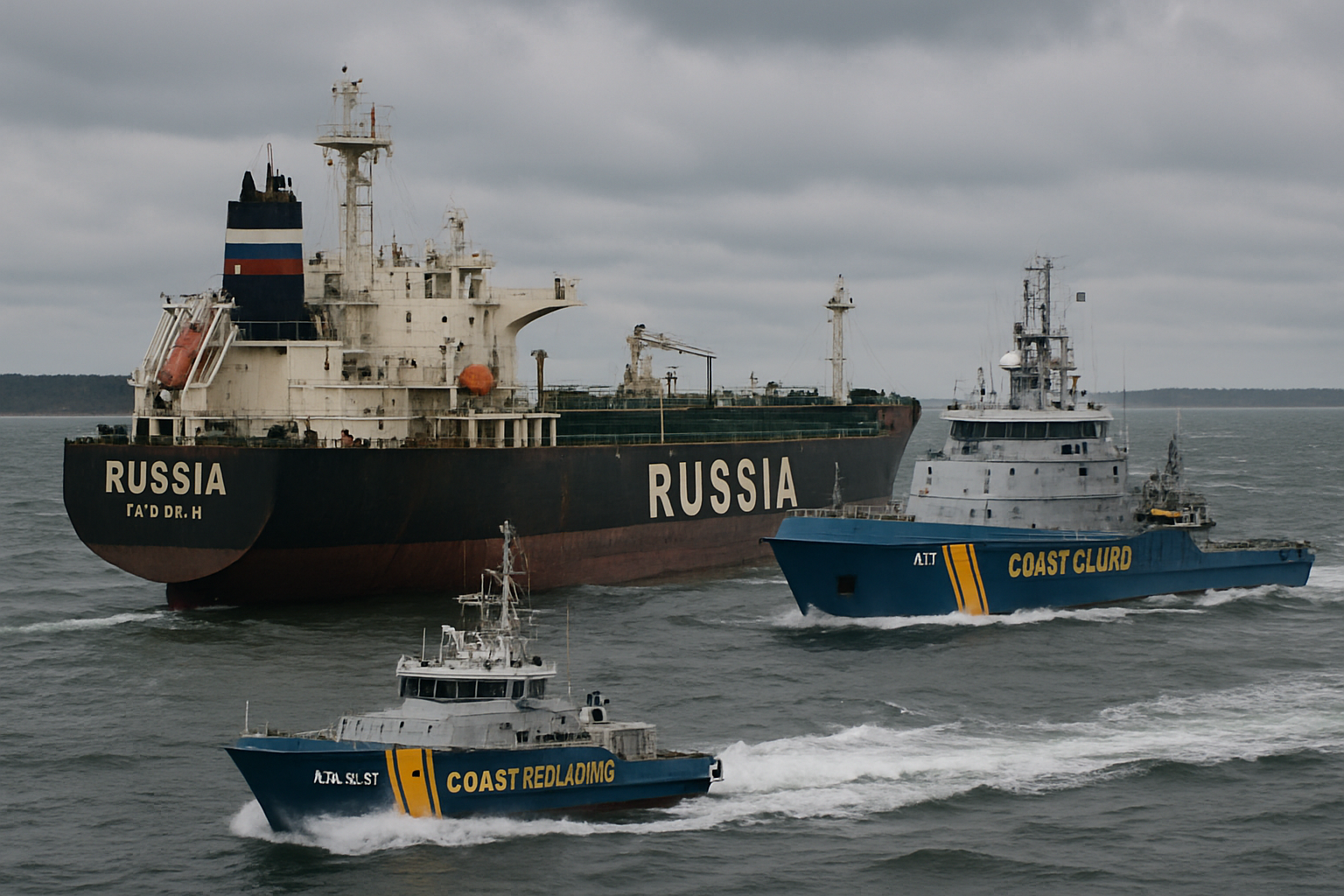
Swedish authorities have seized a second Russian shadow fleet vessel in Baltic Sea waters, arresting the ship's captain on charges of using forged documents as Nordic maritime enforcement intensifies against Moscow's sanctions-evading operations.
The Swedish Coast Guard intercepted the tanker Sea Owl One on March 13, 2026, while it was transiting through Swedish territorial waters south of Trelleborg. The vessel, flying a suspected false flag of the Comoros Islands, was reportedly carrying oil from Santos, Brazil, to the Russian Baltic port of Primorsk when Swedish authorities moved to board and secure the ship.
This latest seizure marks a significant escalation in Baltic maritime security enforcement, coming just weeks after Sweden's dramatic helicopter-assisted capture of the cargo vessel Caffa on March 7, 2026. Defense Minister Carl-Oskar Bohlin personally oversaw that operation, which saw Swedish forces seize a ship carrying suspected stolen Ukrainian grain under a false Guinea flag.
Sophisticated Document Fraud Operation
Swedish prosecutors brought charges against the Russian captain on March 13, alleging the use of forged documentation to conduct maritime operations. According to the Russian Embassy in Sweden, 10 of the 24 crew members aboard Sea Owl One, including the captain, are Russian nationals, while the remaining sailors are from Indonesia.
The vessel's use of the Comoros Islands flag appears to be part of a broader pattern of false flag operations employed by Russia's estimated 600-vessel shadow fleet. Intelligence investigations by German outlets NDR, WDR, and Süddeutsche Zeitung have revealed that approximately one-third of Russia's shadow fleet operates without correct flag state authorization, creating legal enforcement opportunities under international maritime law.
Estonian and Finnish journalists have identified what they describe as "the most dangerous tanker in the Baltic Sea" after investigating dozens of risk factors associated with Russian shadow fleet operations. These vessels often operate without proper insurance, valid documentation, or adherence to international maritime safety standards.
Baltic Sea Enforcement Template
The Sea Owl One seizure builds upon the template established during the Caffa operation, which involved extensive coordination between G7, Nordic, and Baltic state authorities. This coordinated approach represents the most significant enforcement action against sanctions-evading vessels in European waters to date.
The operations demonstrate enhanced maritime surveillance capabilities, including satellite tracking, AI-powered monitoring, and real-time analytics that enable effective detection of suspicious activities. However, coordination across different national jurisdictions remains challenging, requiring sustained international cooperation to achieve meaningful results.
Swedish authorities have noted a dramatic increase in Russian reconnaissance activities in the Baltic Sea region since Finland and Sweden joined NATO, with intelligence reports indicating a 23% rise in Russian surveillance operations. This includes incidents such as a Russian drone from reconnaissance vessel Zhigulevsk being intercepted near the French aircraft carrier Charles de Gaulle during NATO exercises.
Broader Shadow Fleet Operations
Russia's shadow fleet represents a sophisticated global network of vessels using false documentation and concealed ownership to circumvent international sanctions. The European Union's 20th sanctions package, implemented in February 2026, introduced a comprehensive maritime services ban on Russian crude oil exports, including prohibitions on insurance, maintenance, port access, and technical support.
The package added 43 additional vessels to the shadow fleet blacklist, bringing the total number of sanctioned vessels to over 2,600 individuals and entities. However, enforcement officials acknowledge significant challenges given the global nature of maritime commerce and the sophisticated evasion methods employed by Russian operators.
The Belgian government previously conducted a historic nighttime seizure of a Russian shadow fleet tanker in the North Sea with French support, demonstrating that coordinated international enforcement can be effective when properly resourced and coordinated.
Regional Security Implications
The Baltic states have strengthened their cooperation through enhanced intelligence sharing, satellite surveillance, and maritime patrols as part of NATO's Arctic Sentry mission. Lithuanian intelligence has warned that Russia could be ready for "limited military conflict" within 3-5 years if a Ukraine ceasefire is achieved, highlighting the strategic importance of current enforcement efforts.
Latvia's Parliament Defense Committee is scheduled to discuss drone capacity development on March 17, 2026, amid these regional security tensions. The Baltic national libraries have even agreed to unprecedented cooperation in addressing geopolitical challenges and cultural heritage protection - the first time cultural institutions have played such a direct role in democratic resilience efforts.
Finland is considering lifting its comprehensive nuclear weapons ban "as soon as possible," stating that current legislation is inadequate for NATO membership requirements. Similarly, Sweden's Defense Minister Pål Jonson has announced willingness to host nuclear weapons during wartime, breaking an 80-year Nordic nuclear taboo.
Economic and Environmental Concerns
The seizure of shadow fleet vessels carries significant economic implications, as these operations disrupt revenue streams supporting sanctioned entities while maintaining global oil market integrity. The vessels often carry dangerous cargo without proper environmental safeguards, posing catastrophic risks to the Baltic Sea ecosystem.
Estonia has demonstrated leadership in renewable energy, achieving 88% renewable electricity generation and opening continental Europe's largest battery storage facility capable of serving 90,000 households. This energy independence provides a model for reducing regional dependence on Russian energy supplies.
The broader context includes a severe global energy crisis, with oil prices having breached $100 per barrel for the first time since 2022 due to Middle East tensions affecting the Strait of Hormuz, which handles 40% of global oil transit.
Future Enforcement Trajectory
The success of recent Baltic Sea enforcement operations provides a template for small nation coordination in volatile international environments. Nordic officials emphasize that future security depends on robust frameworks for information sharing, coordinated enforcement actions, and standardized response protocols.
The technological integration of advanced surveillance systems has proven essential, with predictive algorithms now capable of identifying potential vessel failures before they become critical. Digital monitoring provides unprecedented visibility into global shipping patterns, enabling authorities to detect suspicious activities more effectively.
"This approach demonstrates that coordinated international efforts can counter sophisticated sanctions violations affecting global supply chains, energy markets, and agricultural product trafficking from occupied territories."
— Nordic Security Official
The Baltic approach to maritime security could influence European security planning for decades, affecting international law enforcement credibility and the viability of multilateral cooperation in addressing contemporary threats. The democratic resilience framework integrating cultural institutions with traditional security measures represents an innovative approach to regional cooperation.
As the international community faces decisions between immediate security concerns and long-term maritime governance architecture restructuring, the effectiveness of these enforcement operations will likely determine whether similar coordinated responses become standard practice in addressing sanctions evasion and territorial sovereignty violations globally.