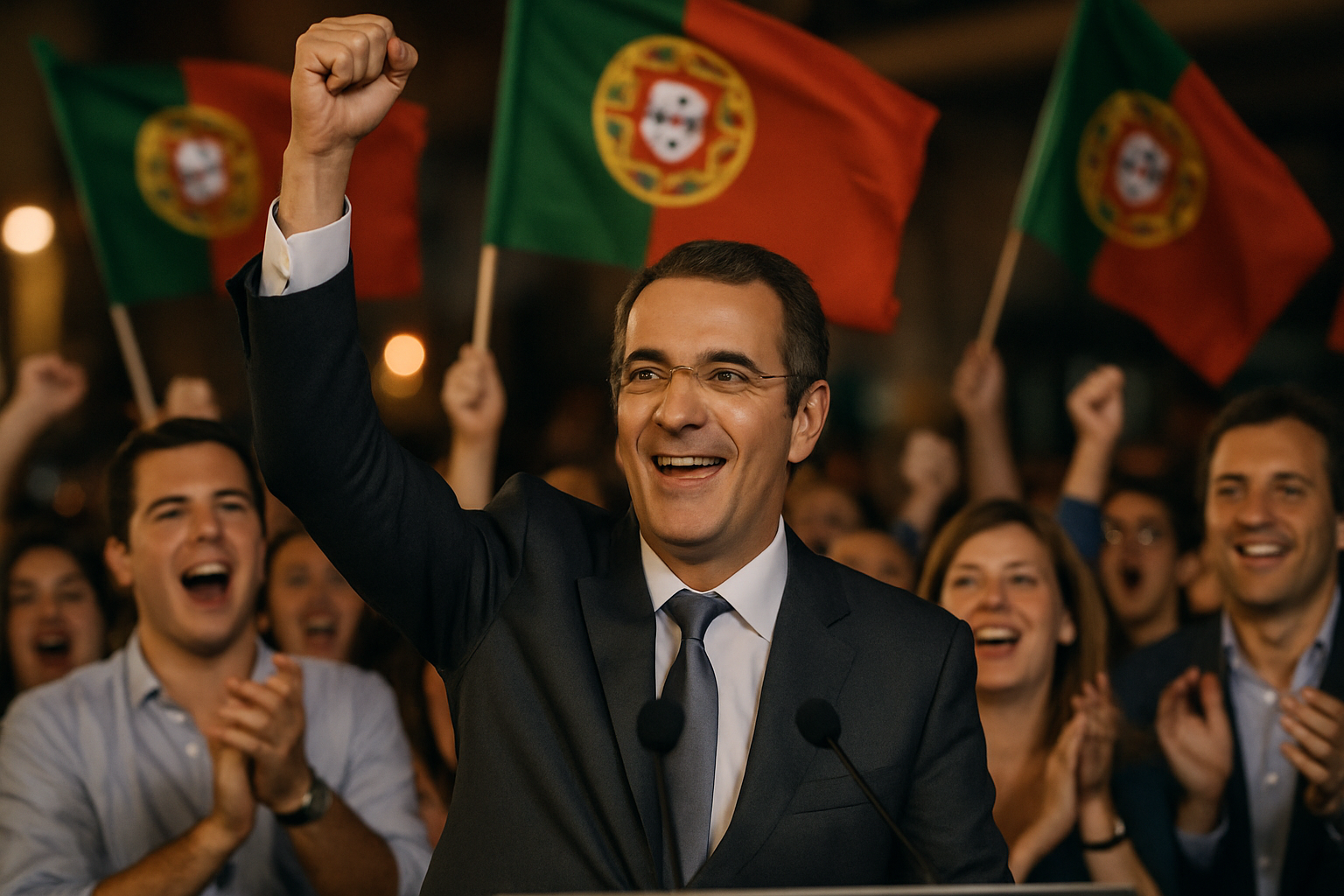
Socialist candidate António José Seguro has achieved the most decisive presidential election victory in Portuguese democratic history, winning 66.8% of the vote against far-right challenger André Ventura's 33.2% in Sunday's runoff election that proceeded despite unprecedented weather emergencies.
The 63-year-old former Socialist Party secretary-general not only secured Portugal's presidency but shattered historical voting records, receiving over 3.4 million votes—more than any presidential candidate in the nation's democratic era. His margin of victory exceeded even Mário Soares' legendary 1991 reelection, establishing Seguro as the most democratically endorsed leader in Portuguese history.
Election Conducted Amid National Emergency
The historic vote took place against extraordinary circumstances, as Portugal battled the aftermath of three consecutive Atlantic storms—Kristin, Leonardo, and Marta—that killed 14 people and prompted the largest peacetime rescue operation in the country's history. Despite 167,000 power outages and 36,000 voters unable to participate due to storm damage, constitutional law prevented postponement, demonstrating remarkable democratic resilience.
"Today we are celebrating not just an electoral victory, but proof of our democratic strength," Seguro declared in his victory speech, addressing supporters gathered despite ongoing weather warnings. "The Portuguese people have shown that neither storms nor extremism can shake our commitment to democracy."
"I will not be opposition; I will be exigence. The majority that elected me expires tonight."
— António José Seguro, President-elect
Breaking Unprecedented Electoral Records
Seguro's victory represents far more than a typical political win. With 66.8% of the vote, he came within three percentage points of Mário Soares' 1991 record while achieving the highest absolute vote count in Portuguese electoral history. His campaign successfully mobilized a broad coalition spanning traditional socialist voters, moderate conservatives, and citizens concerned about far-right populism.
The results were geographically comprehensive: Seguro won all 18 districts and autonomous regions, captured 303 of Portugal's municipalities, and secured over 2,900 parishes. Even in traditionally conservative areas, his message of moderate governance and democratic stability resonated with voters seeking an alternative to political extremism.
Far-Right Challenge Contained
André Ventura, leader of the far-right Chega party, had hoped to capitalize on economic grievances and immigration concerns to achieve a breakthrough victory that would have sent shockwaves across Europe. Instead, his 33.2% showing, while significant, fell short of the populist wave that many international observers had feared.
In his concession speech, Ventura struck a defiant tone, claiming that "the message from the Portuguese was clear: we now lead the right in Portugal." He immediately positioned himself for future political battles, stating that Chega "will soon govern this country," despite the decisive defeat.
The election results offer important lessons for European politics. While populist movements remain a significant force, Seguro's victory demonstrates that moderate, democratic coalitions can successfully counter extremist appeals when they offer compelling alternatives and unite across traditional partisan lines.
Democratic Resilience Under Pressure
Perhaps most remarkably, the election proceeded smoothly despite infrastructure damage from Storm Marta, which struck just hours before polling began. With 26,500 rescue personnel deployed across the country responding to flooding and power outages, Portuguese democracy proved its institutional strength.
Electoral authorities managed to accommodate voters despite transportation disruptions, power failures, and dangerous weather conditions. Only 36,000 voters—representing 14.4% of the electorate in the worst-affected areas—were unable to participate, a remarkably low figure given the severity of the crisis.
"This election will be remembered not just for its results, but for how we conducted it," noted political analyst Ana Sá Lopes. "Portuguese institutions demonstrated that democracy can function even under extraordinary pressure."
International Implications
Seguro's victory resonates far beyond Portugal's borders, occurring at a time when European democracies face mounting pressure from populist movements and authoritarian influences. International leaders quickly congratulated the president-elect, with French President Emmanuel Macron pledging continued cooperation and Brazilian President Luiz Inácio Lula da Silva calling it "a victory for democracy."
The European Union, already providing €246 million in emergency assistance for storm recovery, welcomed the election results as evidence of democratic stability in Southern Europe. The victory strengthens Portugal's position within EU institutions and reinforces the bloc's commitment to democratic values amid global authoritarian challenges.
Challenges and Opportunities Ahead
Seguro inherits a presidency during one of Portugal's most challenging periods in recent memory. Beyond the immediate task of coordinating storm recovery efforts, he faces long-term challenges including economic inequality, climate adaptation, and European integration pressures.
The president-elect has promised a governing style distinct from his predecessor, Marcelo Rebelo de Sousa. "I will not speak about everything and nothing," Seguro declared, signaling a more restrained approach to the traditionally ceremonial office. He emphasized that he sees "no reason" for the current government to be interrupted, suggesting cooperation with Prime Minister Luís Montenegro's administration.
Most symbolically, Seguro announced that "the majority that elected me expires tonight," and indicated he would distance himself from partisan politics, including potentially suspending his Socialist Party membership—a move unprecedented in modern Portuguese politics.
Historic Mandate for Change
With over two-thirds of Portuguese voters supporting his candidacy, Seguro possesses a mandate for significant presidential leadership. His victory speech emphasized themes of national unity, democratic renewal, and climate resilience—issues that transcend traditional partisan divisions.
The scale of victory also provides Seguro with enhanced credibility for the constitutional review that may be necessary to address Portugal's long-term challenges. Having achieved what analysts are calling "revision-level support," he possesses the democratic legitimacy to pursue fundamental reforms if circumstances require them.
Political historian Miguel Esteves Cardoso observed that Seguro's victory represents "the most comprehensive democratic endorsement in our constitutional history. This is not just about one man—it's about Portuguese democracy proving its resilience and renewal capacity."
Looking Forward
Seguro's inauguration is scheduled for March 9, 2026, when he will formally succeed Marcelo Rebelo de Sousa after a decade in office. The transition occurs during a critical period for both Portugal and Europe, as the continent grapples with climate change, economic uncertainty, and geopolitical tensions.
The new president's first major test will likely involve coordinating Portugal's response to the devastating storms that coincided with his election. His administration's effectiveness in managing reconstruction efforts will significantly influence public perception and political momentum for broader reforms.
As Portugal celebrates this historic democratic achievement, Seguro's victory stands as proof that moderate, democratic leadership can prevail even during times of crisis and division. His presidency begins with an unprecedented level of public support and a clear mandate to strengthen Portuguese democracy for the challenges ahead.