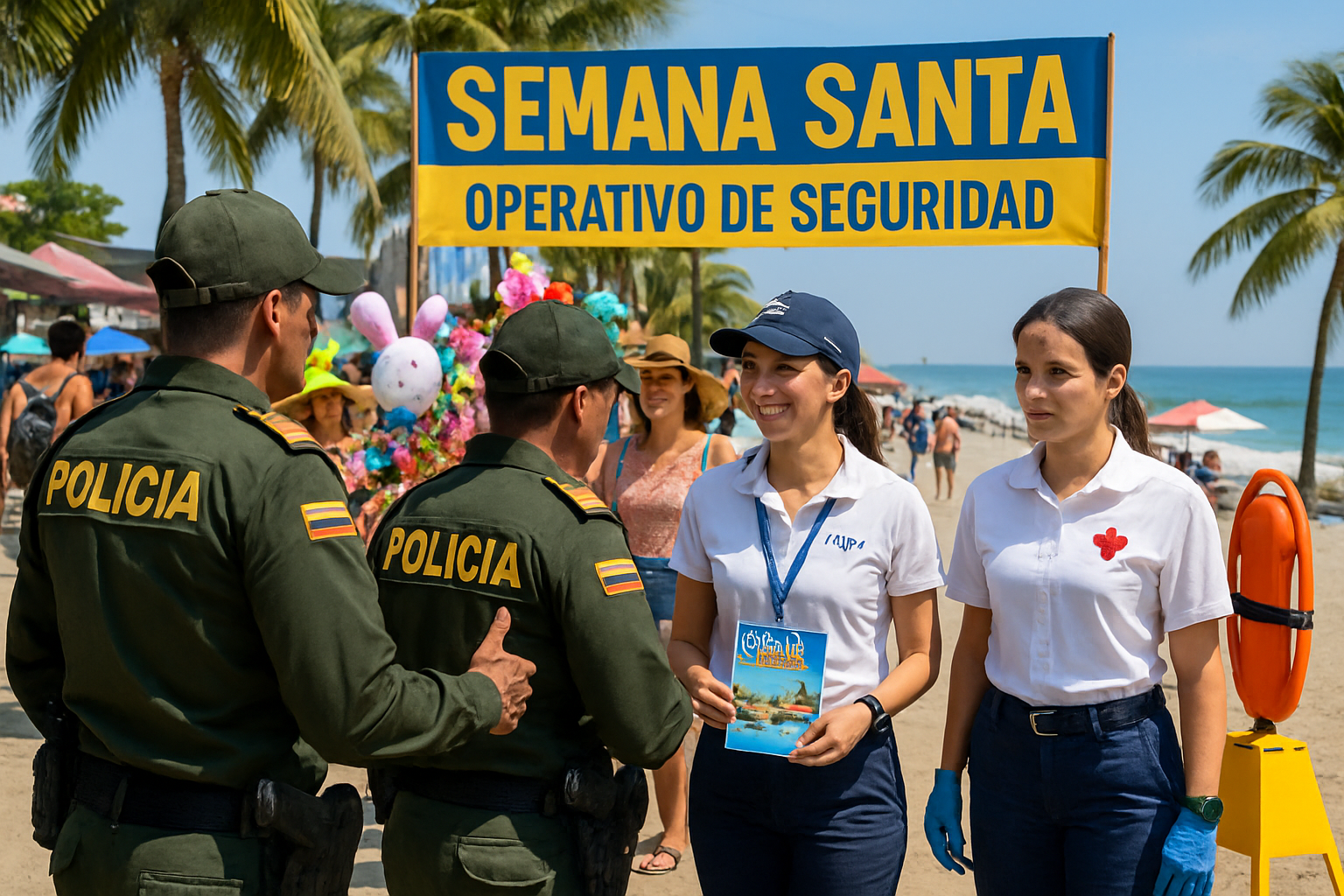
Latin American nations are implementing comprehensive security operations and tourism initiatives as they prepare for Semana Santa 2026, with Colombia, El Salvador, and Nicaragua deploying thousands of personnel to ensure safe Holy Week celebrations for millions of domestic and international visitors.
The scale of preparations across the region reflects the critical importance of Easter Week tourism for economic recovery and the need to maintain safety standards during the largest religious celebration period of the year. Multiple countries are coordinating unprecedented security deployments alongside ambitious tourism campaigns targeting both regional and international markets.
El Salvador Launches Comprehensive Safety Framework
El Salvador has activated its most extensive public safety operation in recent history with the deployment of over 100,000 security personnel under the #PlanVerano 2026 initiative. The National Civil Protection system has established 180 monitoring points across beaches, recreational parks, and lakes, staffed by more than 300 specialized lifeguards trained in aquatic rescue operations.
"We guarantee medical attention at the national level during the holiday period with 17 operational bases, including terrestrial, aerial, and maritime units, plus over 100 ambulances deployed throughout the country."
— Carlos Orellana, Director of Medical Emergency System 132
The coordinated approach involves multiple agencies working in unprecedented cooperation. The Fire Department has deployed more than 800 personnel nationwide as part of the comprehensive safety plan, with over 170 inspectors conducting preventive measures while response teams maintain 24-hour availability. This comes amid concerns over increased fire incidents, which have exceeded 2,000 cases, representing a concerning statistical trend for the institution.
Tourism projections show El Salvador expecting 145,000 international Easter Week visitors in 2026, compared to 135,000 in 2025, driven by improved security conditions and enhanced international promotion campaigns. The country has positioned itself as a premier destination through #SurfCity initiatives and historic center development in San Salvador, creating world-class attractions that appeal to diverse international markets.
Colombia Strengthens Health and Tourism Infrastructure
Colombian authorities have implemented comprehensive measures focusing on public health and tourism safety. The Valle del Cauca region has activated yellow alerts in its hospital network to guarantee adequate medical attention during religious celebrations, while the Atlantic coast region has reinforced sanitary surveillance during the year's highest seafood consumption period.
The combination of religious traditions, increased demand, and expanded informal commerce creates vulnerable scenarios for emergencies, prompting authorities to strengthen oversight of food safety, particularly regarding seafood products that see dramatic consumption increases during Holy Week observances.
Tourism infrastructure in coastal regions like Sucre is experiencing unprecedented demand. Hotel operators in destinations including Coveñas, Tolú, Rincón del Mar, and Berrugas report expectations of full occupancy with 100,000 beds available for travelers. This represents a significant recovery for Colombia's tourism sector, which has been working to rebuild international confidence and attract both domestic and foreign visitors.
Nicaragua Implements Multi-Agency Coordination
Nicaragua has demonstrated sophisticated public safety coordination through multi-agency initiatives addressing various security concerns. The National Police captured three individuals involved in crimes against women while conducting over 3,000 security visits to rural areas, representing a coordinated approach to gender violence prevention and rural security enhancement.
Fire prevention efforts have focused on commercial areas, with Bomberos Unidos conducting preventive inspections at major markets, examining electrical systems, gas installations, and fire suppression equipment as part of proactive risk management. This approach emphasizes prevention over reactive emergency response.
The Health Ministry's deployment of 348 medical posts and 57 mobile clinics across recreational centers represents the largest temporary health infrastructure deployment in recent Nicaragua history. This strategic placement considers population movement patterns and recreational site attendance during the religious celebration period.
Regional Tourism Renaissance
The Semana Santa preparations occur within a broader Latin American tourism renaissance, building on the successes documented throughout 2026. The region has demonstrated significant coordination in marketing efforts, moving from individual country competition toward collaborative development that enhances regional competitiveness.
This coordinated approach includes infrastructure sharing, best practices exchange, and multi-destination experiences that maintain distinctive cultural identities while creating more attractive packages for international visitors. The emphasis on cultural authenticity preservation, enhanced visitor experiences through strategic infrastructure, and meaningful community involvement represents an evolution toward sustainable community-focused development.
Economic multiplier effects extend beyond traditional hospitality to include infrastructure improvements, cultural industry support, artisan networks, and year-round employment creation. Countries implementing comprehensive tourism infrastructure are showing greater economic resilience and sustainable investment attraction through sophisticated destination management.
Security Innovation and Technology Integration
The 2026 preparations showcase significant advances in security technology and coordination. The integration of digital platforms for emergency response, enhanced communication systems, and real-time monitoring capabilities represents a substantial upgrade from previous years' operations.
Colombia's implementation of AI-enhanced surveillance programs in the Atlantic region, with 411 smart cameras across 18 municipalities, exemplifies the technological evolution in public safety. This system includes real-time monitoring, predictive analytics, and automatic law enforcement alerts, representing a shift from reactive to proactive security measures.
The success factors consistently emerging across the region include cultural authenticity preservation, technological enhancement, climate-resilient infrastructure development, meaningful community involvement in tourism planning, and international cooperation replacing competitive approaches.
International Cooperation and Standards
The scale and sophistication of the 2026 Semana Santa preparations reflect international best practices in emergency management and tourism development. The emphasis on proactive risk reduction over reactive emergency response, combined with economic multiplier effects supporting vendor livelihoods and agricultural productivity, demonstrates a mature approach to public event management.
Regional cooperation is replacing individual competition through coordinated marketing, infrastructure sharing, and best practices exchange. This creates multi-destination experiences while maintaining distinctive cultural identities, strengthening the overall competitiveness of Latin America as a tourism destination.
Climate resilience has become essential for destination competitiveness, with infrastructure designed to anticipate extreme weather conditions rather than merely respond to them. The integration of climate adaptation into tourism development represents crucial heritage stewardship evolution addressing environmental challenges while maintaining program quality and community engagement.
Looking Forward: Template for Sustainable Tourism
The comprehensive approach to Semana Santa 2026 preparations establishes new standards for sustainable tourism development that balance economic prosperity with cultural identity and environmental integrity. The simultaneous major initiatives across multiple countries suggest an industry maturation characterized by sophisticated destination management, technological integration, and sustainable practices.
The emphasis on international cooperation, community engagement, and adaptive management enables navigation of complex global challenges including geopolitical tensions, climate change, and evolving consumer preferences. This defines sector standards for decades ahead through value-based development that serves as an economic and social progress engine while maintaining authentic cultural expressions and environmental sustainability.
As Latin America prepares for what promises to be one of the most significant Semana Santa celebrations in recent memory, the region demonstrates its capacity for coordinated response, innovative tourism development, and commitment to both visitor safety and cultural preservation. The template established through these preparations will likely influence tourism management approaches throughout Latin America and beyond for years to come.