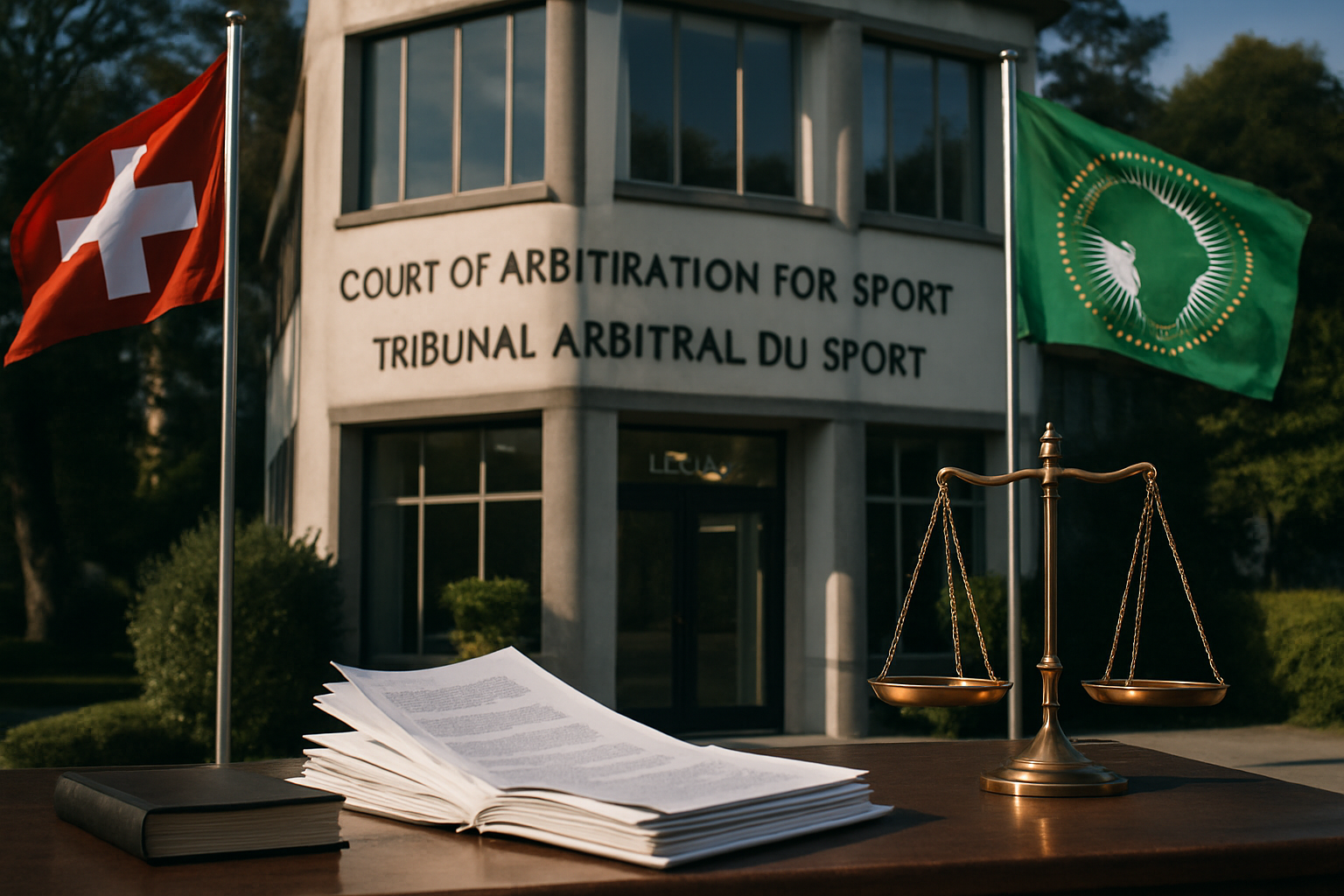
The Court of Arbitration for Sport (TAS) confirmed on Wednesday, March 25, 2026, that it has officially registered Senegal's appeal against the Confederation of African Football's unprecedented decision to strip the nation of its 2025 AFCON championship title, marking a watershed moment in African football governance.
The Senegalese Football Federation (FSF) launched the historic legal challenge seeking to overturn CAF's controversial ruling that awarded the continental championship to Morocco months after Senegal's victory in the final played in Rabat. The appeal represents the first time in AFCON history that a title has been contested through international sports arbitration following post-tournament administrative decisions.
Historic Legal Precedent
According to sources from multiple African football federations, the TAS has confirmed receipt of Senegal's comprehensive legal filing, which concludes that CAF's decision should be annulled and the FSF should be declared the rightful winner of the 2025 African Cup of Nations. The federation is also demanding the immediate suspension of any timeline for implementing CAF's ruling.
This marks an extraordinary escalation in what has become the most significant governance crisis in African football history. Never before has a continental championship been subjected to international legal arbitration months after its completion, setting a precedent that could fundamentally reshape how football disputes are resolved across the continent.
"This case represents a critical test of whether continental football bodies can make post-tournament administrative decisions without proper legal scrutiny. The TAS decision will establish templates for future federation-continental body disputes."
— Me Moustapha Kamara, Sports Law Expert
Government-Level Support
The legal challenge has received unprecedented backing from the Senegalese government, with Prime Minister Ousmane Sonko's administration describing CAF's decision as "grossly illegal" and demanding an international investigation into the continental body's conduct. This represents the first time an African government has formally challenged a continental football organization over a title decision.
FSF President Augustin Senghor has maintained a defiant stance throughout the crisis, declaring that Senegal "will not surrender the trophy" and emphasizing the federation's commitment to pursuing all available legal remedies through international channels rather than accepting CAF's ruling.
International Condemnation and Support
The controversy has drawn widespread international condemnation, with former Egyptian star Ahmed Hossam Mido denouncing it as the "greatest scandal in African football history." Spanish club Cádiz CF offered unprecedented solidarity with their "Todos con vosotros" (We are all with you) message, while former Ballon d'Or winner George Weah has publicly criticized CAF's decision-making process.
European media outlets have characterized the situation as the "joke of the century," with Portuguese media launching corruption investigations and Swedish outlets describing it as an "unprecedented story" that undermines the credibility of African football governance on the global stage.
CAF's Institutional Crisis
CAF President Patrice Motsepe has acknowledged that the events have "damaged trust in African football" while attempting to defend the organization's Appeals Committee decision made during a virtual meeting on March 17, 2026. However, this admission has only intensified criticism of the continental body's governance structures and decision-making processes.
The crisis occurs at a particularly sensitive time for African football, coinciding with expanded World Cup participation, increased global scrutiny, and critical infrastructure development projects across the continent that require institutional integrity and transparent governance.
Legal Complexities and Timeline
Sports law experts have identified significant "irregularities" in CAF's process of declaring Senegal's team forfeit two months after the tournament's completion. The unprecedented timing of the administrative reversal has raised fundamental questions about sporting result finality and the appropriate limits of post-competition interventions.
Historical precedent inconsistencies have also emerged, particularly regarding Morocco's 2019 walkoff incident where the team "never returned to finish the encounter" without facing similar retroactive sanctions. This disparity in treatment has strengthened Senegal's legal position and highlighted potential bias in CAF's regulatory enforcement.
Diplomatic and Commercial Ramifications
The legal battle has further strained Morocco-Senegal relations, already complicated by previous incidents including the imprisonment of 18 Senegalese football fans in Morocco on hooliganism charges. The diplomatic tensions extend beyond sports, affecting broader West African regional cooperation and economic partnerships.
Commercial implications include complex prize money redistribution issues, sponsorship agreement complications, and broadcast rights disputes. Both nations are simultaneously preparing for the 2026 World Cup, but the ongoing legal battle threatens to overshadow their campaigns and complicate diplomatic relations.
Broader African Governance Context
The crisis unfolds amid major continental developments including the African Continental Free Trade Area (AfCFTA) implementation and significant infrastructure projects such as Algeria's Gara Djebilet railway and Angola's Lobito Corridor. The football scandal risks undermining the continent's reputation for transparent governance during a critical period of strategic international partnerships, including participation in the US-EU-Japan Critical Minerals Partnership.
The situation has exposed fundamental challenges in African institutional governance, raising questions about democratic accountability, administrative authority, and the balance between continental sovereignty and international legal oversight in modern competitive frameworks.
Template for Future Sports Governance
The TAS proceedings will establish crucial precedents for how post-tournament administrative reversals are handled globally. The resolution will determine not only the 2025 AFCON champion but also create frameworks for sporting achievement preservation versus institutional interpretation balance in modern football.
Success or failure in this case will influence worldwide federation governance standards, continental competition frameworks, and the capacity of democratic institutions to address sophisticated administrative challenges in the interconnected world of international sports.
Looking Ahead
As the Court of Arbitration for Sport begins its examination of the case, the coming weeks will be decisive in determining both the rightful holder of the 2025 AFCON title and the future of African football governance. The proceedings will test fundamental principles of sporting integrity while establishing new mechanisms for preventing administrative impunity in continental competitions.
The case represents a watershed moment for African sports governance that will determine institutional credibility for decades to come. With international sports law communities monitoring this precedent-setting dispute, the outcome will significantly influence how democratic institutions handle administrative challenges in modern continental competition worldwide.
The Court of Arbitration for Sport's final determination will not only resolve the immediate championship dispute but will also establish lasting templates for protecting sporting achievements while maintaining appropriate institutional oversight in the increasingly complex world of international football governance.