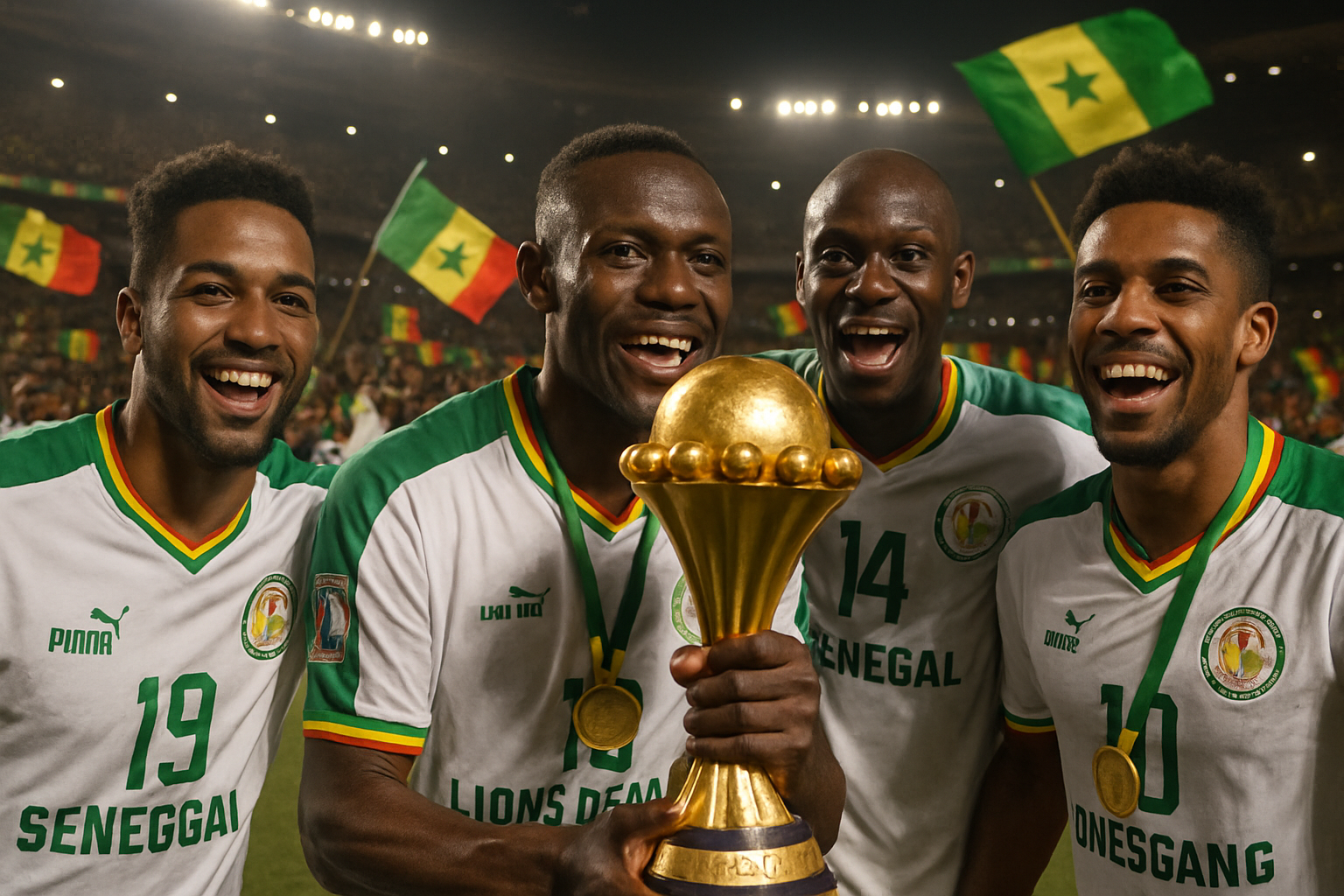
Senegal's national football team defiantly presented the disputed 2025 Africa Cup of Nations trophy to thousands of supporters at the Stade de France on Saturday before defeating Peru 2-0, escalating one of the most controversial governance crises in African football history.
The Lions de la Teranga's public celebration came despite the Confederation of African Football's (CAF) unprecedented decision in March to strip Senegal of the AFCON 2025 title and award it to Morocco months after the tournament's completion. The ceremony represented a bold rejection of continental football authority amid ongoing legal proceedings at the Court of Arbitration for Sport (CAS).
Historic Legal Challenge Unfolds
In a dramatic development that has reshaped the controversy, CAS imposed a conservatory measure in March 2026 freezing Morocco's disputed title pending final arbitration—the first time in AFCON history that a continental championship has been suspended months after completion. The Swiss tribunal's intervention validates Senegal's strategy of pursuing international arbitration rather than accepting CAF's ruling.
Senegalese Football Federation (FSF) President Augustin Senghor has maintained his defiant stance, declaring "will not surrender trophy" as the legal battle intensifies. Sports law expert Me Moustapha Kamara, with 25 years of experience, identified significant "irregularities" in CAF's decision to declare the team forfeit two months after tournament completion.
"We are under shock, but the trophy will remain in Senegal. This is not just about football—it's about justice and sporting integrity."
— Ferdinand Coly, Former Senegal International
Commanding Victory Demonstrates Championship Quality
On the pitch, Senegal showcased the form that earned them continental glory with a professional 2-0 victory over Peru. Nicolas Jackson opened the scoring in the 38th minute with a clinical finish from an Ibrahim Mbaye cross, while Ismaila Sarr sealed the win with a second-half counter-attack goal that demonstrated the tactical discipline maintained under coach Aliou Cissé.
The match served as preparation for the 2026 World Cup, with the team showing no signs of distraction from the ongoing legal battle. The performance reinforced Senegal's claim to championship-level quality despite the administrative controversy surrounding their title.
Unprecedented International Support
The controversy has generated remarkable international solidarity for Senegal's position. Spanish club Cádiz CF launched a "Todos con vosotros" (Everyone with you) campaign, while former Ballon d'Or winner George Weah publicly criticized CAF's decision. Egyptian football legend Ahmed Hossam Mido denounced the ruling as "the greatest scandal in African football history."
European media outlets have been scathing in their assessment, with French publications describing CAF's decision as the "joke of the century," while Portuguese media have reported corruption investigations related to the matter. Swedish coverage characterized the situation as an "unprecedented story" in international football governance.
Government-Level Opposition Intensifies
The dispute has transcended sports, with Senegal's government formally backing the legal challenge. Prime Minister Ousmane Sonko's administration has described CAF's decision as "grossly illegal" and demanded an international investigation—representing the first time an African government has formally accused the continental football body of corruption regarding a title decision.
This governmental intervention adds significant diplomatic weight to the controversy and highlights broader concerns about institutional governance across African sports administration. The case has become a template for challenging continental football body decisions through global sports law mechanisms.
Historical Context and Precedent Concerns
Legal experts note troubling inconsistencies in CAF's application of regulations. The decision to strip Senegal's title marks the first time in AFCON history that a championship has been revoked months after tournament completion. Critics point to Morocco's 2019 walkoff incident, where the team "never returned to finish the encounter" without facing similar retroactive sanctions.
CAF President Patrice Motsepe has acknowledged that the events have "damaged trust in African football" while claiming that "Senegal has the right to appeal." This admission underscores the fundamental governance crisis facing the continental body during a critical period of expanded World Cup participation and increased global scrutiny.
Commercial and Diplomatic Ramifications
The ongoing dispute has strained Morocco-Senegal relations beyond previous football-related incidents, including the imprisonment of 18 Senegalese supporters in Morocco following earlier matches. Both nations' 2026 World Cup preparations have been affected by the legal battle, while prize money redistribution, sponsorship complications, and broadcast rights issues require resolution.
The controversy risks undermining continental reputation for transparent governance during a strategic period of international partnerships, including AfCFTA implementation and various infrastructure projects across Africa requiring institutional credibility.
CAS Arbitration: A Watershed Moment
The Court of Arbitration for Sport proceedings represent far more than a simple sporting dispute. The case is being monitored globally as a precedent-setting example for challenging continental football body decisions and could establish new templates for post-tournament administrative reviews.
Legal expert Romain Bizzini had previously stated that Senegal's chances were "quite weak," but the CAS conservatory measure suggests strong merit in the FSF's arguments. The tribunal must now examine the legality of CAF's post-tournament title reversal and determine proper procedural compliance.
Broader Implications for African Football
This crisis occurs amid broader continental developments that require transparent governance, from the Democratic Republic of Congo to infrastructure projects spanning from Algeria to Angola. The sporting scandal risks undermining Africa's reputation during strategic international partnerships, including the US-EU-Japan Critical Minerals Partnership involving seven African countries.
The resolution will determine not only who holds the 2025 AFCON title but also establish frameworks for sporting integrity preservation versus institutional interpretation balance in modern continental competition. The case tests whether African institutions can maintain credibility under international legal scrutiny.
The Road Ahead
As CAS proceedings continue, the coming weeks will be decisive in determining the rightful AFCON 2025 champion while establishing sporting integrity preservation frameworks for future continental competitions. The African football community faces a fundamental choice between governance reform and a prolonged credibility crisis that could affect development efforts across the continent.
Senegal's defiant display at the Stade de France represents more than a trophy ceremony—it symbolizes a nation's refusal to accept what it views as institutional injustice. The outcome of this unprecedented legal challenge will reverberate through African football for generations, potentially determining whether continental institutions can adapt to 21st-century governance standards or face continued erosion of their authority.
The stakes extend far beyond football, touching on fundamental questions about democratic accountability, rule of law, and the capacity of African institutions to maintain credibility in an interconnected world. As international observers monitor this precedent-setting case, the resolution will influence global patterns of institutional governance and public confidence in continental bodies for decades to come.