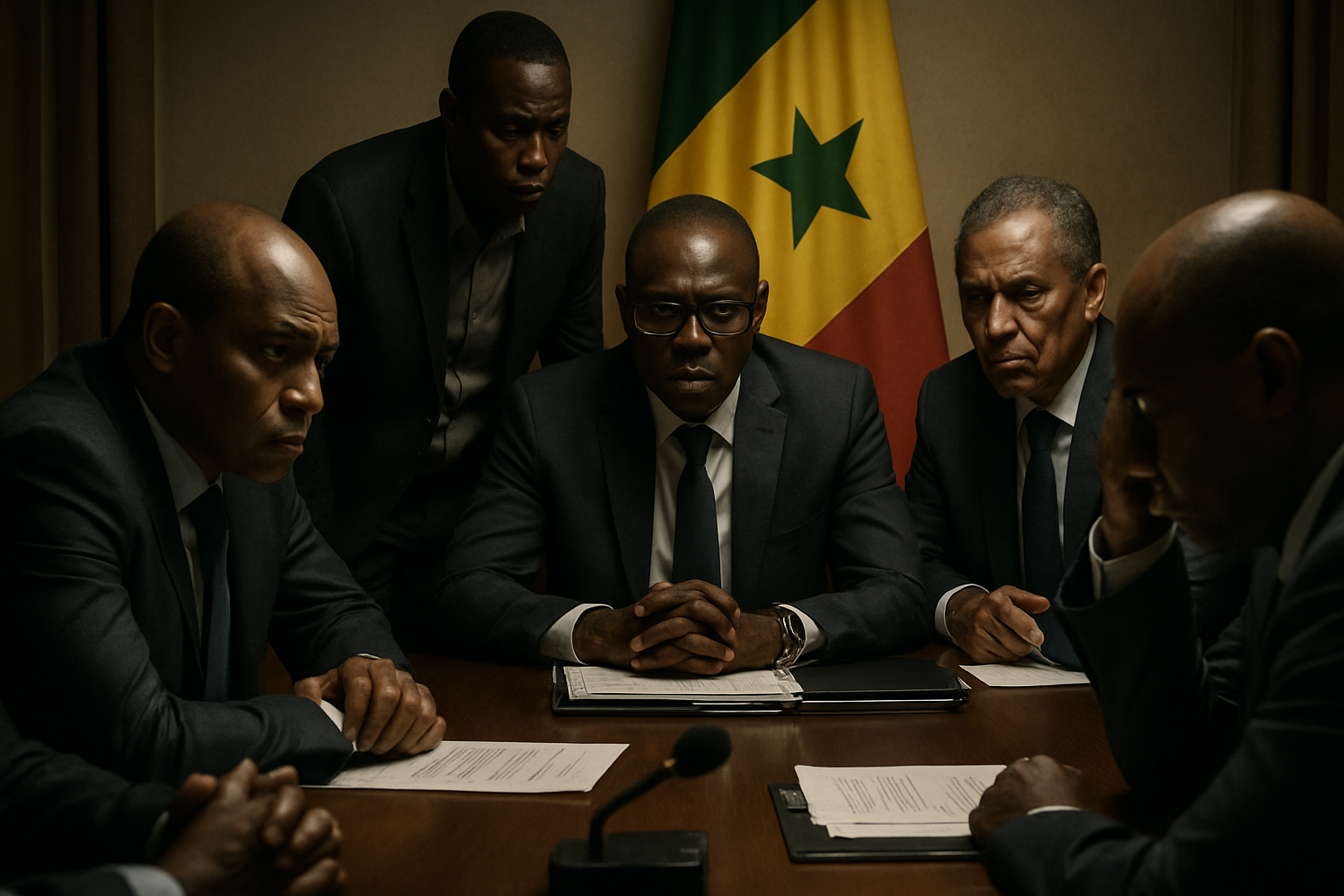
The Senegalese Football Federation is experiencing unprecedented internal tensions during a critical executive committee meeting, while former First Lady Marième Faye Sall has drawn public attention for her transformed appearance during a spiritual pilgrimage to Mecca for the sacred Oumra during Ramadan.
The developing crisis within Senegal's premier sports governing body comes at a particularly sensitive time for the nation's football administration, which has faced mounting pressure following recent controversies and organizational challenges that have tested the federation's leadership structure.
Executive Committee Under Pressure
Sources close to the Senegalese Football Federation describe the current executive committee meeting as operating "under high tension," with significant disagreements emerging over key administrative and strategic decisions. The atmosphere within the federation's headquarters has reportedly become increasingly strained as officials grapple with complex governance issues that threaten to destabilize the organization.
The tensions within the federation occur against the backdrop of broader challenges facing Senegalese sports administration, including recent sanctions imposed by the Confederation of African Football (CAF) following the 2025 AFCON final controversy. In January 2026, CAF imposed heavy sanctions on both Morocco and Senegal following misconduct during the championship final in Rabat, despite Senegal's victory.
The sanctions included a $50,000 fine for the federation and individual penalties for key figures including coach Pape Bouna Thiaw, who received a 5-match suspension plus a $10,000 fine. Players Ismaïla Sarr and Iliman Ndiaye each received 2-match suspensions and $5,000 fines, adding to the administrative burden facing the current leadership.
Historical Context of Federation Challenges
The current crisis reflects broader patterns of governance challenges that have affected African football federations in recent years. The intersection of sports administration and political pressures has created complex dynamics within organizations that must balance competitive success with transparent governance.
Earlier this year, Senegalese football fans faced international controversy when 18 supporters were sentenced to prison terms ranging from 3-12 months by a Moroccan court on hooliganism charges. The incident sparked tensions in Senegal, particularly in Rufisque, where protests erupted following news of the convictions, adding another layer of complexity to the federation's operational environment.
Diplomatic Developments and Regional Relations
The sports tensions have coincided with broader diplomatic efforts to maintain regional stability. Senegalese Prime Minister Ousmane Sonko had previously visited Morocco to repair diplomatic relations after the AFCON incidents, demonstrating the interconnected nature of sports governance and international relations in West Africa.
These diplomatic initiatives highlight how sports federations operate within broader political frameworks, where decisions made in boardrooms can have far-reaching implications for bilateral relationships and regional cooperation. The current executive committee tensions may therefore have consequences beyond the immediate sports administration sphere.
Former First Lady's Spiritual Journey
In a separate but noteworthy development, former First Lady Marième Faye Sall has been photographed in Mecca undertaking the Oumra pilgrimage during the sacred month of Ramadan. Public observers have noted her refreshed appearance, with many commenting that "she has rejuvenated" during this spiritual journey.
The Oumra, considered a minor pilgrimage to Islam's holiest sites, holds special significance when performed during Ramadan. According to authentic Islamic traditions, accomplishing the Oumra during Ramadan is equivalent to performing Hajj alongside the Prophet Muhammad (peace be upon him), making this a particularly meaningful spiritual undertaking.
Marième Faye Sall's decision to undertake this pilgrimage represents a personal spiritual journey that has resonated with many Senegalese citizens who view such religious devotion as exemplary leadership, even in retirement from public life.
Broader Political Context
These developments occur within the broader context of Senegal's evolving political landscape under President Bassirou Diomaye Faye's administration. The government has faced various challenges, including recent controversial legislation regarding LGBTQ+ rights that has drawn international attention and concern from human rights organizations.
The contrast between the tense atmosphere within sports administration and the peaceful spiritual journey of the former First Lady reflects the multiple pressures and transitions characterizing contemporary Senegalese society. These parallel narratives demonstrate how different aspects of public life continue to evolve following the country's recent political transitions.
Regional Sports Governance Patterns
The challenges facing the Senegalese Football Federation mirror broader patterns of sports governance reform across Africa. Recent months have seen increased scrutiny of federation management across the continent, with organizations like CAF implementing stricter oversight and transparency requirements.
The tension within Senegal's executive committee comes at a time when African football federations are under pressure to modernize their governance structures, implement transparent financial management, and maintain competitive excellence while navigating complex political and social pressures.
Future Implications
The resolution of the current executive committee tensions will likely have significant implications for Senegalese football's immediate future. With important continental competitions approaching and ongoing efforts to develop youth football infrastructure, stable federation leadership remains crucial for the country's sporting ambitions.
Meanwhile, the positive public reception of Marième Faye Sall's spiritual journey demonstrates the continued respect for religious devotion and personal transformation within Senegalese society. Her pilgrimage serves as a reminder of the importance of spiritual renewal and personal reflection, even for former public officials.
As these parallel narratives continue to unfold, they reflect the complex interplay between sports governance, political transition, and cultural values that characterizes contemporary Senegal. The federation's ability to resolve its current challenges while maintaining transparent governance will be crucial for preserving the integrity of Senegalese football administration.
The coming weeks will likely provide greater clarity regarding both the resolution of the federation's executive tensions and the broader implications of these developments for Senegal's sports and political landscape.