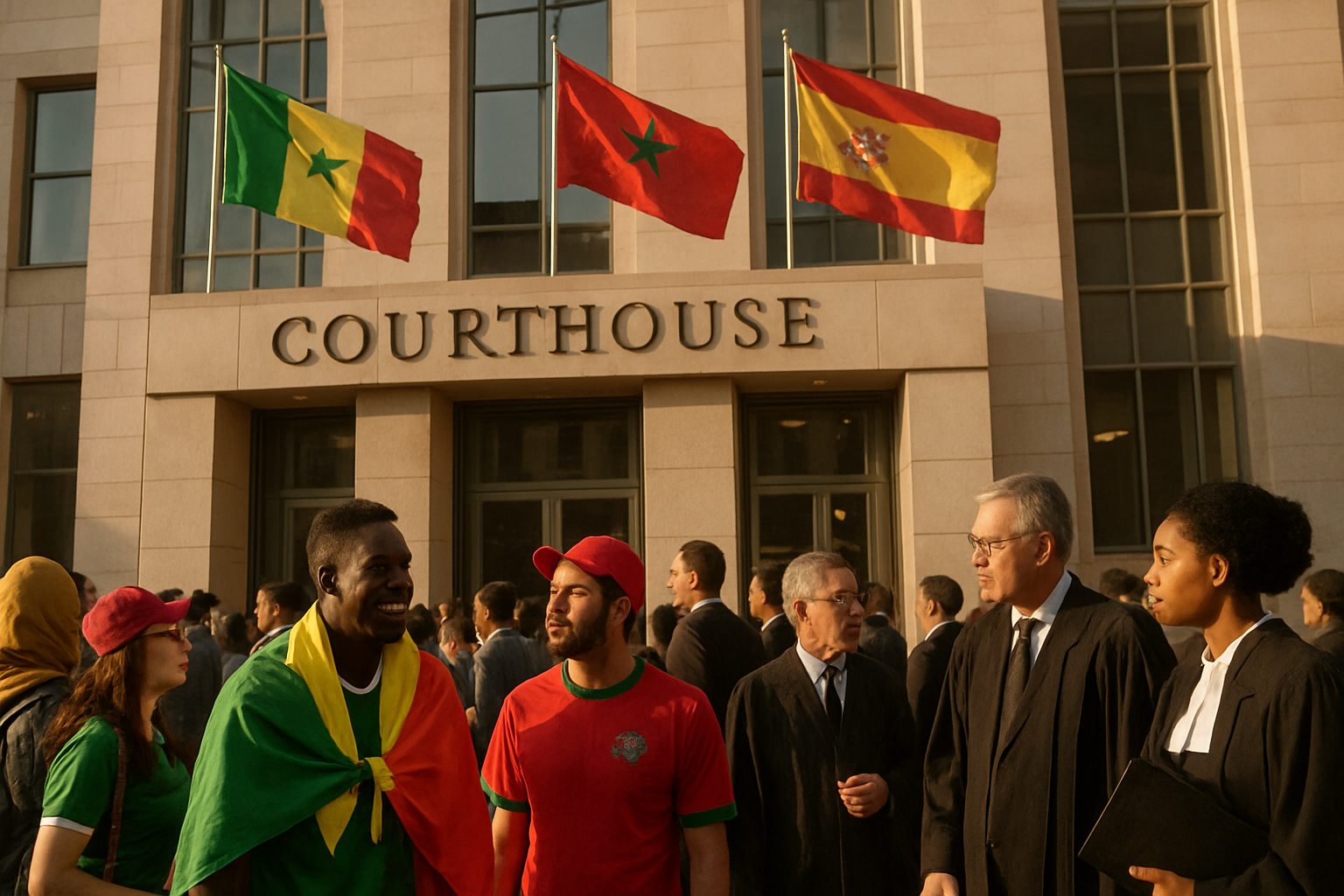
A tale of two legal systems emerges as Senegalese appeals courts make crucial progress in the case of 18 football supporters detained in Morocco, while in Spain, an undocumented Senegalese man achieves a historic victory forcing state compliance with immigration procedures.
These parallel developments demonstrate the evolving landscape of West African legal and immigration rights across international jurisdictions, highlighting both systemic challenges and emerging pathways to justice for Senegalese nationals abroad.
Morocco Appeals Court Advances Supporters' Case
The appeals process for 18 Senegalese football supporters sentenced to prison terms in Morocco has been rescheduled to March 30, 2026, marking another procedural milestone in a case that has strained Morocco-Senegal relations since February 2026. The supporters, initially detained for over a month following incidents during a football match, had been sentenced to terms ranging from 3-12 months on hooliganism charges.
The case has become emblematic of broader tensions in West African football diplomacy. In January 2026, both Morocco and Senegal faced CAF sanctions following misconduct during the 2025 AFCON final in Rabat, which Senegal won. The federations were fined $50,000 each, with individual sanctions including Senegal's coach Pape Bouna Thiaw receiving a 5-match suspension plus $10,000 fine, while players Ismaïla Sarr and Iliman Ndiaye each received 2-match bans plus $5,000 fines.
"This case raises fundamental questions about the treatment of foreign nationals and the proportionality of sentences for football-related offenses."
— Legal Expert familiar with Morocco-Senegal relations
The appeals court postponement follows diplomatic efforts by Senegalese Prime Minister Ousmane Sonko, who previously visited Morocco to repair diplomatic relations after the AFCON incidents. The case continues to test the intersection of sports, law enforcement, and international relations in the region.
Spanish Immigration Compliance Victory
In a separate but equally significant development, Augustin Ndour, an undocumented Senegalese migrant, has achieved what legal experts are calling a landmark victory in forcing Spanish state compliance with immigration procedures. The exclusive Planet News investigation reveals how Ndour successfully compelled Spanish authorities to follow proper legal channels despite his undocumented status.
The case represents a rare instance of an individual without legal status successfully holding a European state accountable to its own immigration laws. Details of Ndour's legal strategy demonstrate sophisticated understanding of Spanish administrative procedures and international human rights frameworks.
Broader Legal System Implications
These developments occur within the context of unprecedented strain on global judicial systems. Recent analysis shows courts worldwide experiencing pressure from case backlogs, resource constraints, and evolving social expectations while maintaining their constitutional guardian roles.
The European legal landscape has seen significant developments in 2026, including comprehensive reforms addressing immigration, judicial independence, and international cooperation. Enhanced coordination between European law enforcement agencies has reached new sophistication levels, with specialized corruption and organized crime courts providing templates for international cooperation.
Democratic Accountability and Immigration Rights
Both cases highlight the evolving nature of democratic accountability in immigration and legal contexts. The Morocco appeals process demonstrates judicial systems' capacity to review and potentially correct initial decisions, while the Spanish compliance case shows how individual advocacy can force state adherence to legal procedures.
Legal scholars note these cases contribute to evolving international jurisprudence regarding migrant rights and state obligations. The success of individual challenges to state power, particularly by undocumented immigrants, establishes important precedents for vulnerable populations seeking justice within European legal frameworks.
"These cases demonstrate that legal systems, when functioning properly, can provide pathways to justice even for the most vulnerable populations."
— Immigration Rights Advocate
Regional Diplomatic Implications
The Morocco-Senegal supporters case continues to influence broader West African diplomatic relations. The appeals process represents an opportunity for both nations to demonstrate commitment to fair legal procedures while managing the complex intersection of sports, nationalism, and international law.
Meanwhile, the Spanish compliance victory may encourage other undocumented migrants to pursue legal remedies, potentially influencing European immigration policy discussions. Spain's response to the Ndour case could serve as a model for other EU member states facing similar challenges.
International Context and Precedent
These legal developments occur amid broader global challenges to democratic institutions and immigration systems. From Iranian women's soccer players seeking asylum in Australia to comprehensive European social media regulation, 2026 has witnessed unprecedented tests of international legal cooperation and human rights protection.
The success of both the appeals process in Morocco and the state compliance victory in Spain demonstrates that democratic institutions, despite facing mounting pressures, retain fundamental capacity to deliver fair and transparent justice regardless of defendants' or plaintiffs' status.
Future Implications
Legal experts anticipate these cases will influence future approaches to cross-border legal cooperation and immigrant rights advocacy. The March 30 appeals hearing in Morocco will be closely monitored for its potential impact on Morocco-Senegal relations and broader CAF disciplinary frameworks.
The Spanish compliance case, meanwhile, may establish templates for other undocumented immigrants seeking to hold European states accountable to their own legal procedures. Success in forcing state compliance demonstrates the potential for individual advocacy to create systemic change within immigration systems.
Both developments underscore the critical importance of sustained political commitment to judicial independence, adequate resource allocation, and public support for rule of law principles in addressing 21st-century challenges to democratic governance and human rights protection.