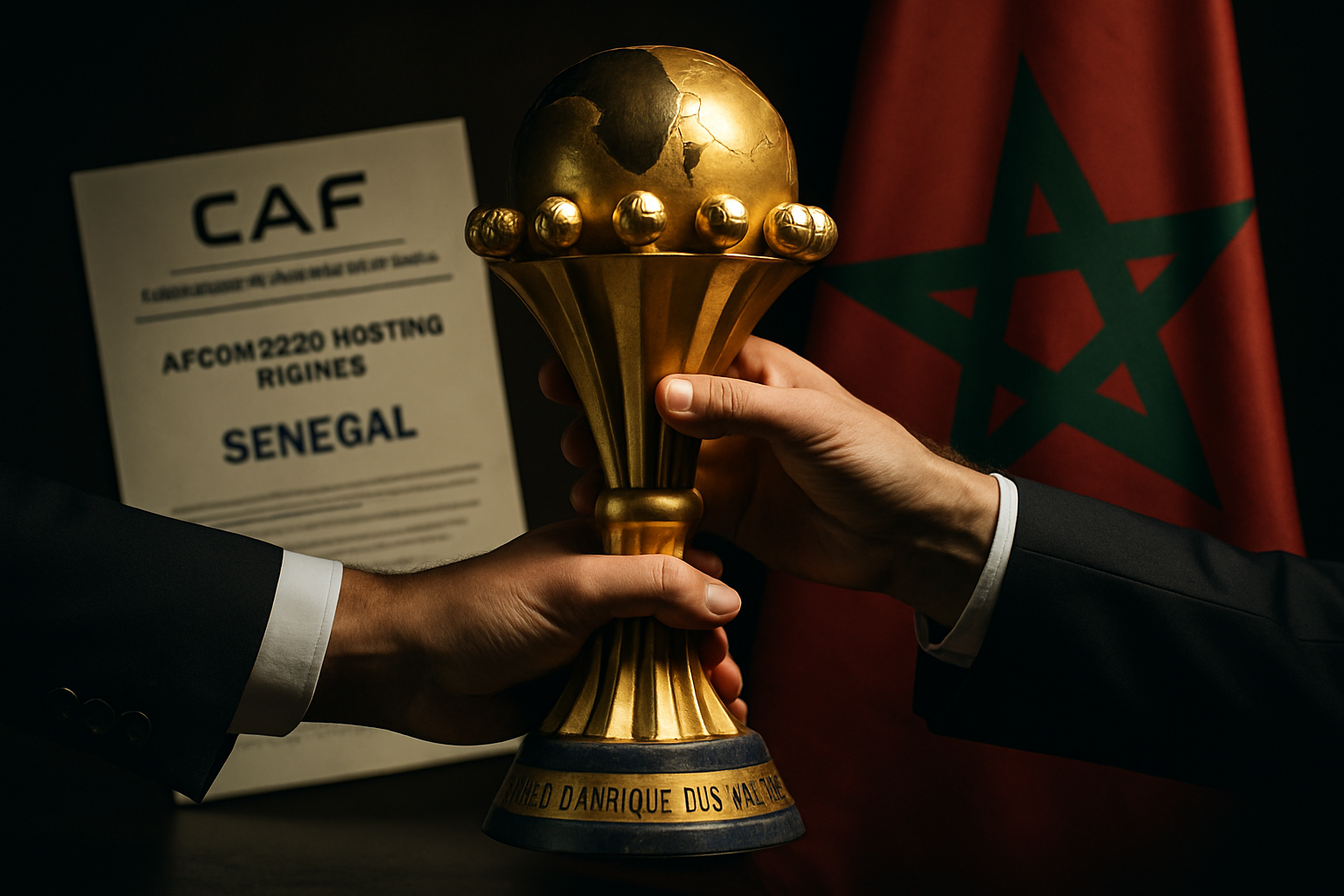
The Confederation of African Football (CAF) has delivered one of the most shocking decisions in African football history, stripping Senegal of their 2025 Africa Cup of Nations title and declaring Morocco the champion via a 3-0 forfeit victory, two months after the Lions of the Téranga won the tournament on the field.
The CAF appeals board announced on Tuesday, March 17, 2026, that Senegal is "declared to have forfeited the final" following incidents during the January 18, 2026 final in Rabat, where several Senegalese players temporarily left the pitch in protest over controversial refereeing decisions. The original 1-0 victory for Senegal in extra time has been overturned and recorded as a 3-0 win for Morocco under articles 82 and 84 of the competition regulations.
Unprecedented Decision Rocks African Football
This marks the first time in AFCON history that a title has been stripped from the winning team months after the tournament concluded. The decision has sent shockwaves through African football, with many questioning the timing and legitimacy of overturning a result so long after the final whistle.
According to multiple sources, the appeals board ruled in favor of Morocco's formal complaint, which cited the temporary walkoff by Senegalese players during the final as grounds for forfeiture. The incident occurred after a penalty was awarded to Morocco following VAR intervention, though the spot kick was subsequently missed by Brahim Díaz.
"This is a historic moment that changes everything we thought we knew about African football governance. Such decisions taken months after a tournament conclusion set a dangerous precedent."
— Claude Le Roy, Former African National Team Coach
What Happened During the Final
The controversial January 18 final at the Prince Moulay Abdellah Stadium in Rabat was marked by several contentious moments. The most significant incident occurred when multiple Senegalese players, led by captain Idrissa Gueye, briefly left the field in protest over what they perceived as biased officiating.
The walkoff lasted approximately five minutes before Senegal's coaching staff convinced the players to return. The team went on to score the winning goal in extra time through a stunning strike, seemingly securing their second AFCON title. However, Morocco immediately filed a formal protest with CAF, citing Article 84 of the tournament regulations which deals with team forfeiture.
Sources close to CAF indicate that the appeals process was thorough, with testimony from match officials, video analysis of the incident, and legal arguments from both federations. The Moroccan Football Federation argued that any team leaving the field of play constitutes abandonment under tournament rules, regardless of whether they return.
International Reactions and Controversy
The decision has sparked fierce debate across the African football community and beyond. Senegalese officials have denounced the ruling as "unjust" and "unprecedented," with former federation president Augustin Senghor declaring that Senegal will not surrender the trophy and will escalate the matter to international sporting courts.
In Rabat, celebrations erupted in the streets as news of the decision broke, with thousands of Moroccan fans gathering to celebrate what they view as rightful recognition of their team's hosting efforts during the tournament.
European football officials have expressed concern about the precedent this sets for international competitions. Several confederation leaders privately questioned whether such delayed decisions undermine the integrity of tournament results and could open the door for similar challenges in future competitions.
Legal and Regulatory Framework
The CAF appeals board's decision was based on Articles 82 and 84 of the AFCON regulations, which state that teams can be declared forfeit for refusing to play or abandoning the field. However, legal experts in sports law note that applying these rules to a temporary protest that lasted only minutes, rather than a permanent abandonment, represents an unusually strict interpretation.
The decision also raises questions about the appeals timeline, as such rulings are typically made within days or weeks of incidents, not months later. CAF has defended the timing, stating that the appeals process required extensive investigation and legal review given the unprecedented nature of the case.
Impact on Upcoming World Cup
The timing of this decision is particularly significant as both Morocco and Senegal are preparing for the 2026 FIFA World Cup in North America. Senegal, drawn in Group D with Norway, is now facing a major disruption to their preparations, while Morocco can claim continental championship momentum heading into the global tournament.
FIFA has yet to comment on whether this change affects any World Cup seeding or preparation arrangements, though sources suggest the world governing body will recognize CAF's decision as the official tournament result.
Historical Context and Precedents
While forfeits and protests are not uncommon in football, the retroactive stripping of a major continental title is virtually unprecedented. The closest comparison might be various Olympic Games situations where medals were stripped years later due to doping violations, but those involved individual athletes rather than team sports decided on the field.
The decision also comes against the backdrop of Morocco's significant investment in football infrastructure and their successful hosting of the 2025 AFCON, which was widely praised for its organization and facilities. Some observers suggest this may have influenced the appeals board's deliberations, though CAF officials deny any such considerations.
What Happens Next
Senegal has indicated they will challenge the decision through all available legal channels, potentially including the Court of Arbitration for Sport (CAS) in Switzerland. Legal experts suggest such an appeal could take months to resolve, creating further uncertainty about the tournament's official outcome.
Meanwhile, Morocco is expected to receive the AFCON trophy in an official ceremony, though the timing and location remain unclear. The Moroccan Football Federation released a statement expressing "satisfaction with the correct application of tournament regulations" while calling for "unity in African football."
For African football, this decision represents a watershed moment that could influence how future tournaments are officiated and how protests are handled. The precedent of overturning results months after competition conclusion may force CAF to revise its regulations and appeals procedures to provide clearer guidelines for similar situations.
The controversy also highlights the ongoing tensions between sporting integrity and administrative interpretation of rules, a debate that extends far beyond African football to the global sporting community. As legal challenges likely continue, the true final chapter of AFCON 2025 remains to be written.