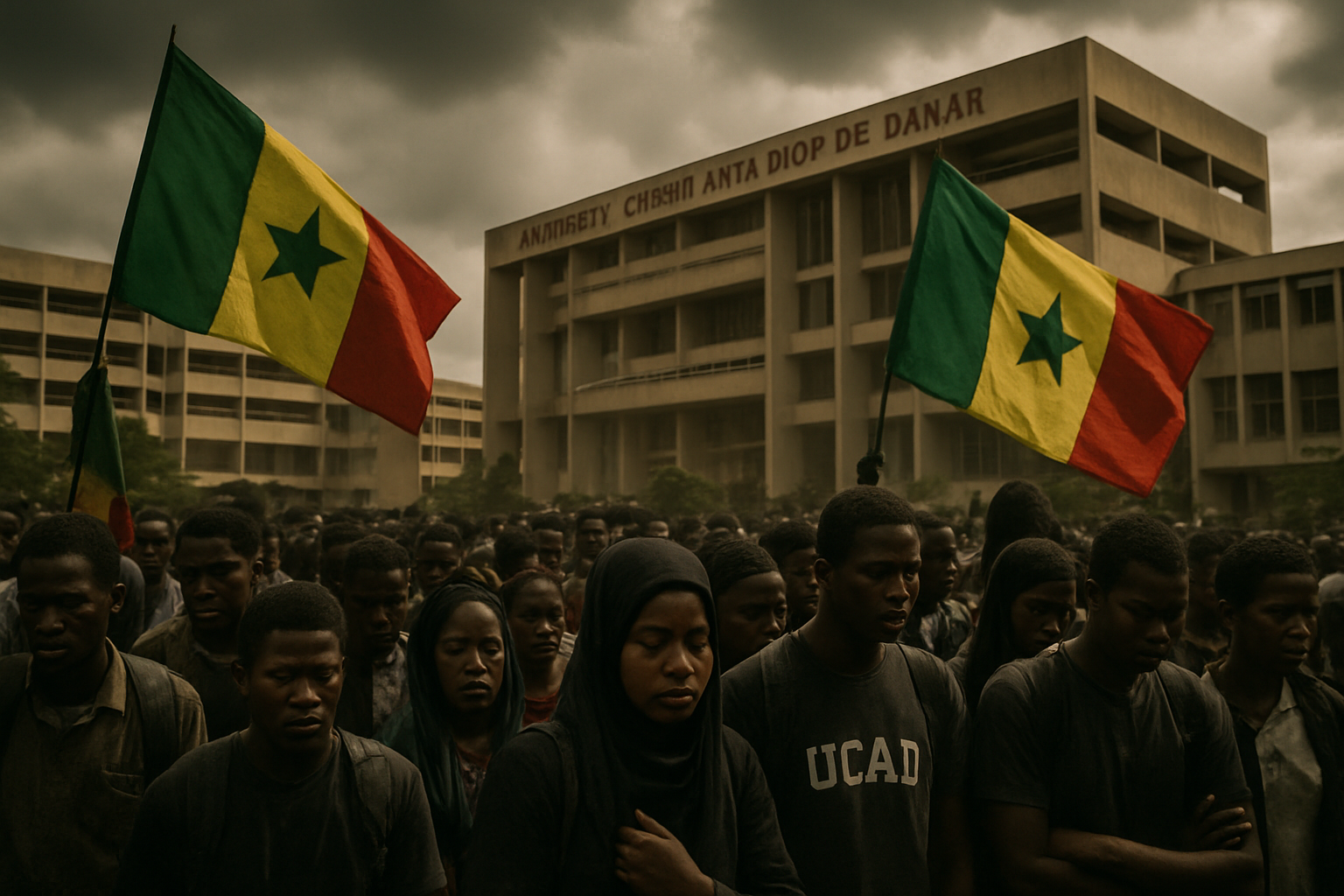
The death of a medical student during violent confrontations at Senegal's University Cheikh Anta Diop (UCAD) has ignited a national crisis, prompting government investigation, institutional closure, and sharp criticism of President Bassirou Diomaye Faye's handling of higher education challenges.
Abdoulaye Ba, a medical student at UCAD, died during clashes between students and security forces at the Dakar campus. French police commissioner sources, working in coordination with the central Dakar commissariat led by Commissioner Divisionary Mamadou Tendeng, indicated that the student may have jumped from a building during the confrontations, though the exact circumstances remain under investigation.
Crisis Response and Government Action
The tragic incident has prompted swift but controversial government response. President Bassirou Diomaye Faye faces mounting criticism for what opposition groups describe as an "incomprehensible error" in crisis management. Students issued a powerful collective statement expressing their anguish: "We are starved, tortured, betrayed, deceived, disappointed, and one of our own has been killed."
The gravity of the situation led to immediate institutional response. The Centre des œuvres universitaires de Dakar (COUD) announced the activation of a psychological support cell specifically designed to provide counseling and mental health assistance to students traumatized by recent events. This emergency measure reflects the depth of psychological impact on the campus community.
Security Force Response Under Scrutiny
Colonel Abdoulaye Aziz Ndao, a specialist and instructor in crowd control, delivered sharp criticism of security force operations during the student demonstrations. In statements broadcast on FDS TV, he condemned what he characterized as excessive force, stating that while "the use of force is acceptable," the approach taken by defense and security forces was inappropriate for the campus environment.
His critique highlights broader concerns about police tactics in educational settings, particularly given the vulnerable nature of student populations and the importance of preserving academic freedom and campus safety. The colonel's intervention adds professional military perspective to growing calls for review of security protocols in university contexts.
Historical Context of Educational Crisis
This incident represents the culmination of mounting pressures within Senegal's higher education system. The crisis has been compounded by university restaurant closures, creating food insecurity for thousands of students who depend on campus dining facilities. These closures have created a perfect storm of infrastructure failures, resource constraints, and student welfare challenges.
"We are starved, tortured, betrayed, deceived, disappointed, and one of our own has been killed."
— Student Statement, UCAD
Prominent Senegalese rapper Niit Doff condemned the situation as "flagrant injustice," reflecting broader cultural and artistic community concern about the treatment of students and the deteriorating conditions at the country's premier university.
Institutional Infrastructure Challenges
The University Cheikh Anta Diop crisis reflects deeper systemic challenges facing African higher education institutions. UCAD, as Senegal's flagship university, serves as a critical indicator of the country's educational health and capacity to provide quality higher education to its population.
Restaurant closures have created unprecedented food security challenges for thousands of students, many of whom rely on subsidized campus meals as their primary source of nutrition. This infrastructure failure demonstrates the intersection of economic constraints, institutional management challenges, and basic student welfare needs.
Government Investigation and Accountability
The government has ordered a comprehensive investigation into the circumstances surrounding Ba's death and the broader campus violence. This investigation will examine not only the immediate events leading to the tragedy but also the systemic issues that created conditions for such violent confrontation.
The investigation's findings will likely have significant implications for university security protocols, student welfare systems, and government higher education policy. International observers are watching closely as Senegal attempts to address fundamental challenges in educational governance and student safety.
Regional and International Implications
The UCAD crisis occurs within a broader context of educational challenges across West Africa and sub-Saharan Africa. The incident reflects common pressures facing university systems across the region, including inadequate funding, infrastructure deficits, and political instability affecting educational institutions.
International media coverage has highlighted the incident as indicative of broader challenges facing educational systems in developing nations, particularly the difficulty of maintaining quality education amid resource constraints and political pressures.
Student Welfare and Mental Health Response
The activation of psychological support services by COUD represents recognition of the profound trauma experienced by the campus community. The death of a peer in violent circumstances creates lasting psychological impact requiring professional intervention and ongoing support.
This response aligns with global trends toward comprehensive mental health support in educational settings, acknowledging that academic success requires not only intellectual resources but also emotional and psychological safety nets for students facing crisis situations.
Path Forward and Reform Requirements
Resolution of the UCAD crisis will require comprehensive reform addressing multiple dimensions simultaneously. Key requirements include sustained political commitment to higher education funding, infrastructure investment in student welfare facilities, transparent investigation of security force conduct, and establishment of early warning systems for institutional instability.
Success will depend on stakeholder engagement including students, faculty, administration, government officials, and civil society organizations working collaboratively to address both immediate safety concerns and underlying systemic challenges that created conditions for crisis.
The tragic death of Abdoulaye Ba serves as a sobering reminder of the human cost when educational institutions fail to provide safe, supportive environments for learning. Senegal's response to this crisis will determine whether it becomes a catalyst for comprehensive educational reform or another example of missed opportunities for institutional improvement in African higher education.