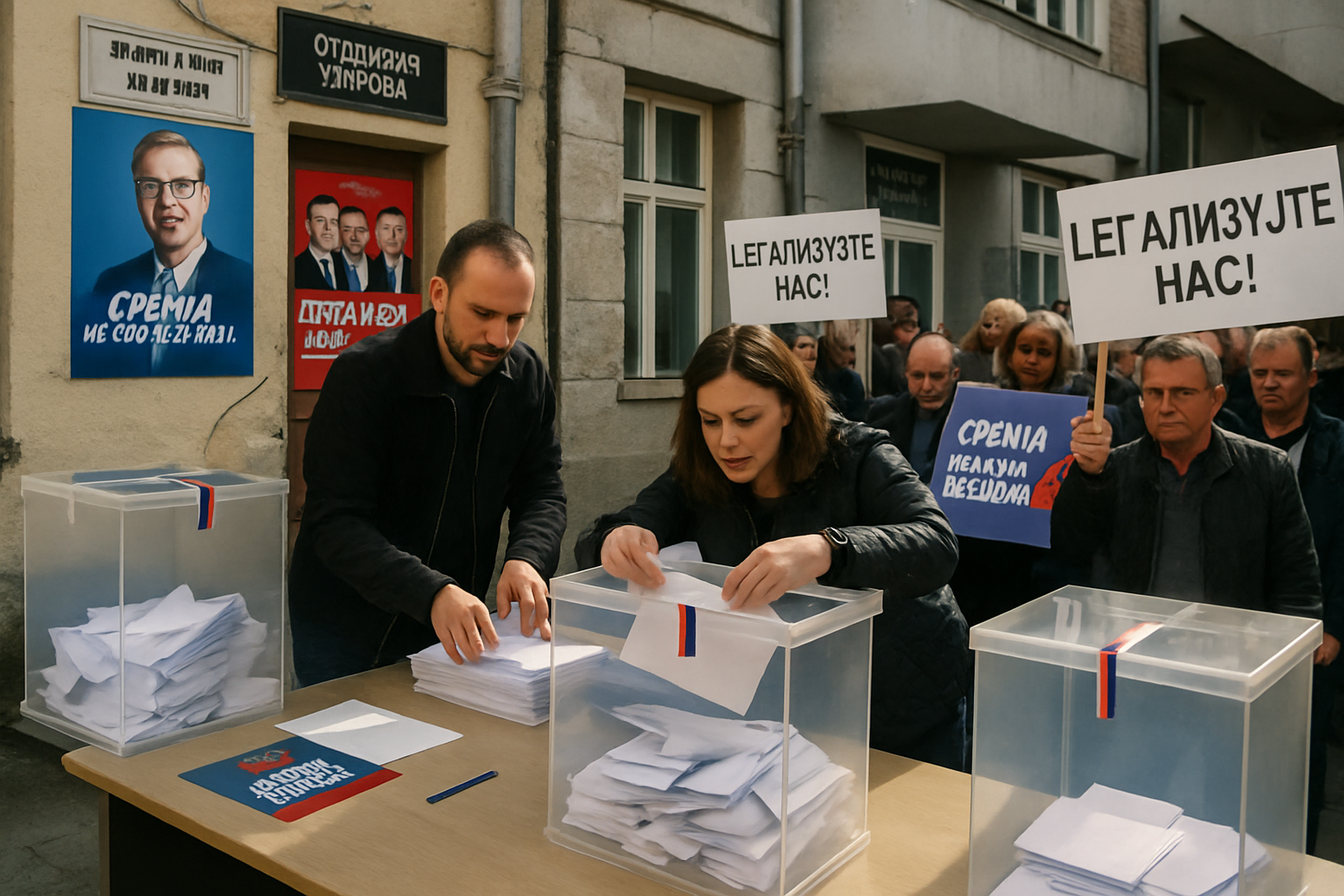
Serbian municipal politics are intensifying as election campaigns heat up across multiple cities while protesters demand urgent intervention in a controversial land registration dispute on Zlatibor mountain involving thousands of hectares of disputed territory.
The political landscape reveals a complex intersection of democratic competition and infrastructure governance challenges, with opposition candidates struggling against institutional obstacles while citizens mobilize around land rights issues that touch the heart of Serbia's development strategy.
Municipal Election Campaigns Face Institutional Hurdles
In Majdanpek, opposition candidate Irena Barbulović from the "New Day" list has accused the ruling Serbian Progressive Party (SNS) of conducting an extended two-month campaign while warning voters against unrealistic promises. Speaking to N1 Info, Barbulović emphasized her platform's focus on equal opportunities for all citizens rather than "fairy tales" that have characterized previous electoral cycles.
"We cannot offer fairy tales, but we can offer equal chances for everyone," Barbulović stated, highlighting the challenge opposition forces face against the well-resourced SNS machine that has dominated Serbian politics for over a decade.
The electoral environment in Majdanpek reflects broader patterns documented in previous Serbian elections, where opposition parties have struggled to compete on equal terms with government-backed candidates who benefit from extensive state resources and media coverage.
Student Movement Challenges Traditional Politics in Knjaževac
In neighboring Knjaževac, a student-backed electoral list has emerged as a significant political force, demanding the first position on ballot papers and challenging what they describe as discriminatory treatment by election commissions. Ana Simonović Petković, a lawyer and candidate from the "Knjaževac with Students" list, has accused local election officials of bias against their youth-oriented campaign.
The emergence of student-backed political movements in Serbian municipalities reflects a broader generational shift documented across the region, where young voters increasingly demand accountability and transparency from established political structures. This phenomenon mirrors similar youth-led political transformations observed in neighboring countries throughout 2025 and 2026.
"The city is full of unknown people, and the election commission is not well-intentioned toward us,"
— Ana Simonović Petković, "Knjaževac with Students" candidate
The student movement's complaints about election commission treatment echo broader concerns about institutional fairness that have characterized Serbian electoral processes in recent years, particularly regarding the treatment of opposition and independent candidates.
Zlatibor Land Registration Crisis Escalates
While municipal campaigns unfold, a separate but related governance crisis has erupted over land registration practices on Zlatibor mountain. Čajetina Municipality President Milan Stamatović has demanded the immediate suspension of what he characterizes as "suspicious and non-transparent procedures" involving the registration of thousands of hectares of land in favor of PK Zlatibor.
The land registration dispute represents more than a bureaucratic disagreement—it touches fundamental questions about property rights, development policy, and institutional transparency that have become central to Serbian political discourse. Stamatović's intervention reflects growing public concern about large-scale land transactions that lack adequate public oversight.
The controversy surrounding PK Zlatibor's land acquisitions occurs within the context of Serbia's broader development challenges, where questions about foreign investment, environmental protection, and local community rights often intersect in complex ways.
Infrastructure and Democratic Governance Intersection
These simultaneous developments—municipal election campaigns and land registration disputes—illustrate the complex relationship between infrastructure development and democratic governance in contemporary Serbia. Opposition candidates struggle to compete effectively while citizens mobilize around specific policy issues that directly affect their communities.
The timing of these events is particularly significant given Serbia's ongoing negotiations regarding European Union membership and the country's efforts to demonstrate progress on rule of law and democratic institutions. International observers have consistently highlighted concerns about electoral fairness and property rights protection as key areas requiring improvement.
Historical context from previous Serbian electoral cycles shows a pattern where ruling party advantages in campaign resources and media access have limited genuine political competition, while infrastructure and development decisions often proceed with limited public consultation or transparency.
Regional Political Patterns and International Implications
The developments in Serbian municipalities reflect broader regional trends where traditional political structures face challenges from youth movements and citizen activism around specific governance issues. Similar patterns have emerged across the Western Balkans, where EU accession processes have heightened scrutiny of democratic institutions and rule of law implementation.
The land registration controversy particularly resonates with European Union concerns about property rights protection and transparent governance procedures that are central to accession negotiations. Serbia's handling of such disputes provides concrete examples of whether the country can effectively address institutional challenges required for EU membership.
For regional stability, the outcomes of these municipal elections and resolution of property disputes will influence perceptions of Serbia's democratic development trajectory and its capacity for institutional reform under international pressure.
Citizen Mobilization and Democratic Accountability
The protests over Zlatibor land registration demonstrate an important dimension of Serbian civil society engagement, where citizens mobilize around specific policy issues even when broader electoral competition faces institutional constraints. This pattern suggests that democratic accountability can emerge through multiple channels beyond formal electoral processes.
President Stamatović's public demands for transparency in land registration procedures represent a form of institutional resistance within the system, where local officials use their positions to challenge questionable practices by higher-level authorities or connected interests.
Such developments indicate that democratic governance in Serbia operates through complex interactions between formal electoral competition, civil society mobilization, and institutional resistance within existing government structures.
Looking Forward: Elections and Governance Challenges
As these municipal elections approach, the combination of traditional campaign challenges and specific governance crises provides a revealing snapshot of Serbian democracy's current condition. Opposition candidates continue efforts to compete despite institutional disadvantages, while citizens demand accountability on concrete issues affecting their communities.
The resolution of the Zlatibor land registration dispute will serve as an important test case for Serbia's capacity to address institutional transparency concerns that have been repeatedly highlighted by European Union officials and international democracy monitors.
For Serbian citizens, these simultaneous developments represent both the limitations and possibilities of democratic participation in a system where institutional challenges coexist with spaces for citizen engagement and political competition.
The outcomes of these municipal contests and the resolution of infrastructure disputes will contribute to the broader assessment of Serbia's democratic development trajectory and its progress toward meeting European integration requirements in an increasingly complex regional political environment.