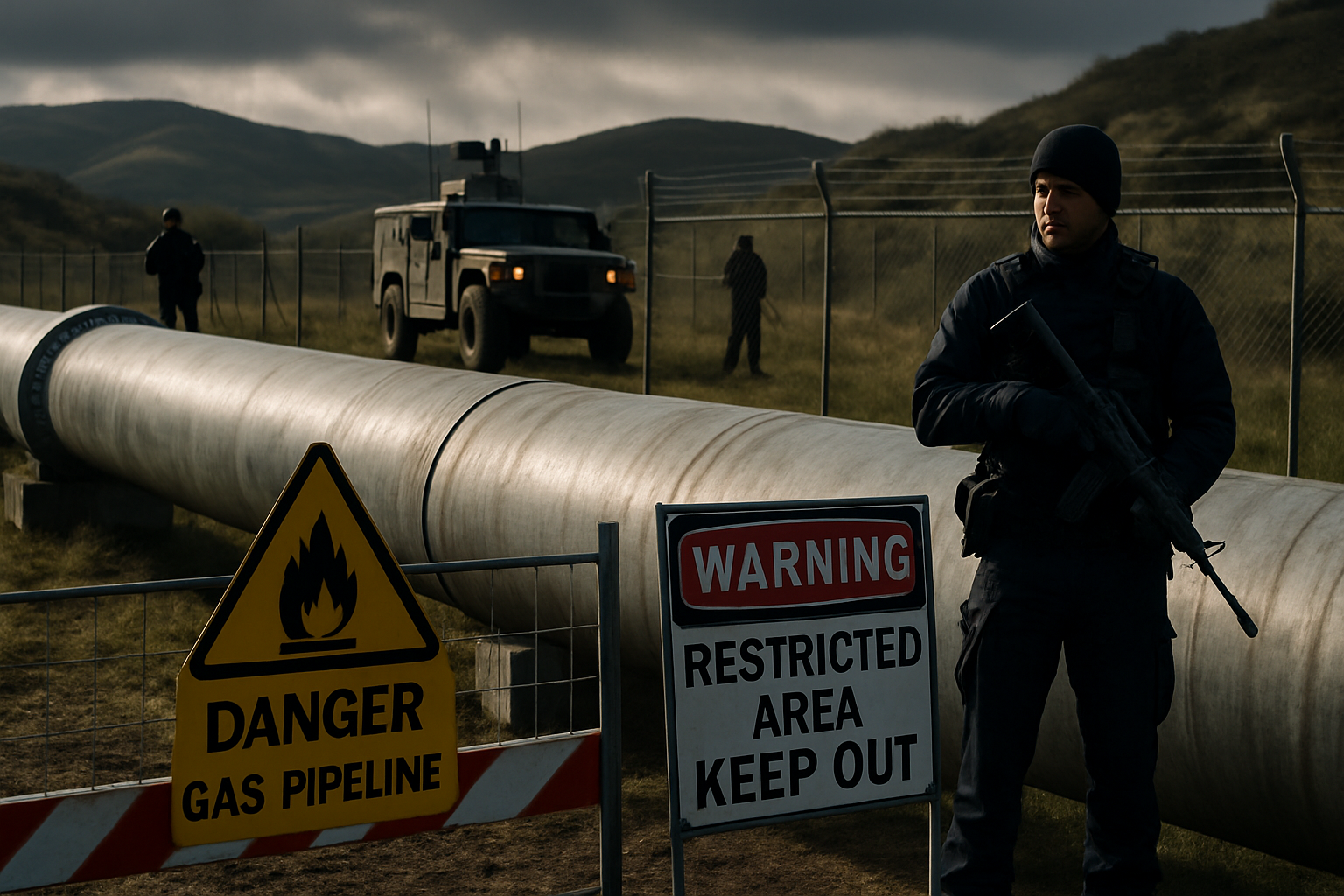
Serbian President Aleksandar Vučić reported Sunday that military and police forces discovered explosive devices near critical gas pipeline infrastructure connecting Serbia and Hungary, in what authorities describe as a prevented terrorist attack targeting vital European energy supplies.
The discovery of two backpacks containing explosives with "destructive power" near the Balkan Stream pipeline route represents a significant escalation in threats to European energy infrastructure amid ongoing regional security challenges. The incident occurred near Kanjiža in Serbia's Vojvodina region, close to the Hungarian border where the pipeline carries Russian gas to Central Europe.
Immediate Security Response
President Vučić immediately informed Hungarian Prime Minister Viktor Orbán of the discovery, prompting Budapest to convene an extraordinary session of the National Defense Council. The timing is particularly sensitive as Hungary faces parliamentary elections on April 12, 2026, with Orbán's Fidesz party facing unprecedented electoral pressure.
According to multiple sources, Serbian military and police units found sophisticated detonation equipment alongside the explosive devices, suggesting a coordinated attempt to damage critical energy infrastructure. Law enforcement officials continue their investigation on-site, searching for additional evidence and working to identify those responsible for the security breach.
"This represents a prevented terrorist attack that could have had devastating consequences for regional energy security"
— Bálint Pásztor, Alliance of Vojvodina Hungarians
Critical Infrastructure at Risk
The targeted pipeline serves as a vital energy artery for both Serbia and Hungary, carrying Russian natural gas through the TurkStream route. This infrastructure has become increasingly important following the March 2026 global energy crisis, when oil prices surged past $119 per barrel and European nations implemented emergency energy measures.
The discovery highlights vulnerabilities in European energy infrastructure at a time when the continent is still recovering from unprecedented supply disruptions. The Balkan Stream pipeline represents a critical link in the regional energy supply chain, with any disruption potentially affecting millions of consumers across Central Europe.
Regional Security Implications
The incident comes against the backdrop of heightened regional tensions and follows a pattern of infrastructure security concerns across Europe. Intelligence sources indicate this represents part of broader threats to energy infrastructure that have emerged following the deterioration of international relations in early 2026.
Hungarian authorities view the discovery as potentially targeting the Orbán government during a crucial electoral period, with opposition parties already capitalizing on energy security concerns in their campaigns. The timing raises questions about whether the planned attack was designed to influence Hungary's political landscape or broader European energy policies.
International Response and Investigation
European Union security officials have been briefed on the incident, with enhanced coordination protocols now in effect for protecting critical energy infrastructure across member states. The discovery prompted immediate reviews of security measures at other strategic energy facilities throughout the region.
Intelligence agencies from multiple countries are reportedly cooperating in the investigation, seeking to determine whether this represents an isolated incident or part of a broader campaign targeting European energy security. The sophisticated nature of the explosive devices suggests professional planning and execution.
Energy Security Context
This security incident occurs as Europe continues to grapple with energy supply vulnerabilities exposed during the March 2026 crisis, when Iran's closure of the Strait of Hormuz triggered the most severe global energy emergency since the 1970s oil shocks. European nations implemented unprecedented emergency measures, including strategic petroleum reserve releases and fuel rationing in some countries.
The discovery near the Serbian pipeline underscores the ongoing fragility of European energy infrastructure and the potential for both geopolitical and direct physical threats to disrupt supplies. Energy security has become a paramount concern for EU policymakers as they seek to diversify supply sources and enhance infrastructure protection.
Political Ramifications
Hungarian media outlets have characterized the incident as following a "Russian scenario," raising questions about potential state-sponsored activities targeting Hungarian sovereignty. The discovery has become a significant issue in Hungary's pre-election discourse, with opposition parties calling for enhanced transparency about energy security measures.
Former Hungarian intelligence chief Péter Buda dismissed the reports as a potential "false flag operation," suggesting the incident may have been orchestrated for political purposes. These conflicting narratives reflect the polarized nature of regional politics and the weaponization of energy security issues in electoral campaigns.
Enhanced Security Measures
Following the discovery, both Serbian and Hungarian authorities have implemented enhanced security protocols along the entire pipeline route. Military patrols have been increased, and additional surveillance systems deployed to monitor critical infrastructure points.
The incident has prompted broader discussions about infrastructure protection across the European Union, with calls for increased investment in security measures and improved international coordination. Energy infrastructure protection has emerged as a top priority for European security agencies.
Ongoing Investigation
Serbian authorities continue their investigation into the source and motivation behind the explosive placement, with law enforcement officials working to identify potential perpetrators and any broader network involved in the planning. The sophisticated nature of the devices suggests significant resources and expertise were involved in the operation.
Intelligence cooperation between Serbian, Hungarian, and broader European security services has intensified as authorities seek to determine whether this represents an isolated incident or part of a coordinated campaign targeting regional energy infrastructure. The investigation's findings could have significant implications for European security policies moving forward.
The April 5, 2026 discovery near Kanjiža represents a watershed moment in European energy security, highlighting the continued vulnerability of critical infrastructure to both geopolitical pressures and direct physical threats. As investigations continue, the incident serves as a stark reminder of the complex security challenges facing European energy systems in an increasingly unstable international environment.