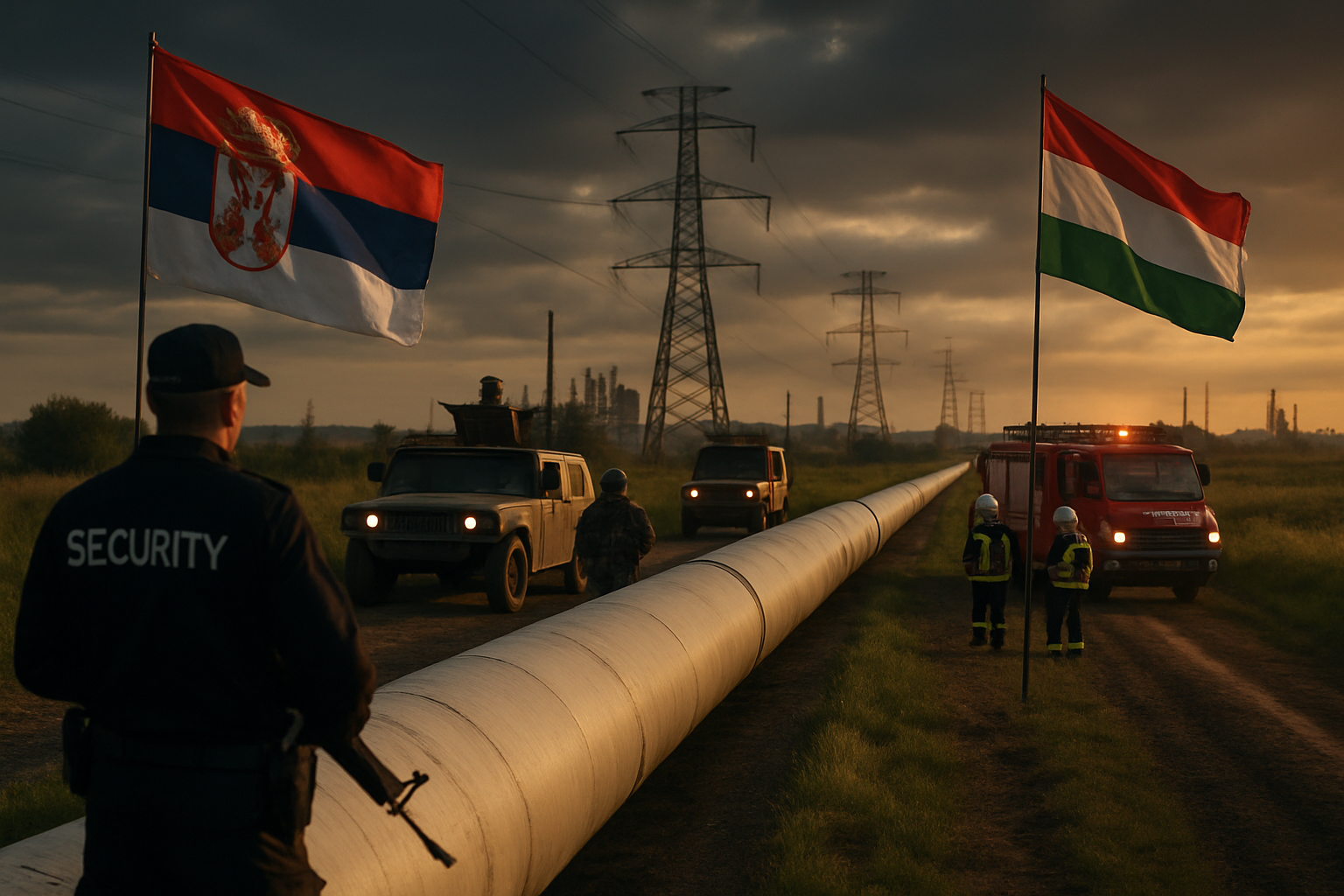
Serbian military and police forces discovered explosives and detonation equipment near critical gas infrastructure connecting Serbia and Hungary, Serbian President Aleksandar Vučić announced Sunday, marking a serious escalation in regional energy security concerns amid ongoing European tensions.
President Vučić immediately contacted Hungarian Prime Minister Viktor Orbán to inform him of the discovery near Kanjiža, in Serbia's northern Vojvodina region. The explosives were found close to pipeline infrastructure that carries Russian natural gas to Hungary, raising alarming questions about the security of Europe's energy supply chains.
"Our military and police units have discovered explosive materials and the necessary detonators for activation at the critical gas infrastructure connecting Serbia and Hungary," Vučić announced on social media. "I have informed Prime Minister Orbán and will keep him updated on the progress of our investigation."
Emergency Response and International Coordination
Orbán confirmed receiving the briefing from Vučić and announced the convening of an extraordinary defense council for Sunday afternoon. The Hungarian leader, who faces crucial elections on April 12, described the incident as a threat to critical infrastructure connecting the two neighboring countries.
According to multiple sources, Serbian authorities recovered two backpacks containing explosive devices near the gas pipeline infrastructure. The discovery has prompted enhanced security measures along the entire pipeline route and increased coordination between Serbian and Hungarian security forces.
Regional Security Implications
The incident occurs against a backdrop of heightened tensions in Central and Eastern Europe, particularly concerning energy security. The affected pipeline represents a crucial link in the regional gas supply network, with Hungary heavily dependent on Russian energy imports through Serbian territory.
Balint Pastor, president of the Alliance of Vojvodina Hungarians, characterized the incident as a prevented terrorist attack targeting gas infrastructure. "If Hungary was the target, this represents an attempt to destabilize Viktor Orbán's government," Pastor stated on Facebook, highlighting the potential political dimensions of the security threat.
"Serbian authorities have found destructive explosives and the equipment needed for activation at the critical gas infrastructure connecting Serbia and Hungary. An investigation is underway."
— Viktor Orbán, Hungarian Prime Minister
Investigation and Security Measures
Serbian authorities have launched a comprehensive investigation into the incident, with military and police units securing the area around Kanjiža. The discovery of what officials describe as "explosives of devastating power" has led to immediate implementation of enhanced security protocols along critical infrastructure routes.
The timing of the discovery is particularly significant given ongoing regional tensions and the approaching Hungarian parliamentary elections. The incident raises serious questions about infrastructure protection and the potential for sabotage targeting energy supplies.
European Energy Security Context
This security incident comes amid broader European energy vulnerabilities highlighted by recent global crises. The March 2026 Middle East crisis demonstrated the fragility of international energy supply chains, with oil prices reaching $119.50 per barrel and natural gas prices surging 24% across Europe.
The Serbia-Hungary gas corridor represents a critical component of Central European energy infrastructure, making any threat to its security a matter of regional concern. The pipeline's strategic importance has only increased as European nations seek to maintain energy supplies amid geopolitical uncertainties.
Response from Regional Leaders
Both Serbian and Hungarian authorities have emphasized their commitment to protecting critical infrastructure and maintaining energy supply security. The incident has prompted immediate diplomatic coordination between Belgrade and Budapest, with both governments treating the matter as a national security priority.
The extraordinary defense council called by Orbán demonstrates the seriousness with which Hungarian authorities are treating the threat. This represents one of the most significant infrastructure security incidents in the region in recent years.
Ongoing Investigation
Serbian security services continue their investigation into the source and motivation behind the explosive devices. Authorities are examining all possible scenarios, from international terrorism to domestic threats, as they work to determine responsibility for the incident.
The discovery near Kanjiža, a town in northern Serbia close to the Hungarian border, suggests sophisticated planning given the strategic location and timing. Serbian officials have not yet disclosed details about potential suspects or the specific nature of the explosive materials recovered.
Broader Implications
The incident highlights the vulnerability of critical energy infrastructure to security threats and the potential for such attacks to disrupt regional stability. As European nations increasingly focus on energy security amid global uncertainties, protecting pipeline networks and other critical infrastructure has become a paramount concern.
The successful prevention of what authorities describe as a potential attack demonstrates the importance of robust security measures and international cooperation in protecting vital energy supplies. The incident serves as a stark reminder of the ongoing security challenges facing Europe's energy infrastructure.