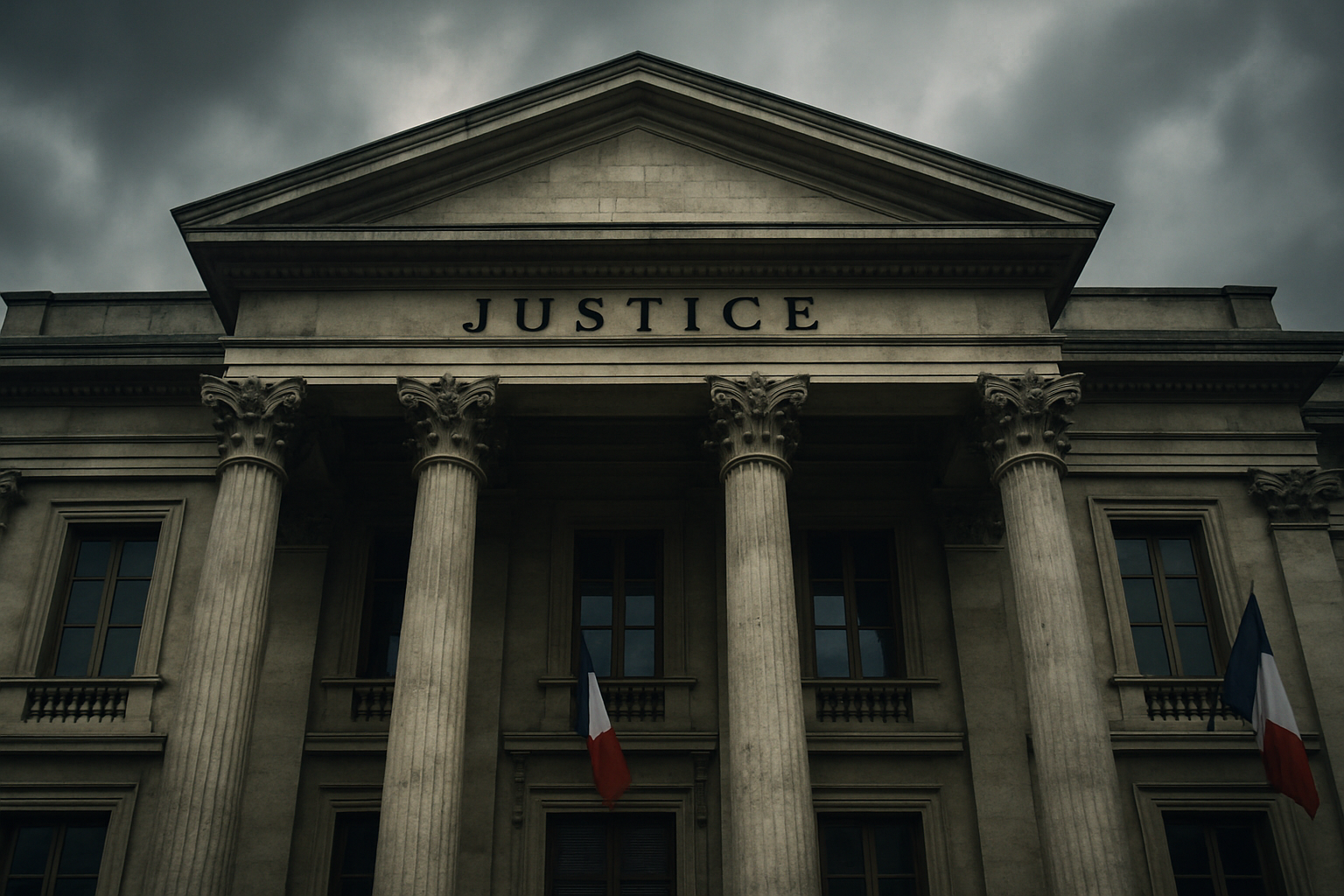
French prosecutors have formally charged seven men with intentional homicide in the fatal beating of 23-year-old far-right activist Quentin Deranque in Lyon, as authorities brace for a controversial memorial rally scheduled for Saturday under unprecedented security measures.
Prosecutor Thierry Dran announced at a press conference on Friday that he had requested murder charges against the seven suspects, all of whom he recommended remain in custody to prevent any "disturbance to public order." The charges represent a significant escalation in one of France's most politically charged criminal cases in recent years.
Deranque, a mathematics student and devout Catholic, died from severe cranial injuries two days after being viciously attacked on the sidelines of a pro-Palestinian conference featuring MEP Rima Hassan in Lyon. The 23-year-old activist had been participating in a far-right counter-protest when he was set upon by masked assailants.
Political Ramifications and International Tensions
The case has already triggered a diplomatic crisis between France and Italy, with Italian Prime Minister Giorgia Meloni describing Deranque's death as "a wound for all of Europe" and condemning what she called "a climate of ideological hatred sweeping several nations." French President Emmanuel Macron responded sharply, telling Rome not to "comment on what is happening in other countries."
"I'm always struck by how people who are nationalists, who don't want to be bothered in their own affairs, are so quick to interfere in others'," Macron said, reflecting the broader tensions within the European Union over political violence and national sovereignty.
Among those charged is Jacques-Elie Favrot, a parliamentary assistant to La France Insoumise (LFI) deputy Raphaël Arnault, which has intensified political pressure on the hard-left movement led by Jean-Luc Mélenchon. Justice Minister Gérald Darmanin has blamed the "ultra-left" for the killing, while National Rally leader Jordan Bardella declared Mélenchon bears "immense moral responsibility."
Memorial Rally Proceeds Despite Security Concerns
The Auvergne-Rhône-Alpes prefecture announced that a "March in homage to Quentin" will proceed as planned on Saturday at 3:00 PM in Lyon. Interior Minister Laurent Nuñez confirmed Friday morning that he would not seek to ban the demonstration, despite security concerns.
French police will deploy in force for the weekend rally, with authorities seeking to contain anger over the fatal beating while preventing further violence between opposing political factions. The decision to allow the march reflects the delicate balance French authorities must strike between protecting free expression and maintaining public order.
The memorial comes as France grapples with unprecedented political polarization ahead of the March 2026 municipal elections and the 2027 presidential race. The killing has become a rallying cry for Marine Le Pen's National Rally, which faces its own legal challenges with Le Pen potentially being barred from the presidential election due to an ongoing EU funds fraud case.
Investigation Details and False Accusations
According to prosecutor Dran's investigation, six suspects participated directly in the beating of Deranque, while three others aided the attackers. The prosecutor emphasized that the intentional homicide charges reflect the severity of the violence that led to Deranque's death from cranial injuries.
The case has been complicated by false accusations that emerged on social media. A Lyon woman from La Jeune Garde was wrongly accused of involvement but was actually in South America at the time of the attack. She has filed a defamation complaint, highlighting how misinformation has compounded the tragedy.
Videos of the deadly confrontation have been widely shared on social media, providing crucial evidence for investigators but also inflaming political tensions across France's deeply divided political landscape.
Government Response and University Restrictions
In response to the killing, the French government has announced restrictions on political meetings at universities, a move that critics argue threatens academic freedom and free speech on campuses. The restrictions represent an unprecedented government intervention in university autonomy.
The Socialist Party has distanced itself from La France Insoumise, leaving Mélenchon's movement increasingly isolated as the political fallout continues. This isolation comes at a critical time, with municipal elections just weeks away and the presidential campaign on the horizon.
European Context of Political Violence
The Deranque killing occurs within a broader European context of rising political extremism and violence. The case has drawn international media attention as a symbol of the threats to democratic institutions when political disagreement turns violent.
The incident represents a dangerous escalation of political confrontations that have plagued France in recent years, testing the country's ability to maintain peaceful democratic discourse. European observers are closely watching how French institutions respond to this intersection of political extremism and criminal violence.
The diplomatic tensions between France and Italy over the case also reflect broader challenges within the European Union about how member states should respond to political violence and extremism within their neighbors' borders.
Implications for French Democracy
As France prepares for crucial elections in 2026 and 2027, the Deranque case has become a defining moment for the country's democratic institutions. The government's response will be closely scrutinized as a test of France's commitment to both justice and democratic principles.
The case highlights the dangerous polarization of French politics, where political differences increasingly lead to physical confrontations. The ability of French society to process this tragedy through legal rather than vigilante justice will be crucial for the health of its democracy.
Saturday's memorial rally will serve as a critical test of whether French authorities can maintain order while respecting the right to peaceful assembly, even in the most politically charged circumstances. The outcome may well influence how political movements conduct themselves in the lead-up to the 2027 presidential election.