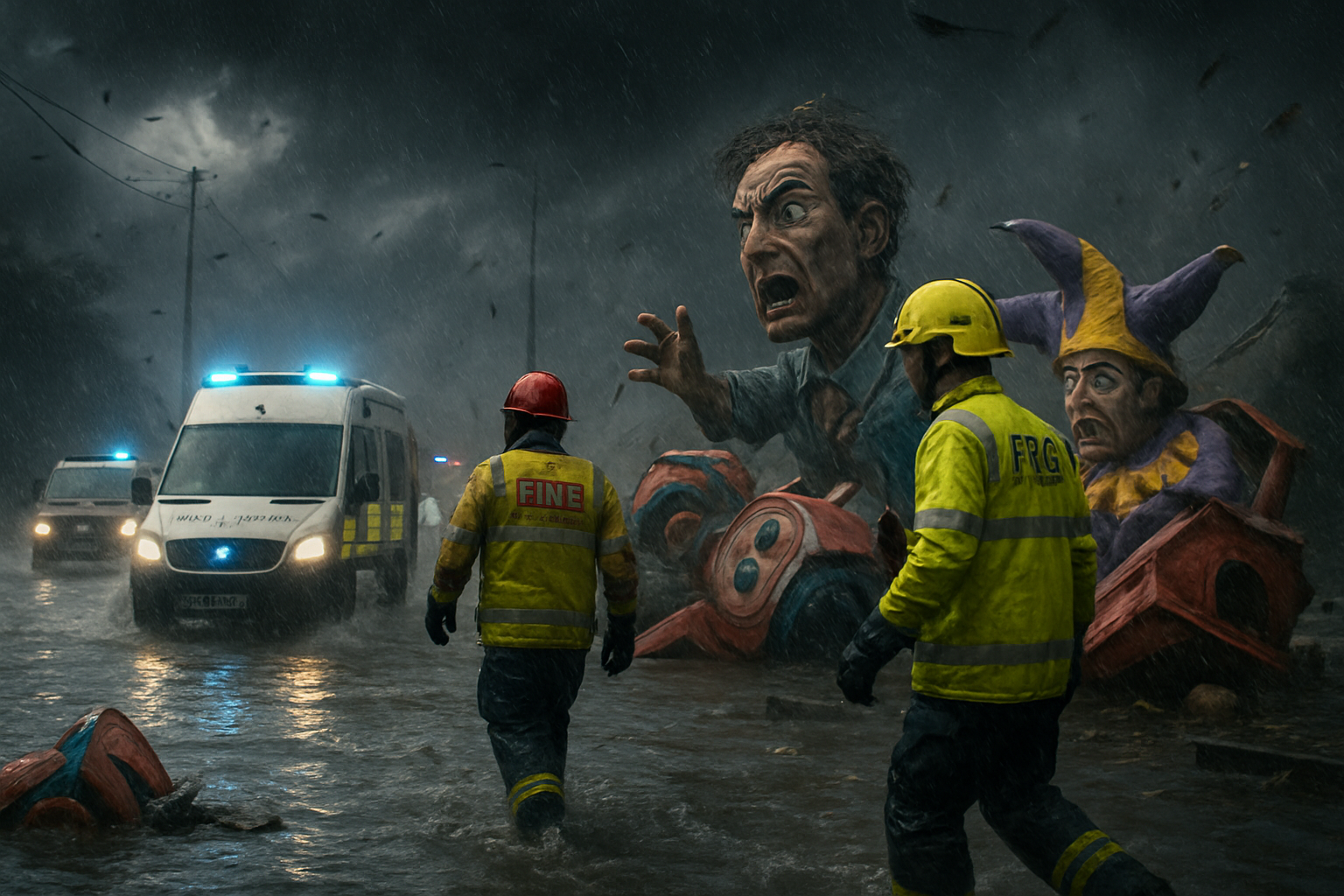
Europe remains in the grip of a devastating weather crisis as Storm Leonardo continues its destructive path across the continent, forcing thousands of evacuations, paralyzing transportation networks, and leaving multiple countries under emergency alerts as of February 5, 2026.
The ongoing weather emergency has affected at least 16 countries from the Iberian Peninsula to the Balkans, creating one of the most widespread extreme weather events in recent European history. According to meteorological services, the crisis represents an intensification of the severe conditions that have already claimed dozens of lives and caused unprecedented infrastructure damage across the region.
Spain Bears the Brunt of Leonardo's Fury
Spain's Andalusia region remains the epicenter of the crisis, with authorities maintaining red alerts for "extraordinary danger" across multiple provinces. According to Spanish emergency services, over 3,500 people have been evacuated from the provinces of Cádiz, Málaga, and Jaén, while a massive search operation continues for a missing woman who fell into the Turvilla River in Sayalonga, Málaga.
The Spanish meteorological agency AEMET reported that Grazalema recorded an extraordinary 526 liters per square meter of rainfall - nearly matching the town's entire annual average of 523 liters. The saturated soils have created new streams in areas that had never experienced water flow, highlighting the exceptional nature of this weather event.
Transportation across Spain has been severely compromised, with 116 roads currently closed - 100 due to flooding and inundations, and 16 due to snowfall. All high-speed rail services between Sevilla-Córdoba and Málaga-Granada have been suspended, while the Strait of Gibraltar region remains under the highest level of weather warnings.
Educational authorities have taken unprecedented measures, suspending classes across most of Andalusia. Only Almería province maintains normal school operations, while Granada, Jaén, and several other regions keep educational facilities closed as a precautionary measure.
Portugal Mobilizes Military Response
Portuguese authorities have deployed an exceptional emergency response, with 1,975 military personnel and 30 naval vessels mobilized across the affected regions. President Marcelo Rebelo de Sousa has reinforced the nation's vigilance posture, while Prime Minister Montenegro has guaranteed that "all resources" will be made available for the crisis response.
The storm has caused particularly severe damage in Alcácer do Sal, where flooding has exceeded levels not seen since 1963. Dozens of people have been evacuated from their homes, with emergency accommodation provided in hotels and temporary shelters. Portuguese authorities reported over 1,800 weather-related incidents since the storm's arrival.
Campo Grande tunnels in Lisbon have been closed due to flooding risks, while orange weather alerts remain in effect for much of the country. The storm follows closely on the heels of Storm Kristin, which claimed five lives in Portugal just weeks earlier.
Broader European Impact
Beyond the Iberian Peninsula, the extreme weather has created chaos across multiple European regions:
Germany: Frankfurt Airport experienced significant disruptions, while a 30-kilometer traffic jam formed on the A3 autobahn due to unexpected heavy snowfall. Ice warnings have expanded from northeastern regions to western and southern areas, compounding ongoing transportation strikes affecting 100,000 workers.
Ireland: Meteorological services have issued orange and yellow weather warnings, with authorities warning of difficult travel conditions as the heaviest rainfall is expected in southern and eastern areas. The unsettled weather pattern is forecast to continue into next week, raising concerns about further flooding.
Balkan Region: Croatia's Dalmatia coast has been battered by one of the strongest cyclonic tides in decades, with sea levels recorded 70 centimeters above normal levels. Storm surge has flooded coastal areas, with seawater entering ground-floor buildings and businesses along the entire coastline.
Greece: The Greek islands have faced severe conditions, with Corfu experiencing significant damage from high winds that toppled trees and caused power outages. A small tornado struck the settlement of Afiona, damaging roofs and creating dangerous conditions for residents.
North Africa Extension: The weather crisis has extended to Algeria, where Civil Protection units have been deployed across multiple provinces to address flooding and assist with emergency evacuations. Authorities report that torrential rains have flooded homes and required extensive water extraction operations.
Infrastructure and Economic Impact
The scale of infrastructure damage has been unprecedented. Spanish reservoirs have surged to 67.3% capacity - an increase of 8.1 percentage points in just one week, with 31 reservoirs reaching 100% capacity. While this addresses previous drought concerns, it also raises risks of overflow and structural stress on aging dam infrastructure.
The aviation sector has been significantly affected, with numerous flights cancelled or delayed across the region. Maritime transport has also suffered, with ferry services suspended in several areas due to dangerous sea conditions.
Agricultural regions, particularly Spain's olive groves and citrus farms, face substantial losses. The timing of the storm during the crucial growing season threatens to have lasting economic implications for Europe's agricultural sector.
Emergency Response and International Cooperation
The crisis has activated extensive emergency response mechanisms across Europe. The EU Civil Protection Mechanism has been invoked by Portugal, enabling coordinated international assistance. Sweden and Denmark have announced a €246 million emergency assistance package, demonstrating the solidarity approach to this continental crisis.
Emergency services across affected countries report operating at or near their operational limits. Warming centers have been activated, vulnerable populations are being monitored, and military assets have been deployed for rescue operations and infrastructure stabilization.
Local authorities have established emergency accommodation centers, with thousands of people displaced from their homes receiving temporary shelter and support services. The coordination between national and local emergency services has been crucial in managing the scope of this multi-country crisis.
Climate Context and Future Implications
This weather emergency occurs against the backdrop of January 2026 being recorded as the hottest month in global history, with 18 of the past 19 months exceeding 1.5°C above pre-industrial levels. The juxtaposition of record global temperatures with extreme weather events demonstrates the increasing volatility and unpredictability of climate patterns.
The current crisis is part of a broader Northern Hemisphere extreme weather pattern that has already caused over 140 deaths since late January, including 110+ fatalities in North America and 30 in Japan. Meteorologists warn that such simultaneous extreme events across multiple continents are becoming increasingly common.
The event has raised serious questions about Europe's climate adaptation infrastructure and emergency response capabilities. Despite generally effective emergency management systems, the scale and geographical scope of Storm Leonardo have tested institutional resilience to its limits.
Recovery and Ongoing Concerns
As rescue operations continue and emergency services work to restore essential services, authorities warn that recovery from this crisis will extend well beyond the immediate weather emergency. Comprehensive damage assessments are pending weather stabilization, but initial estimates suggest repair costs will reach hundreds of millions of euros.
The meteorological outlook remains concerning, with additional weather systems approaching from the Atlantic. Authorities across affected regions are maintaining high alert levels and advising citizens to avoid unnecessary travel and remain vigilant for rapidly changing conditions.
This crisis represents a watershed moment for European emergency preparedness and climate adaptation strategies. The lessons learned from coordinating responses across multiple countries simultaneously will be crucial for future extreme weather events, which climate scientists predict will become more frequent and intense.
As Europe continues to battle the immediate effects of Storm Leonardo, the event serves as a stark reminder of the continent's vulnerability to extreme weather and the urgent need for enhanced climate resilience infrastructure across all member nations.