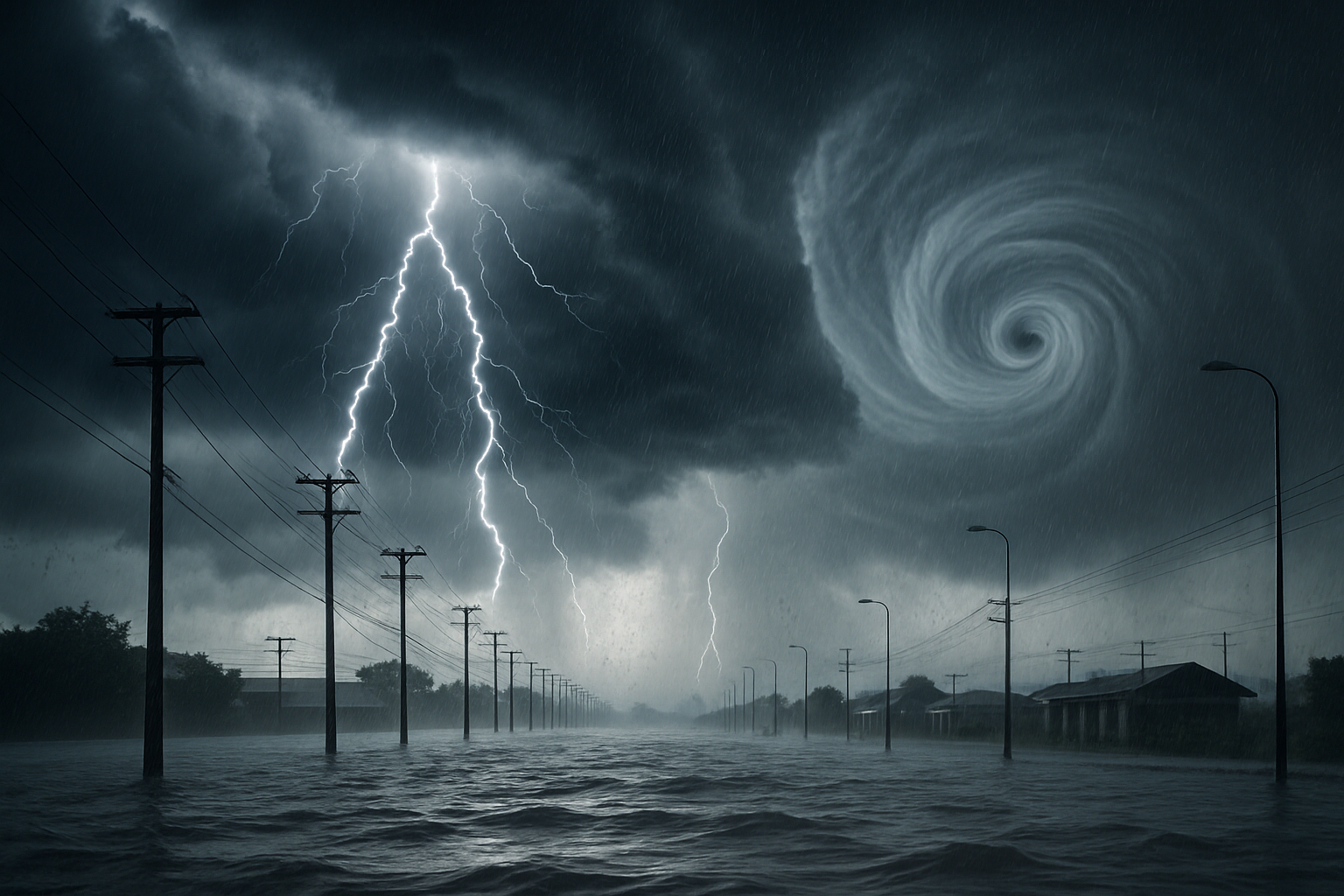
Multiple countries are grappling with simultaneous severe weather emergencies across three continents, as Algeria faces dangerous flooding, Australia battles Tropical Cyclone Narelle, and Bosnia deals with widespread power outages from heavy snowfall during what scientists confirm is the 22nd consecutive month of global temperatures exceeding critical climate thresholds.
Algeria Flooding Emergency Escalates
Algeria's civil protection services reported multiple rescue operations after severe weather struck the provinces of Béchar and Béni Abbès, with floodwaters rising to dangerous levels in major waterways. In the municipality of Béchar, rescue teams successfully evacuated 11 people who became trapped in two separate locations due to rapidly rising water levels in local valleys.
Four people were rescued near the cement factory at Hassi El-Houari, while seven others were extracted from the new district area after being stranded by the same flooding conditions. The meteorological services have warned of a powerful atmospheric disturbance continuing to affect northern regions through Tuesday, bringing heavy rainfall exceeding 60mm per hour, dense snowfall above 1,100 meters elevation, and dangerous winds surpassing 100 km/h.
"The system is creating unprecedented March intensity threatening widespread infrastructure damage across northern Algeria, the northern Sahara, oases, and southwestern areas."
— Algeria National Weather Service
Emergency teams have also extracted two vehicles stuck in the Taghline valley due to rising water levels caused by intense rainfall in the Tagnanta region. Additional operations included water extraction at ten different points across the municipalities of Béchar, Taghit, and Kennedsa, where accumulated rainwater threatened residential and commercial areas.
Australia Braces for Cyclone Narelle Impact
Australia's eastern coastline is experiencing severe weather conditions as authorities urge residents to avoid dangerous surf conditions. Sydney and surrounding areas have been battered by large swells, with hazardous surf warnings extending from Forster to past Eden along the New South Wales coast.
The situation has been described as a "one-in-50-year event" bringing powerful winds of up to 100 km/h, dangerous surf conditions with 11-meter swells, and significant risks of coastal erosion. The coastal hazard warning remains in place as the low-pressure system continues to stir up dangerous conditions along the state's extensive coastline.
Meanwhile, Tropical Cyclone Narelle has already begun impacting Western Australia, with emergency services in the holiday town of Exmouth reporting "significant damage" from the storm's renewed force. The cyclone has forced residents to evacuate as it approaches the coast with destructive winds and heavy rainfall.
Energy Infrastructure Under Threat
The cyclone's impact extends beyond immediate weather damage, as Australia's largest natural gas processing plants have been forced offline due to Cyclone Narelle. This development comes at a particularly challenging time, as Australia is already grappling with fuel shortages stemming from ongoing conflicts in the Middle East.
The shutdown of critical energy infrastructure highlights the vulnerability of industrial facilities to extreme weather events and the cascading effects such disruptions can have on national energy security during times of global supply chain stress.
Bosnia Faces Widespread Power Disruptions
Heavy snowfall across Bosnia and Herzegovina has created significant transportation and electrical infrastructure challenges, with northwestern regions bearing the brunt of the severe winter conditions. The Una-Sana Canton has been particularly affected by the severe weather system.
Multiple settlements across the country are without electrical power as snow accumulation and strong winds have damaged transmission lines and complicated repair efforts. Transportation authorities have issued warnings about dangerous driving conditions and advised against non-essential travel in affected areas.
The snowfall has been described as creating "chaos" throughout the country, with emergency services working around the clock to restore essential services and maintain supply lines to isolated communities.
Cyprus Reports Beneficial Water Inflows
In contrast to the severe weather affecting other regions, Cyprus is experiencing a positive development with March 2026 recording the most beneficial water inflow to dams since 2019. According to the Water Development Department, total water inflow to the 18 main dams has reached 68.88 million cubic meters, compared to just 18.664 million during the corresponding period last year.
The stored quantity in dams has reached 29.9% of total capacity, marking an increase of 5.4% compared to last year. However, the Southern Conveyor system, which supplies major urban centers, shows only marginal improvement, emphasizing the continued need for water conservation measures despite the general improvement in reservoir levels.
UAE Flooding Adds to Regional Concerns
The extreme weather patterns have extended to the Middle East, where several cities in the United Arab Emirates experienced flooding following heavy rainfall. Roads in multiple UAE cities were inundated, creating transportation challenges and highlighting the vulnerability of urban infrastructure to intense precipitation events in arid regions.
Global Climate Context and Emergency Response
These simultaneous weather emergencies occur during what climate scientists confirm is the 22nd consecutive month of global temperatures exceeding 1.5°C above pre-industrial levels – the longest sustained extreme warming period in recorded human history. January 2026 was confirmed as the hottest month ever recorded, with human-induced climate change fundamentally overriding natural cooling mechanisms.
The convergence of extreme weather across multiple continents is exposing critical weaknesses in global emergency response systems, which were designed to handle sequential regional disasters rather than concurrent multi-continental emergencies. Traditional mutual aid mechanisms are proving inadequate when multiple regions face simultaneous disasters, preventing the usual regional compensation that historically managed localized extreme weather events.
"Emergency services are operating at or beyond capacity limits globally, with transportation networks, power grids, and communication systems repeatedly failing as extreme weather exceeds operational parameters designed for historical climate patterns."
— International Emergency Management Assessment
Infrastructure Adaptation Challenges
The current crisis builds on the devastating February 2026 European storm succession that claimed over 35 lives across Portugal, Spain, and France. That crisis required Portugal's largest peacetime rescue operation with 26,500 emergency personnel and prompted the EU to activate its Civil Protection Mechanism with €246 million in assistance – the largest coordinated European weather response on record.
Infrastructure systems designed for historical climate patterns are repeatedly failing as conditions exceed their operational parameters. The recovery timelines have fundamentally shifted from weeks to months and years, emphasizing the urgent need for "building back better" with climate-resilient infrastructure rather than simply restoring damaged systems to their previous vulnerable state.
Economic and Social Impact
The economic devastation spans multiple sectors, with agricultural operations facing mounting losses as extreme weather destroys crops and disrupts supply chains during critical growing seasons. Tourism industries are experiencing extended cancellations and infrastructure damage during what should be peak revenue periods.
Mental health services are reporting increased demand for support related to climate anxiety and repeated extreme weather trauma. Families are facing the prospect of losing generational homes multiple times within a decade, while small businesses confront extinction threats from repeated weather-related disruptions.
International Cooperation Under Strain
The simultaneity of disasters is testing international cooperation frameworks that were designed to handle sequential regional emergencies rather than concurrent global events. Environmental challenges transcend political boundaries, with atmospheric systems and ocean currents transporting climate effects globally, making unilateral adaptation insufficient for comprehensive resilience.
The World Meteorological Organization has indicated a 50-60% probability of El Niño development during July-September 2026, which could potentially drive unprecedented temperatures by combining baseline warming with natural cycle amplification during an already record-breaking warming streak.
Path Forward: Transformation vs. Crisis Management
March 2026 represents a watershed moment for global climate preparedness, forcing a critical choice between reactive crisis management and transformative infrastructure adaptation. Current conditions provide a preview of what could become routine in the 2030s without significant climate adaptation investment.
Traditional seasonal patterns that guided infrastructure design, agricultural planning, and emergency preparedness for centuries are no longer reliable frameworks. The window for effective climate action is narrowing as ecological systems approach critical thresholds that could trigger irreversible changes affecting global food security, climate stability, and human settlements.
Scientists and emergency management experts emphasize that the tools, knowledge, and cooperation frameworks exist for comprehensive environmental protection. However, success depends on unprecedented speed and coordination through sustained international cooperation and political commitment to treating environmental protection as essential infrastructure for human prosperity and planetary sustainability.
As additional weather systems develop across the Atlantic and Pacific regions, authorities worldwide remain on high alert. The current crisis conditions may persist for weeks or months, potentially establishing a "new normal" of extreme weather frequency and intensity that permanently challenges traditional emergency response frameworks.