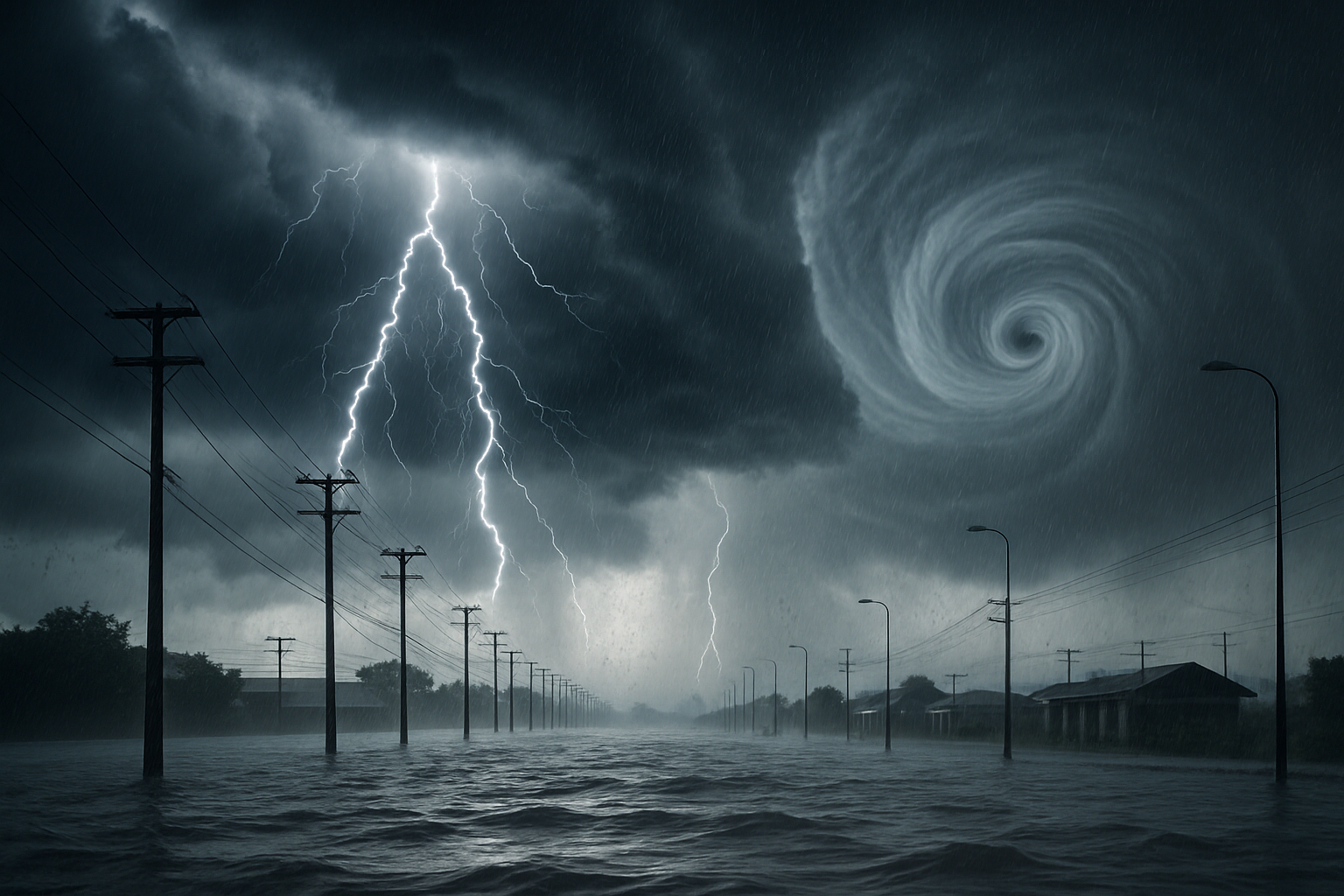
Multiple countries across the globe are facing simultaneous extreme weather disasters including golf ball-sized hail in Sydney, dangerous tropical cyclones in Queensland, severe flooding in Hawaii, and thunderstorms across Cyprus and Europe, creating an unprecedented multi-continental emergency that is overwhelming traditional disaster response systems.
The crisis is unfolding during what meteorologists confirm is the 21st consecutive month of global temperatures exceeding 1.5°C above pre-industrial levels—the longest sustained extreme warming period in recorded human history. This extraordinary convergence of weather disasters demonstrates what scientists are calling the "climate volatility paradox," where sustained global warming enables both heat records and devastating regional extreme weather events.
Australia Faces Devastating Hail and Cyclone Threats
Sydney experienced a terrifying afternoon as golf ball-sized hailstones pounded the city during a severe storm that brought darkness at 3:30 PM. The Bureau of Meteorology recorded 5-centimeter hail at Penrith at 4 PM, with other parts of New South Wales including Singleton and Warragamba also suffering significant hailstone damage.
Meanwhile, Queensland faces an even more serious threat as Tropical Cyclone Narelle approaches the coast. Queensland Premier David Crisafulli reported that the cyclone "walked a tightrope perfectly between Coen and Lockhart River" before exiting through the western side of Cape York Peninsula. The storm delivered "sizeable winds and some pretty reasonable rain" despite being downgraded to a Category 2 system.
The Australian Fire Emergency Services Authority (AFAC) has identified a critical shift from sequential disasters to "compound disasters," where multiple emergency types occur concurrently rather than separately, fundamentally challenging traditional resource allocation and mutual aid mechanisms.
Mediterranean Under Siege
Cyprus is battling severe thunderstorms with the Department of Meteorology issuing yellow warnings for heavy rainfall between 35-50 millimeters per hour and possible hail. A low-pressure system affecting the region has brought showers and isolated thunderstorms throughout the day, with the higher peaks of the Troodos mountains experiencing sleet or snow.
The warnings remain in force with winds reaching moderate to strong at force 4-5 Beaufort, periodically strengthening to force 5-6. Sea conditions have deteriorated to rough, with periods of very rough conditions. Temperatures are expected to reach only 17°C inland and drop to 6°C at the highest mountain elevations.
Global Emergency Response System Breakdown
Emergency services worldwide are reporting capacity limits as traditional mutual aid mechanisms designed for sequential regional disasters prove inadequate when multiple countries face simultaneous extreme weather events. The unprecedented nature of concurrent global emergencies is testing international cooperation frameworks beyond their design parameters.
"Emergency services are operating beyond capacity limits globally, and traditional mutual aid is strained by simultaneous disasters across multiple continents."
— Emergency Management Expert Analysis
The EU Civil Protection Mechanism has been repeatedly activated throughout this crisis period, with Sweden and Denmark providing €246 million in assistance—representing the largest coordinated European weather response on record. However, experts note that even these unprecedented measures are insufficient when disasters strike simultaneously across multiple regions.
Infrastructure Vulnerabilities Exposed
Transportation networks, power grids, and communication systems designed for historical climate patterns are repeatedly failing as extreme weather events exceed their operational parameters. Recovery timelines have shifted from the traditional weeks to months or even years, representing a fundamental change in disaster response and preparation approaches.
The crisis has exposed critical vulnerabilities in infrastructure systems that were built for a climate that no longer exists. Emergency management experts emphasize that response strategies require fundamental restructuring for what they term the "permanent climate volatility era."
Economic and Social Devastation
The economic impact spans multiple sectors:
- Agricultural operations face mounting losses as extreme weather destroys crops and disrupts supply chains during critical growing seasons
- Tourism industries struggle with extended cancellations and infrastructure damage during peak revenue periods
- Transportation networks experience cascading disruptions affecting global commerce
- Mental health services report increased demand as communities face repeated extreme weather trauma
Families are losing generational homes, small businesses face extinction, and vulnerable populations require extended support. The psychological toll of repeated extreme weather events is creating an unprecedented demand for mental health services across all affected regions.
Climate Science Context
January 2026 was confirmed as the hottest month ever recorded, extending an unprecedented warming streak where human-induced climate change is fundamentally overriding natural cooling mechanisms, including La Niña effects. The World Meteorological Organization indicates a 50-60% probability of El Niño development during July-September 2026, which could drive temperatures into unprecedented territory by combining baseline warming with natural cycle amplification.
Scientists emphasize that current conditions provide a preview of routine 2030s circumstances without significant climate adaptation investment. The choice between reactive crisis management versus transformative infrastructure adaptation has become increasingly critical as the window for effective climate action continues to narrow.
International Cooperation Under Strain
Environmental challenges transcend political boundaries, with atmospheric systems and ocean currents transporting climate effects globally regardless of borders. The simultaneity of disasters is testing cooperation mechanisms that were developed under the assumption that stable regions could assist others during isolated emergencies.
Traditional bilateral aid frameworks are proving inadequate when multiple continents face emergencies simultaneously, requiring fundamental restructuring of international cooperation mechanisms for an era of permanent climate volatility.
Adaptation Imperatives
The current crisis represents a watershed moment in global climate preparedness. "Building back better" with climate-resilient infrastructure has evolved from an optional enhancement to an essential survival strategy. Infrastructure systems require fundamental reassessment for a "new normal" of extreme weather volatility, as traditional seasonal patterns that guided planning for centuries are no longer reliable frameworks.
Technology-tradition integration is showing success in various regions, with approaches that combine advanced meteorological forecasting with Indigenous fire management in Australia, and agricultural wisdom with climate monitoring in Estonia. These hybrid adaptation strategies provide templates for broader application.
Strategic Significance
March 2026 represents a critical juncture in global climate response. The convergence of extreme weather events, infrastructure vulnerabilities, and emergency response limitations underscores the urgent need for coordinated international action. The tools, knowledge, and cooperation frameworks exist for comprehensive environmental protection, but success depends on unprecedented speed and coordination through sustained international cooperation.
Additional weather systems are developing in Atlantic and Pacific regions, and authorities maintain high alert levels globally. Current conditions may persist for weeks, potentially establishing a "new normal" of extreme weather frequency that permanently challenges traditional emergency response frameworks.
The question is no longer whether transformative action is needed, but whether humanity can organize and implement solutions rapidly enough to maintain planetary habitability during what may be Earth's most environmentally challenging period in recorded history. The choices made in the coming months will potentially be decisive for global climate resilience strategies affecting generations to come.