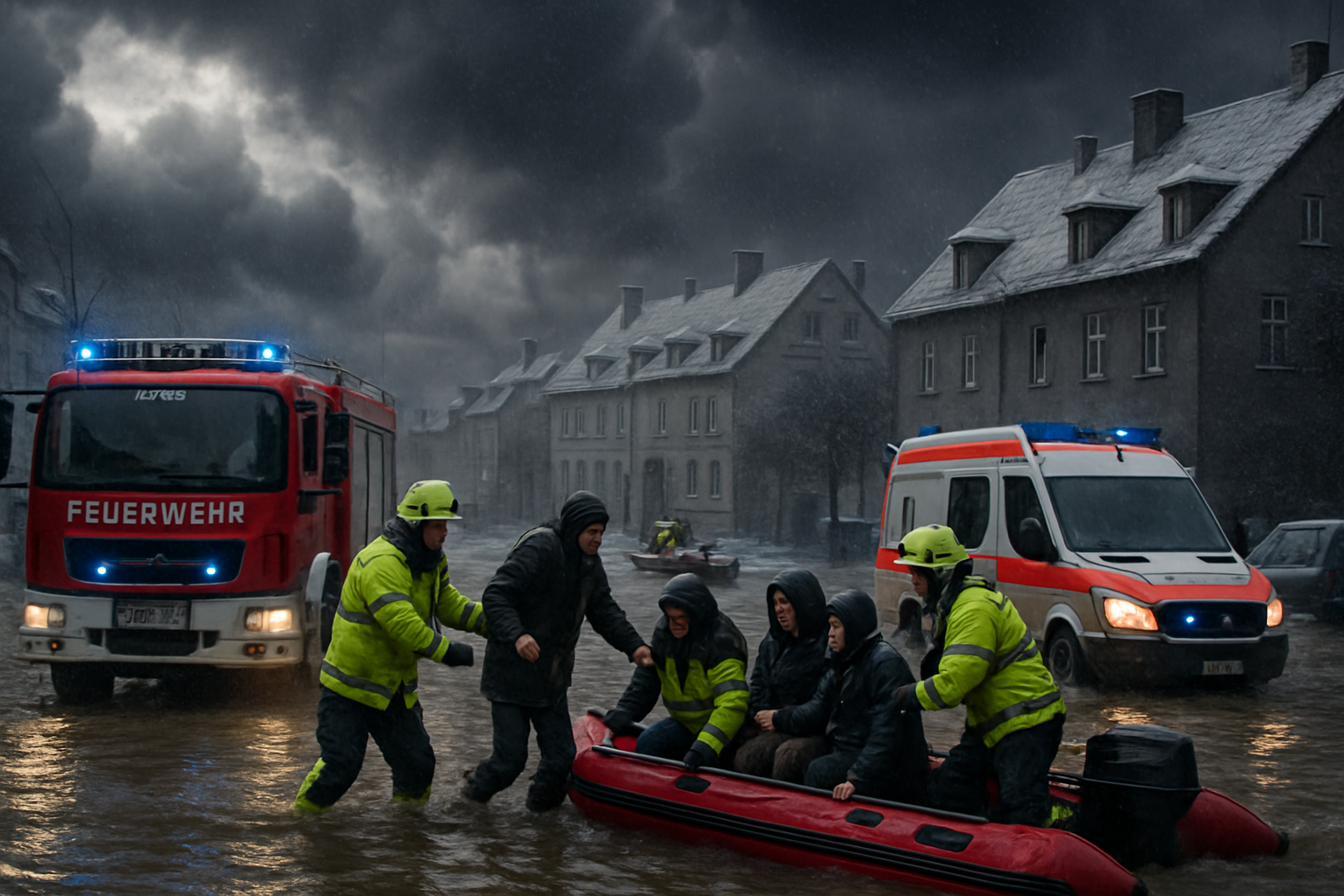
Storm Nils has emerged as the fourth consecutive major Atlantic weather system to batter Europe in February 2026, triggering emergency alerts across multiple nations as flooding, heavy snow, and hurricane-force winds continue to overwhelm emergency services and disrupt millions of lives.
The latest severe weather warnings span from France's Atlantic coast to Bulgaria's mountainous regions, with meteorological services issuing red and orange alerts for life-threatening conditions. The French weather service Vigicrues warned of "important and major overflows" expected within the next 24 hours along the Garonne River system, while the Netherlands faces nationwide code yellow warnings for hazardous snow and ice conditions.
France Bears Brunt of Storm Nils
French authorities have placed the Garonne River basin on red alert for flooding, with Vigicrues reporting that "important and major overflows are occurring or expected in the coming twenty-four hours" for waterways under orange or red vigilance. The warnings particularly affect the southwestern departments that have already endured weeks of severe weather.
The storm represents the continuation of what meteorologists are calling an unprecedented succession of Atlantic weather systems – Storms Kristin, Leonardo, Marta, and now Nils – that have collectively killed at least 16 people across Portugal and Spain while requiring the largest peacetime rescue operation in Portuguese history.
Netherlands Battles Snow and Ice
The Netherlands has implemented nationwide code yellow weather alerts as snow sweeps across the country from the south, creating slippery road conditions and forcing drivers to exercise extreme caution. Schiphol Airport has already canceled over 150 flights in preparation for expected snowfall, with up to 5 centimeters of accumulation predicted.
"The Netherlands is under a code yellow weather alert as a snow front moves from the south, creating hazardous conditions across the country."
— Dutch Meteorological Service
Aviation authorities are closely monitoring conditions, with memories fresh of the transportation chaos that has plagued Northern European airports throughout this exceptional winter season.
Portugal Continues Recovery Operations
Portugal continues to grapple with the aftermath of the previous storm succession, with river water levels showing signs of gradual improvement in some areas. The Mondego River valley is experiencing a "considerable" drop in water levels, though officials warn the situation will take several weeks to normalize completely.
Portuguese authorities report that river flows are beginning to stabilize after weeks of maintaining the largest peacetime rescue operation in the nation's history, involving 26,500 personnel including 1,975 military members and 30 naval vessels responding to over 1,800 weather-related incidents since February 1.
Infrastructure Damage Assessment
The human and economic toll continues to mount across the affected regions. In Montemor-o-Velho, local officials indicate that while immediate flooding threats are receding, the recovery process will be measured in weeks rather than days. The extensive damage to agricultural lands, particularly in the Mondego valley's fertile farming areas, represents billions in losses for the Portuguese economy.
Bulgaria Closes Ski Resorts
Bulgaria has taken the extraordinary step of completely closing the Pamporovo ski resort due to what officials describe as "complicated meteorological conditions" that pose risks to tourist safety. The closure affects thousands of visitors and represents significant economic losses for the winter tourism sector.
Further east, the weather crisis has reached Bulgaria's Petrich region, where authorities report approximately 75 liters of rainfall per square meter fell in just a few hours on Sunday morning. The rainfall has caused dangerous river conditions, with water levels reaching critical heights in the lower areas of the municipality.
Multi-National Emergency Response
The scope of this weather emergency has triggered unprecedented international cooperation. The European Union has activated its Civil Protection Mechanism, while Sweden and Denmark have provided a €246 million assistance package – the largest coordinated European weather response in recent history.
Emergency services across the continent report operating at capacity limits, with traditional mutual aid mechanisms strained by the simultaneous nature of multiple national crises. The frequency and intensity of these weather events are testing Europe's climate adaptation frameworks in ways not previously anticipated.
Aviation and Transport Disruptions
The aviation sector continues to face severe disruptions, with numerous airports across Europe implementing flight restrictions due to weather conditions. French airports are reducing operations by 30% at Paris Charles de Gaulle due to ice conditions, while Polish airports report severe frost and snow affecting operations.
Meanwhile, Norway has recorded aviation incidents unrelated to weather, including an emergency landing at Trondheim Airport Værnes after a powerbank overheated in an aircraft cabin, exposing crew members to smoke. Though no injuries were reported, the incident highlights the additional stress on emergency services already stretched by weather-related incidents.
Bosnia and Herzegovina Prepares for Mixed Precipitation
Weather forecasters in Bosnia and Herzegovina are warning residents to prepare for a complex weather pattern beginning Monday, with conditions expected to deteriorate from afternoon rain to overnight sleet and snow. The forecast predicts southwest winds shifting to northerly directions, with temperatures ranging from -6°C to 3°C in the morning and reaching 3°C to 11°C during the day in southern regions.
Tuesday's forecast calls for snow or sleet across most of the country, with particularly heavy accumulations expected in mountainous areas where 10-30 centimeters of snow could fall, accompanied by occasionally stronger wind gusts.
Climate Context and Future Outlook
This weather crisis is unfolding against the backdrop of January 2026 being confirmed as the 18th consecutive month to exceed 1.5°C above pre-industrial levels, demonstrating how climate warming is enabling extreme regional weather events even during what should be naturally cooler periods.
Scientists note that the current pattern represents a preview of conditions expected to become routine by the 2030s without significant climate action. The simultaneous nature of these disasters across multiple continents is preventing traditional regional compensation mechanisms from functioning effectively.
Recovery and Adaptation Challenges
Recovery from this series of weather events is expected to take months or even years, with economic damage estimated in the billions across agricultural, tourism, and infrastructure sectors. The crisis has exposed critical vulnerabilities in transportation networks, power grids, and communication systems that were designed for historical rather than future climate conditions.
European leaders face mounting pressure to implement "build back better" climate-resilient infrastructure rather than simply repairing damage to previous specifications. The frequency and intensity of extreme weather events are forcing a fundamental reassessment of emergency response capabilities and international cooperation frameworks.
Human Impact and Community Response
Beyond the statistics and meteorological data, this crisis represents profound human impact. Families are losing generational homes, small businesses face potential extinction, and vulnerable populations require extended emergency support. Mental health services report increased demand as communities struggle to cope with repeated traumatic weather events.
The democratic process itself has been tested, with Portugal's presidential election proceeding despite infrastructure disruption, though 36,000 voters were unable to participate. This has created what experts call a "climate-democracy intersection" where extreme weather increasingly disrupts governance systems.
Looking Ahead
As Storm Nils continues to track across Europe, additional Atlantic weather systems are developing, suggesting this crisis may persist for several more weeks. Emergency management officials emphasize that this represents the "new normal" of extreme weather frequency that will require transformative rather than reactive approaches.
The current situation serves as a watershed moment for European climate adaptation, demonstrating that the continent's response capabilities need fundamental enhancement to handle the increasing volatility of climate conditions. International cooperation has proven essential, but the simultaneous nature of multiple national emergencies continues to strain traditional aid mechanisms.
As communities across Europe work to recover from this latest round of severe weather, the focus increasingly turns to long-term resilience building rather than short-term crisis management. The lessons learned from this unprecedented succession of storms will likely shape European emergency preparedness and climate adaptation strategies for years to come.