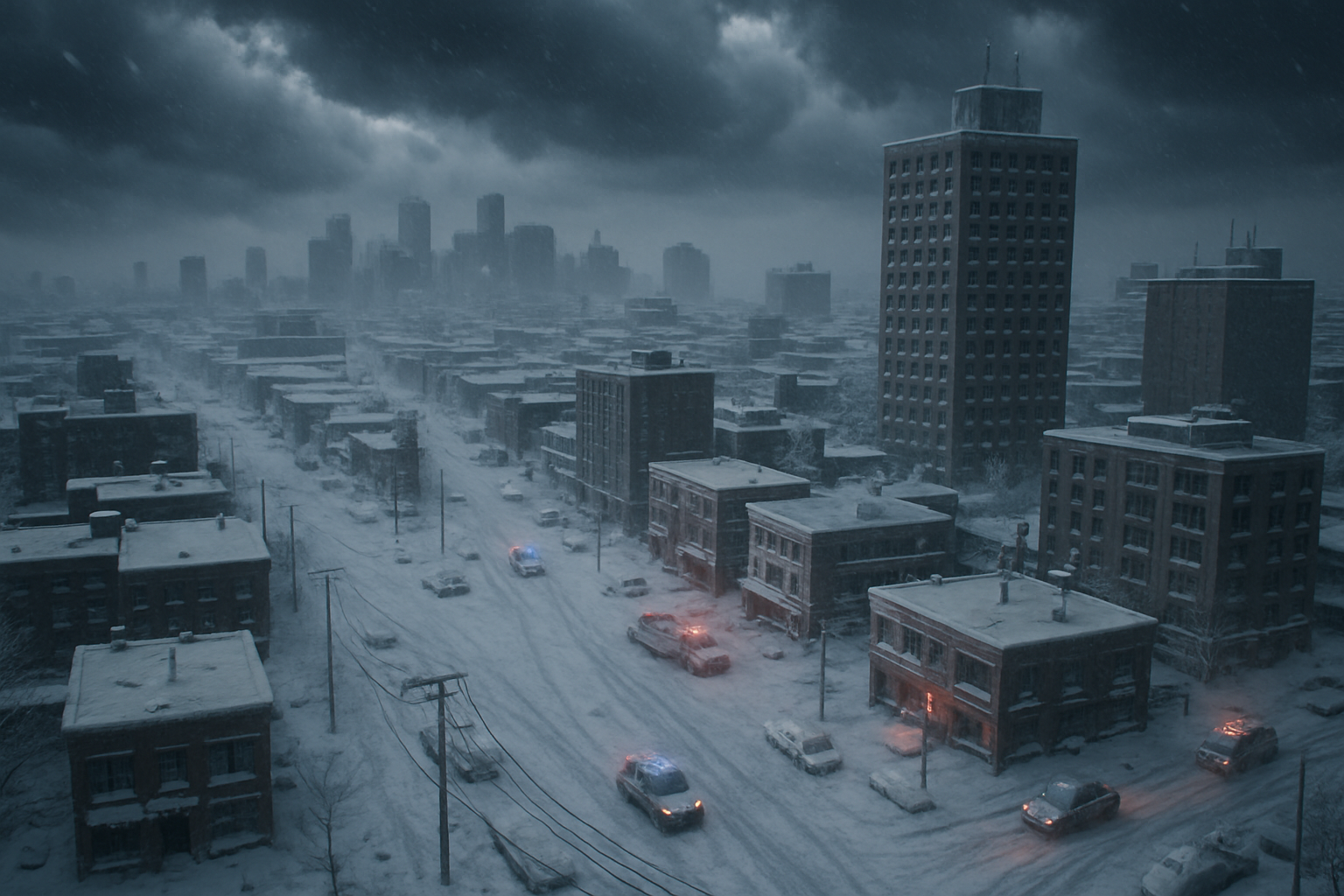
A devastating winter storm system has claimed over 110 lives across the United States while simultaneously battering regions from Canada's Atlantic provinces to Northern Europe, marking one of the most severe cold weather events in decades.
The extreme weather event, characterized by what meteorologists call a "bomb cyclone," has brought record-breaking cold temperatures, heavy snowfall, and dangerous ice conditions to millions of people across multiple continents. From the southeastern United States to the Nordic countries, communities are grappling with transportation disruptions, power outages, and life-threatening conditions.
United States Bears the Brunt
The United States has suffered the most severe impact, with more than 110 fatalities reported as a second wave of Arctic air moves across the eastern portion of the country. The death toll represents one of the deadliest winter weather events in recent American history, with casualties spanning from exposure to hypothermia and weather-related accidents.
North Carolina has experienced particularly unusual conditions, with coastal communities witnessing rare scenes of snow-covered beaches and entire towns paralyzed by ice. According to official reports from the National Weather Service, snowfall accumulations varied dramatically across the state, creating stark contrasts between areas experiencing extreme accumulations and those with more modest snowfall.
"We're seeing temperatures that haven't been recorded in some areas for decades," said meteorologists tracking the polar vortex disruption that has brought Arctic conditions as far south as Florida.
— National Weather Service Officials
The weather system has been described as a "bomb cyclone" – a rapidly intensifying storm that occurs when atmospheric pressure drops dramatically within 24 hours. This phenomenon has created a corridor of severe weather stretching from New York to Florida, with approximately 150 million people under cold weather advisories and extreme cold warnings as of Sunday.
Canadian Maritime Provinces Under Siege
Canada's Atlantic provinces are experiencing their own battle with the winter storm system. Newfoundland has been particularly hard hit, with schools closed across central and eastern regions and bus services suspended due to heavy snow and high winds. St. John's recorded approximately 10 centimeters of snow before sunrise on Monday, with conditions continuing to deteriorate throughout the day.
Nova Scotia is facing its third significant storm in a matter of weeks, with Cape Breton and parts of eastern and northern mainland regions under snowfall or winter storm warnings. The repeated storms have strained emergency services and tested the resilience of communities already dealing with previous weather-related damage.
"This is unprecedented – three major storms in such a short timeframe is testing our infrastructure and resources to the limit," said emergency management officials in Halifax.
— Nova Scotia Emergency Management
European Energy Crisis Intensifies
The severe cold has exacerbated Europe's ongoing energy challenges, with Finland experiencing dramatic spikes in electricity prices. In the town of Mustasaari, restaurant owner Mikki Saarela was forced to close his grill establishment for the day as electricity costs soared to approximately 250 euros for a single day of operation.
This situation highlights the broader impact of extreme weather on European energy systems, which are already strained due to various geopolitical and supply chain factors. The combination of increased heating demand and stressed power grids has created difficult economic conditions for businesses and consumers alike.
Poland Faces Heating System Crisis
Poland is confronting its own winter weather challenges, with the city of Gdansk experiencing a critical heating system failure. Mayor Aleksandra Dulkiewicz announced that repairs to the district heating network serving Gdansk and Sopot should be completed by Wednesday, but warned residents that indoor temperatures could drop to 15 degrees Celsius during the outage.
The timing of the heating system failure during the severe cold snap has created potentially dangerous conditions for residents, particularly vulnerable populations such as the elderly and children. City officials have urged residents to check on neighbors and seek alternative heating arrangements where possible.
"We are working around the clock to restore heating, but residents need to prepare for cold indoor conditions and look out for one another during this critical period."
— Aleksandra Dulkiewicz, Mayor of Gdansk
Transportation Systems Paralyzed
The winter storm has caused widespread transportation disruptions across all affected regions. In the United States, major highways have been closed, with Interstate 85 in North Carolina experiencing complete shutdowns due to heavy snowfall and dangerous driving conditions. Airlines have canceled thousands of flights, leaving travelers stranded at airports across the eastern seaboard.
Canadian provinces have pulled buses off roads and closed schools as a safety precaution, while European countries are dealing with similar transportation challenges. The combination of snow, ice, and extremely low temperatures has made many roads impassable and created hazardous conditions for any form of travel.
Polar Vortex and Climate Implications
Meteorologists attribute the severe weather to a disruption in the polar vortex, a large area of cold air that typically circulates around the Arctic. When this system becomes unstable, it can send frigid Arctic air much further south than normal, creating the extreme temperature contrasts currently being experienced.
The phenomenon raises important questions about climate patterns and the increasing frequency of extreme weather events. While individual storms cannot be directly attributed to climate change, the pattern of more intense and unpredictable weather events aligns with scientific projections about global climate disruption.
Emergency Response and Recovery Efforts
Emergency services across all affected regions are working at maximum capacity to respond to the crisis. In the United States, the Federal Emergency Management Agency (FEMA) has activated emergency response protocols and is coordinating with state and local authorities to provide assistance to affected communities.
Warming centers have been established in major cities to provide shelter for homeless populations and those without adequate heating. Emergency medical services report increased calls related to carbon monoxide poisoning from improper use of heating devices, highlighting the secondary dangers associated with extreme cold weather events.
Power companies are working to restore electricity to hundreds of thousands of customers who have lost service due to ice accumulation on power lines and equipment failures in extreme temperatures. The combination of high demand and system stress has created challenging conditions for utility workers attempting repairs in dangerous weather.
Economic Impact Mounting
The economic implications of the severe weather are becoming increasingly apparent. Beyond the immediate costs of emergency response and infrastructure damage, businesses across affected regions are experiencing significant losses due to closures and reduced customer activity.
The energy sector is facing particular strain, with heating demand reaching seasonal peaks while generation and distribution systems struggle with extreme conditions. This has led to significant price volatility in energy markets and increased costs for consumers already dealing with economic pressures.
Agricultural regions are also assessing potential damage to crops and livestock, with some areas experiencing temperatures well below what many agricultural operations are equipped to handle. The full extent of economic damage will likely not be known for weeks as communities work to recover from the immediate crisis.
Looking Ahead
Weather forecasters indicate that while the most intense phase of the storm system may be passing, cold conditions are expected to persist for several more days across affected regions. Communities are being urged to maintain emergency preparedness measures and continue taking precautions against extreme cold exposure.
The severe weather event serves as a stark reminder of the vulnerability of modern infrastructure to extreme natural conditions and highlights the importance of emergency preparedness planning. As climate patterns continue to evolve, such events may become more frequent, requiring enhanced resilience planning and infrastructure investment.
Recovery efforts are expected to continue for weeks, with authorities emphasizing the importance of community cooperation and mutual assistance during this challenging period. The death toll in the United States represents a sobering reminder of the deadly serious nature of extreme weather events and the need for continued vigilance as conditions remain dangerous across multiple regions.