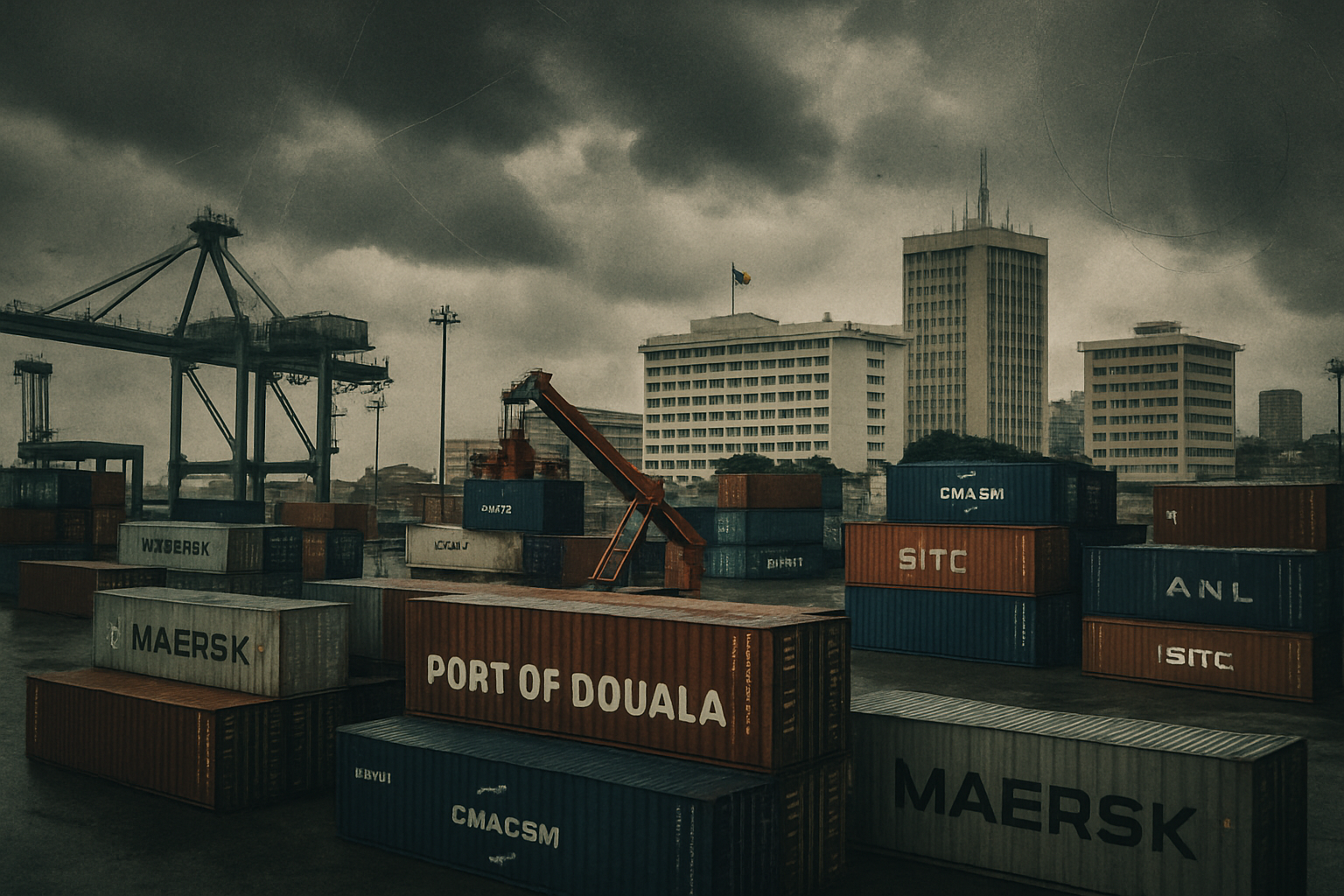
A devastating financial scandal has erupted in Cameroon as official government reports reveal SGS Cameroun S.A., the Swiss multinational corporation responsible for cargo scanning at the Port of Douala, systematically defrauded the state of a staggering 1,745,284,376,303 CFA francs ($2.8 billion) between 2021 and 2023 while allegedly receiving state protection.
The explosive allegations, detailed in an official Ministry of Finance report, expose what investigators describe as "massive and organized fraud" orchestrated by the Geneva-based inspection company at Cameroon's economic lifeline — the Port Autonome de Douala, which handles the vast majority of the country's international trade.
Systematic Fraud at Economic Heart
According to the damning government investigation, SGS Cameroun S.A. exploited its privileged position as the official cargo scanning contractor to conduct what officials characterize as a "fraudulent system" that bled the state treasury dry over three consecutive fiscal years. The company held the strategic contract for pre-shipment inspection and cargo scanning services at the port, giving it unprecedented access to customs operations and revenue streams.
The Port Autonome de Douala serves as Cameroon's primary economic gateway, handling approximately 95% of the country's imports and serving as a crucial transit hub for landlocked Central African nations including Chad and the Central African Republic. The alleged fraud therefore strikes at the very foundation of the national economy.
Investigative sources indicate that the Swiss multinational manipulated scanning procedures, documentation processes, and revenue reporting mechanisms to systematically divert funds that should have flowed to state coffers. The sophisticated nature of the alleged scheme suggests extensive planning and coordination spanning multiple levels of operation.
State Protection Allegations Surface
Perhaps more shocking than the fraud itself are explosive claims that the Cameroonian state actively protected SGS from accountability measures. Government sources, speaking on condition of anonymity, allege that high-ranking officials provided institutional cover for the company's activities, creating what critics describe as a "protection racket" that enabled the massive financial hemorrhaging to continue undetected.
The allegations of state complicity represent a devastating blow to Cameroon's governance credibility and raise serious questions about the penetration of corporate interests into government decision-making processes. Opposition politicians have demanded immediate parliamentary investigations into which officials allegedly facilitated or covered up the fraudulent activities.
Anti-corruption activists point to the case as emblematic of broader systemic problems in Cameroon's management of strategic infrastructure contracts with multinational corporations. The alleged state protection of a foreign company defrauding national resources has sparked outrage among civil society groups demanding accountability.
International Implications
The SGS scandal occurs amid heightened global scrutiny of corporate conduct in developing markets, particularly regarding the activities of European multinationals in Africa. SGS Group, headquartered in Geneva, positions itself as a world leader in inspection, verification, testing, and certification services, making these allegations particularly damaging to its international reputation.
The timing of the revelations coincides with increased international attention to corporate corruption in Africa following a series of high-profile cases involving European companies. The European Union and Swiss authorities may face pressure to investigate SGS's global operations and corporate governance practices.
Regional economic implications extend beyond Cameroon's borders, as the Port of Douala's compromised integrity potentially affects trade flows throughout Central Africa. Neighboring countries that rely on the port for their international commerce may demand assurances that their own cargo handling has not been compromised by fraudulent practices.
Economic Impact Assessment
The 1.745 trillion CFA franc loss represents approximately 4.2% of Cameroon's total GDP, making it one of the largest corporate fraud cases in the country's history. Economic analysts warn that the financial damage extends far beyond the immediate monetary loss, potentially undermining investor confidence and damaging Cameroon's international financial standing.
The alleged fraud occurred during a period when Cameroon was implementing significant infrastructure development programs, meaning the diverted funds could have supported critical national development projects. The lost revenue could have funded major improvements to healthcare systems, educational infrastructure, or transportation networks.
Port operations experts indicate that fraudulent scanning procedures may have compromised trade facilitation and customs efficiency, potentially imposing additional costs on legitimate businesses and traders using the facility. The broader economic ecosystem surrounding the port may have suffered reduced competitiveness due to corrupted operational processes.
Investigative Methodology
The Ministry of Finance investigation employed sophisticated financial analysis techniques to uncover the alleged fraud patterns. Investigators examined customs documentation, revenue reporting systems, scanning procedure compliance, and financial flows between SGS and various government agencies over the three-year period.
Digital forensic analysis reportedly revealed discrepancies between actual cargo volumes, scanning activities, and revenue reports submitted by SGS to government authorities. The investigation also examined communication patterns between company officials and government representatives, potentially uncovering evidence of coordination in fraudulent activities.
International audit standards were applied to ensure the investigation's credibility, with external expertise consulted to validate findings. The comprehensive nature of the investigation strengthens the government's position in any potential legal proceedings against SGS or complicit officials.
Corporate Response and Legal Implications
SGS Group has not yet issued a comprehensive public response to the allegations, though company representatives have indicated they will cooperate fully with any official investigations. The company's legal exposure potentially extends beyond financial restitution to include criminal liability for fraud and corruption charges.
Legal experts suggest that the case could set important precedents for holding multinational corporations accountable for fraudulent activities in African markets. The alleged state complicity adds complexity to potential prosecutions, as investigators must determine the extent of official involvement in facilitating or concealing the fraud.
Recovery of the 1.745 trillion CFA francs may prove challenging given the international nature of SGS operations and the potential complexity of tracing diverted funds through corporate structures. Asset recovery specialists may need to coordinate across multiple jurisdictions to identify and freeze potentially fraudulent proceeds.
Reform Implications
The scandal has intensified calls for comprehensive reform of Cameroon's public procurement processes and oversight mechanisms for strategic infrastructure contracts. Transparency advocates demand implementation of real-time monitoring systems and independent oversight bodies to prevent similar fraudulent schemes.
Parliamentary opposition groups are demanding immediate hearings on the SGS case and broader reviews of all major infrastructure contracts involving foreign corporations. The revelations may force fundamental reassessment of how Cameroon manages relationships with multinational service providers in strategic economic sectors.
International development organizations emphasize that the case highlights the critical importance of robust governance frameworks when developing countries engage with global corporations. Enhanced transparency requirements and strengthened regulatory capacity may be necessary to prevent future exploitation.
Ongoing Investigations
Government sources indicate that investigations into the SGS affair are expanding beyond the initial Ministry of Finance report. Multiple agencies are reportedly examining different aspects of the alleged fraud, including potential money laundering, tax evasion, and corruption charges against individuals.
The investigation's scope may extend to other SGS operations in Cameroon and potentially other countries where the company holds similar contracts. Regional coordination with neighboring countries may be necessary to assess whether similar fraudulent patterns exist elsewhere in Central Africa.
As investigations continue, the SGS Cameroon scandal represents a critical test of Cameroon's commitment to corporate accountability and transparent governance. The case's resolution will significantly impact public confidence in the government's ability to protect national economic interests from corporate exploitation while ensuring that justice is served regardless of the perpetrators' international connections or alleged state protection.