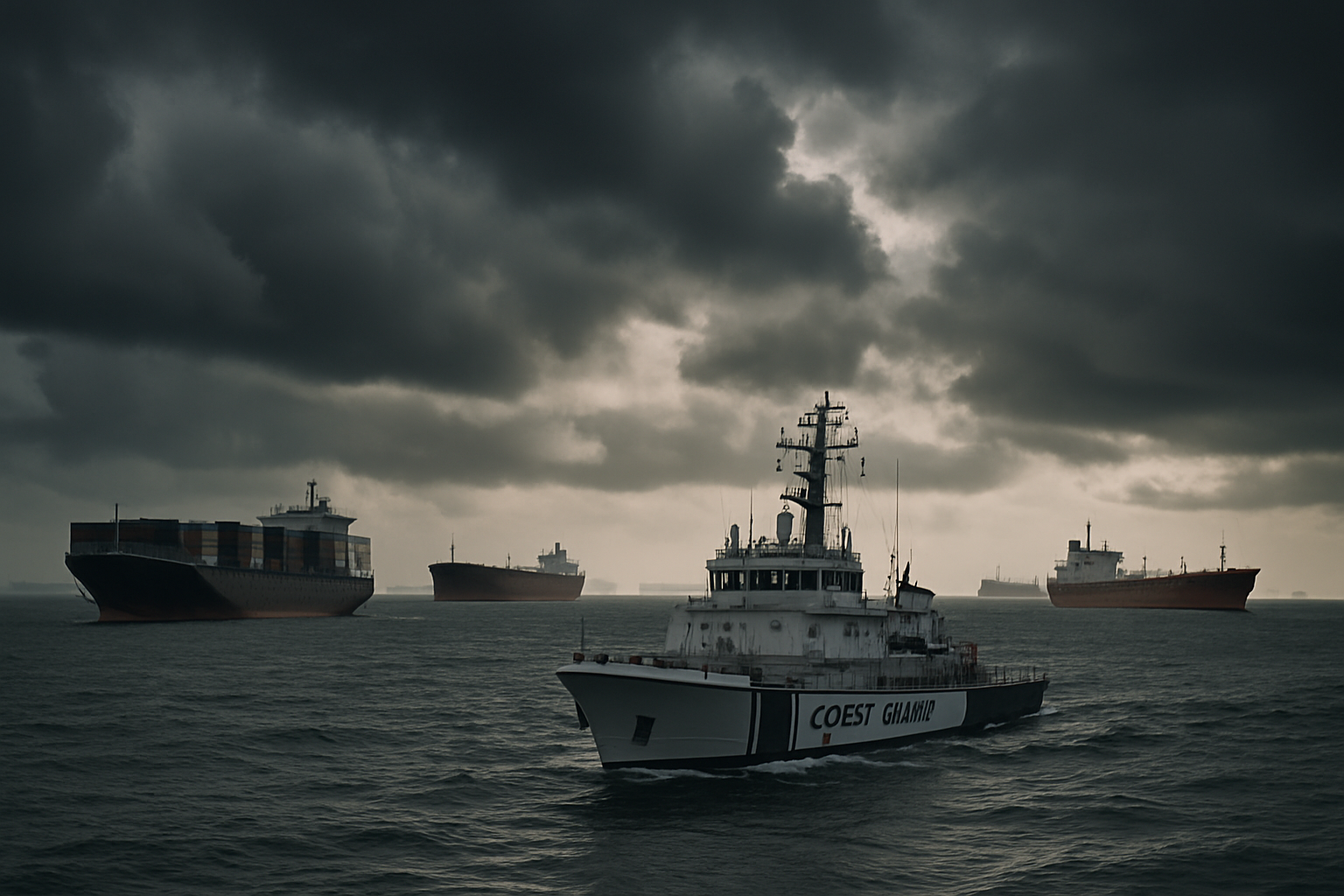
A comprehensive investigation across multiple maritime jurisdictions reveals alarming gaps in international shipping enforcement, as shadow fleet operations continue to exploit regulatory weaknesses while serious safety incidents underscore growing vulnerabilities in global maritime infrastructure.
Recent analysis by German investigative outlets NDR, WDR, and Süddeutsche Zeitung has exposed that one-third of vessels operating within Russia's shadow fleet lack proper flag state authorization, creating significant enforcement opportunities that European Union member states have been reluctant to utilize despite clear legal justification under international maritime law.
Shadow Fleet Operations Expose Enforcement Gaps
The investigation into Russia's shadow fleet operations reveals systematic exploitation of maritime regulatory frameworks, with sophisticated networks using false documentation and concealed ownership structures to circumvent international sanctions. Intelligence estimates suggest over 600 vessels worldwide participate in this shadow fleet, employing advanced evasion methods that challenge traditional maritime surveillance capabilities.
According to the German investigation, the lack of correct flag state registration creates clear legal grounds for vessel interdiction under international maritime law. However, EU member states have demonstrated hesitancy to act decisively, despite having the legal authority to stop these vessels in international waters.
This enforcement gap occurs against the backdrop of the EU's 20th sanctions package against Russia, implemented in February 2026, which introduced the most comprehensive maritime services ban to date. The package includes a complete prohibition on insurance, maintenance, port access, and technical support for Russian crude oil exports, while adding 43 additional vessels to the shadow fleet blacklist.
Greek Maritime Industry Surge Amid Global Uncertainty
While enforcement challenges persist, the Greek maritime sector continues its expansion trajectory with significant new vessel orders. Following 47 new ship orders recorded in January 2026, Greek shipowners have placed an additional 16 orders for new vessels, according to Intermodal's survey for industry publication "N".
This surge in Greek maritime investment occurs amid broader industry transformation, with companies like Atlas Maritime under Leo Patitsas making strategic returns to the Suezmax tanker market through new orders from South Korean shipbuilder DH Shipbuilding. Such strategic pivots from automotive carriers toward crude oil transportation reflect industry diversification strategies amid market uncertainty.
The Greek shipping industry's operational excellence has been recognized through industry performance rankings, with Safety Management Overseas S.A. and Safe Bulkers Management Ltd. achieving top scores in RISK4SEA's 6th edition "Top PSC Performers" list, demonstrating zero detentions over 36 months of verified inspection data.
Maritime Safety Incidents Raise Serious Concerns
Recent maritime incidents across multiple jurisdictions highlight persistent safety challenges facing the industry. In New Zealand, Maritime New Zealand has launched an investigation into the sinking of a Fiordland Jet commercial jetboat on the Waiau River, while the country also faces tragic military training accidents affecting maritime-related operations.
The incident involving the Fiordland Jet vessel underscores the importance of comprehensive safety protocols across all maritime operations, from commercial tourism to military training exercises. These incidents occur as the industry grapples with increased regulatory scrutiny and the need for enhanced safety management systems.

Regulatory Framework Evolution
The maritime industry faces unprecedented regulatory evolution as international authorities adapt to sophisticated evasion techniques employed by sanctioned entities. The EU's enhanced maritime services ban represents a dramatic expansion from previous oil import restrictions, targeting the service infrastructure that makes sanctions compliance more enforceable.
However, EU officials acknowledge significant enforcement challenges given the complexity of global maritime commerce and the sophisticated methods employed by shadow fleet operators. The success of these measures depends heavily on international cooperation in maritime surveillance, port inspections, and financial monitoring.
Greece and Cyprus, as major maritime nations, negotiated specific implementation timelines due to their significant shipping industries, highlighting the delicate balance between enforcement objectives and economic realities within the EU framework.
Technology and Surveillance Enhancements
Modern maritime enforcement increasingly relies on advanced surveillance technologies, including satellite vessel tracking, AI-powered water quality sensors, and real-time analytics systems. These technological innovations provide tools for rapid threat response and evidence-based policy making, enabling authorities to monitor vessel movements and identify suspicious activities across vast oceanic areas.
The integration of sophisticated monitoring systems represents a significant evolution in maritime law enforcement capabilities, though challenges remain in coordinating information sharing across multiple jurisdictions and legal frameworks.
Economic and Strategic Implications
The current maritime crisis extends far beyond regulatory compliance, affecting global trade patterns, energy security, and regional economic stability. The systematic targeting of Russian energy exports through maritime services restrictions has created additional uncertainty in shipping markets, with companies pursuing operational efficiency improvements and route diversification strategies.
Environmental regulations continue to drive demand for cleaner vessels, making older designs less attractive for long-term investment. This intersection of compliance requirements, technological advancement, and market uncertainty creates unprecedented decision-making challenges for maritime executives worldwide.
"The maritime industry is navigating the most complex operational environment in decades, requiring unprecedented levels of cooperation between international authorities and private sector operators."
— Maritime Security Expert
Global Trade Evolution Impact
Structural shifts in global trade patterns are fundamentally reshaping maritime transportation requirements. Automotive manufacturers regionalizing production has reduced long-distance shipping demand, while electric vehicle manufacturing growth is changing the geographical distribution of production and component sourcing.
These changes force shipping companies to reconsider traditional business models and explore new market opportunities beyond established cargo patterns. The Pure Car Truck Carrier (PCTC) market exemplifies these challenges, having reached a turning point after extraordinary ordering activity from 2021-2024 but now facing subdued new orders amid capacity surge and market uncertainty.
International Cooperation Challenges
Success in addressing maritime enforcement challenges requires enhanced international cooperation on multiple fronts. The complex nature of transnational maritime ecosystems means that ocean currents, fish migration patterns, and pollution plumes cross national boundaries, making unilateral enforcement efforts insufficient.
Current developments demonstrate both the potential for international collaboration and its limitations. While regional powers have shown unprecedented support for certain diplomatic processes, the enforcement of maritime sanctions and safety regulations continues to face coordination challenges across different legal and regulatory frameworks.
Future Outlook and Strategic Recommendations
The maritime industry's future success depends on its ability to adapt to evolving regulatory frameworks while maintaining operational excellence and strategic flexibility. Companies demonstrating adaptability through market diversification and operational innovation are better positioned to navigate the complex global shipping environment.
Key strategic priorities include:
- Enhanced compliance systems capable of managing complex international regulatory requirements
- Investment in next-generation vessel technologies with advanced environmental and safety capabilities
- Diversified operational strategies beyond traditional cargo markets
- Strengthened international cooperation frameworks for maritime security
The current maritime crisis represents both significant challenges and opportunities for industry transformation. Organizations with robust compliance frameworks, operational excellence, and strategic vision are best positioned to navigate these complex dynamics while contributing to enhanced global maritime security.
As the industry continues to evolve, the integration of advanced technology, international cooperation, and sustainable practices will determine which companies and regions emerge as leaders in the new global maritime landscape. The stakes extend beyond commercial success to encompass fundamental questions of international security, environmental protection, and global trade stability.