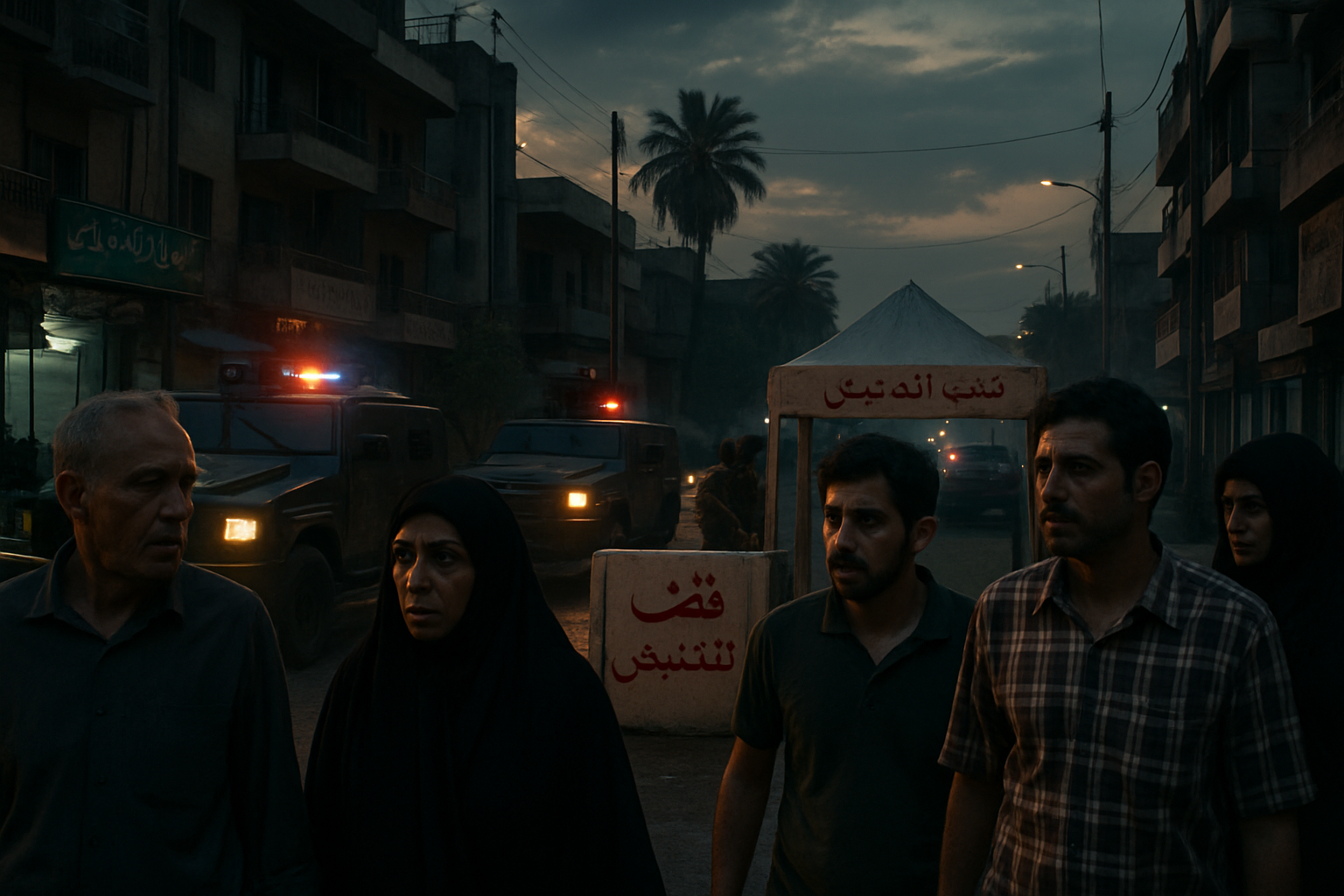
American freelance journalist Shelly Kittleson has been kidnapped in Baghdad by suspected Iranian-backed armed groups, marking a significant escalation in the ongoing Middle East crisis that has already claimed thousands of lives across the region.
The abduction occurred on Tuesday when four armed men seized Kittleson and forced her into a vehicle in the Iraqi capital. Police officials, speaking on condition of anonymity, confirmed the identity of the victim as the experienced war correspondent who has covered multiple conflicts across the Middle East region.
The Kidnapping and Initial Response
The Iraqi Interior Ministry confirmed the abduction of a female journalist but initially declined to disclose her nationality. Ministry officials stated that one suspect was arrested during the immediate aftermath and that efforts were ongoing to secure the journalist's release.
According to sources cited by multiple international news outlets, including AL-Monitor, Kittleson is a U.S. freelance journalist based in Rome who has extensively covered wars in the region and contributed articles to various media organizations. Her expertise in Middle Eastern affairs and her experience in conflict zones made her a valuable correspondent in one of the world's most volatile regions.
Footage appears to show the journalist being forcibly shoved into a car by unknown assailants in broad daylight. The brazen nature of the kidnapping, captured on what appears to be surveillance video, underscores the deteriorating security situation in Baghdad.
U.S. State Department Response
A State Department official confirmed that the United States was aware of the reported kidnapping of an American journalist in Baghdad. Significantly, the official revealed that Washington had previously issued warnings to the individual regarding threats against them.
"The State Department previously fulfilled our duty to warn this individual of threats against them and we will continue to coordinate with the FBI to ensure their release."
— State Department Official
The revelation that Kittleson had been specifically warned about threats raises serious questions about the intelligence available to U.S. authorities regarding the safety of American journalists in Iraq, particularly during the current regional crisis.
Iranian-Backed Militia Connection
Multiple sources, including Swedish media reports, indicate that Kittleson was threatened by the Iranian-backed terrorist group Kataib Hezbollah prior to her kidnapping. This connection places the abduction within the broader context of the ongoing Iran-U.S. conflict that has engulfed the Middle East since early March 2026.
According to Iraqi authorities, one person was arrested when his getaway vehicle crashed during the kidnapping operation. However, other suspects escaped with Kittleson, indicating a coordinated operation by experienced operatives familiar with Baghdad's geography and security apparatus.
The timing of the kidnapping is particularly significant, occurring during what UN Secretary-General António Guterres has called "the greatest test of multilateral cooperation in the modern era" – the ongoing Iran-U.S. crisis that has resulted in the deaths of over 787 civilians and the displacement of hundreds of thousands across the region.
Regional Context and Security Deterioration
The kidnapping takes place against the backdrop of Operation Epic Fury, the largest coordinated U.S.-Israeli military campaign since the 2003 Iraq invasion. The operation has cost over $27 billion and resulted in unprecedented global disruption, including the cancellation of more than 18,000 flights worldwide and oil prices surging past $100 per barrel due to the closure of the Strait of Hormuz.
Iraq has become increasingly unstable as Iranian-backed militias have intensified their operations against Western targets. The country's security forces are stretched thin, managing both domestic challenges and the spillover effects from the broader regional conflict.
The March 1 death of Iranian Supreme Leader Ali Khamenei during U.S.-Israeli strikes has further destabilized the region, with his son Mojtaba Khamenei assuming power in the first hereditary succession in the Islamic Republic's 47-year history. This transition has consolidated Revolutionary Guard influence over Iranian governance and intensified proxy group activities across the region.
Press Freedom Under Threat
Kittleson's kidnapping highlights the extreme dangers faced by journalists working in Iraq and the broader Middle East. The Committee to Protect Journalists has documented that 2025 was the deadliest year on record for media workers globally, with 129 journalists killed.
Iraq has remained one of the world's most dangerous countries for journalists since the 2003 U.S. invasion. The current regional crisis has exponentially increased these risks, with Iranian-backed groups specifically targeting Western nationals and institutions as part of their broader campaign against American interests in the region.
The fact that Kittleson continued her reporting despite explicit U.S. government warnings demonstrates the professional commitment of journalists working in these dangerous environments, often at great personal risk to ensure the world receives accurate information about critical global events.
International Diplomatic Implications
The kidnapping of an American journalist adds another complex layer to the already strained diplomatic efforts to resolve the regional crisis. While Pakistan has offered to mediate between the U.S. and Iran, and multiple countries have attempted to facilitate dialogue, incidents like this kidnapping further complicate peace negotiations.
The abduction represents the first known kidnapping of an American journalist since the current Iran crisis escalated in March 2026. It follows a pattern of Iranian-backed groups targeting Western assets across the region, including attacks on military bases, energy infrastructure, and civilian targets.
European allies have already expressed concerns about the safety of their nationals in the region, with multiple countries ordering immediate evacuations from Iran and surrounding areas due to what they describe as "extremely uncertain" security conditions.
Ongoing Rescue Operations
Iraqi security forces have launched a large-scale operation to locate and rescue Kittleson. Officials report using "precise intelligence data" to track the kidnappers, though they have not provided details about the progress of these efforts.
The arrest of one suspect during the initial escape attempt has provided authorities with potential leads, though the remaining suspects' familiarity with Baghdad suggests they may have access to safe houses and escape routes throughout the city.
Italian media have reported conflicting information about a possible release or hospitalization with injuries, but these reports lack official confirmation and may represent misinformation designed to confuse rescue efforts.
Broader Regional Crisis
The kidnapping occurs during the most dangerous international crisis since the end of the Cold War. The conflict has resulted in unprecedented global consequences, including the effective closure of the Strait of Hormuz – through which 40% of the world's oil transits – causing severe energy disruptions worldwide.
Iran's Revolutionary Guards have declared that "no red lines remain" in their confrontation with the United States and Israel, leading to systematic attacks on American and allied targets throughout the Middle East. This escalation has forced NATO to withdraw forces from Iraq and has prompted the largest international evacuation operations since the Arab Spring of 2011.
The human cost of this broader conflict continues to mount, with civilians bearing the brunt of military operations on all sides. The kidnapping of journalists like Kittleson represents another tragic dimension of how armed conflicts impact those whose job it is to document and report on these events for the world.
Looking Forward
As rescue efforts continue for Shelly Kittleson, her case has become emblematic of the broader challenges facing press freedom in conflict zones. The international community's response to her kidnapping will likely influence how Iranian-backed groups view the targeting of journalists and other civilians in the future.
The incident also underscores the urgent need for diplomatic solutions to the regional crisis. With journalist safety, energy security, nuclear governance, and international stability all at stake, the current conflict represents a template-setting moment for 21st-century crisis management that will have implications extending far beyond the current events.
The safe return of Kittleson remains a priority for U.S. authorities and the international community, serving as a crucial test of Iraq's ability to maintain security for international personnel during one of the most challenging periods in the region's modern history.