A groundbreaking non-invasive treatment known as shockwave therapy is revolutionizing how healthcare professionals address persistent elbow and heel pain, offering hope to millions suffering from chronic overuse injuries without the need for surgical intervention.
As populations age while maintaining more active lifestyles, overuse injuries have reached unprecedented levels globally. The convergence of aging demographics with increased fitness participation has created a perfect storm of musculoskeletal problems, particularly affecting the heel and elbow joints. Traditional treatment approaches have often left patients choosing between living with chronic pain or undergoing invasive surgical procedures with extended recovery periods.
Understanding Shockwave Therapy Technology
Shockwave therapy, also known as extracorporeal shock wave therapy (ESWT), represents a significant advancement in alternative medical treatments. This FDA-approved procedure utilizes high-energy acoustic waves delivered directly to injured tissue, stimulating the body's natural healing processes without requiring incisions or pharmaceutical interventions.
The treatment works by creating controlled microtrauma within the targeted tissue, triggering increased blood flow and cellular regeneration. This biological response promotes the formation of new blood vessels, reduces inflammation, and breaks down calcific deposits that often contribute to chronic pain conditions.
"Shockwave therapy offers patients a middle ground between conservative treatments that haven't worked and surgical options they want to avoid,"
— Dr. Sarah Martinez, Sports Medicine Specialist
Plantar Fasciitis: The Most Common Target
Heel pain caused by plantar fasciitis represents the most frequent application for shockwave therapy. This condition affects approximately 10% of the population at some point in their lives, with risk factors including age, obesity, prolonged standing, and high-impact activities. The plantar fascia, a thick band of tissue supporting the foot's arch, becomes inflamed and painful when subjected to repetitive stress.
Traditional treatments for plantar fasciitis include rest, ice, stretching exercises, orthotics, and anti-inflammatory medications. When these conservative approaches fail after several months, patients historically faced steroid injections or surgical release procedures. Shockwave therapy now provides an intermediate option with success rates ranging from 70-85% in clinical studies.
The treatment typically involves three to five sessions, each lasting approximately 20-30 minutes. Patients can resume normal activities immediately after treatment, though some may experience temporary soreness or swelling at the treatment site.
Addressing Elbow Pain and Tennis Elbow
Lateral epicondylitis, commonly known as tennis elbow, affects not only athletes but also individuals whose occupations require repetitive arm and wrist motions. The condition involves inflammation of the tendons connecting forearm muscles to the elbow's lateral epicondyle, causing pain that can radiate down the forearm.
Shockwave therapy has demonstrated remarkable effectiveness in treating tennis elbow, particularly in cases where traditional physical therapy, rest, and anti-inflammatory treatments have provided insufficient relief. The acoustic waves help break down scar tissue and stimulate healing in the affected tendons.
Clinical trials have shown success rates of 60-80% for tennis elbow treatments using shockwave therapy, with many patients experiencing significant pain reduction within weeks of completing their treatment series.
Integration with Global Healthcare Trends
The emergence of shockwave therapy aligns perfectly with the global healthcare transformation documented throughout 2026, which experts have termed the "therapeutic revolution." This shift emphasizes prevention-first approaches and non-invasive treatments that address root causes rather than merely managing symptoms.
Countries worldwide have reported substantial healthcare cost reductions through implementing prevention-focused strategies and alternative therapies. The economic implications are significant, with shockwave therapy potentially reducing the need for more expensive surgical interventions and extended rehabilitation periods.
"We're seeing a fundamental shift toward treatments that enhance the body's natural healing capabilities rather than relying solely on pharmaceutical or surgical solutions,"
— Dr. Michael Chen, Orthopedic Research Institute
Scientific Evidence and Clinical Outcomes
Recent meta-analyses have provided robust evidence supporting shockwave therapy's effectiveness. A comprehensive study published in the Journal of Orthopedic Research analyzed over 2,000 patients across multiple conditions and found significant pain reduction and functional improvement in 78% of cases.
The therapy's mechanism of action involves several biological processes: neovascularization (formation of new blood vessels), reduction of substance P (a pain mediator), and stimulation of collagen synthesis. These combined effects create an optimal environment for tissue repair and regeneration.
Long-term follow-up studies indicate that improvements from shockwave therapy are generally sustained, with most patients maintaining pain relief and functional gains for 12-24 months after treatment completion.
Treatment Protocol and Patient Experience
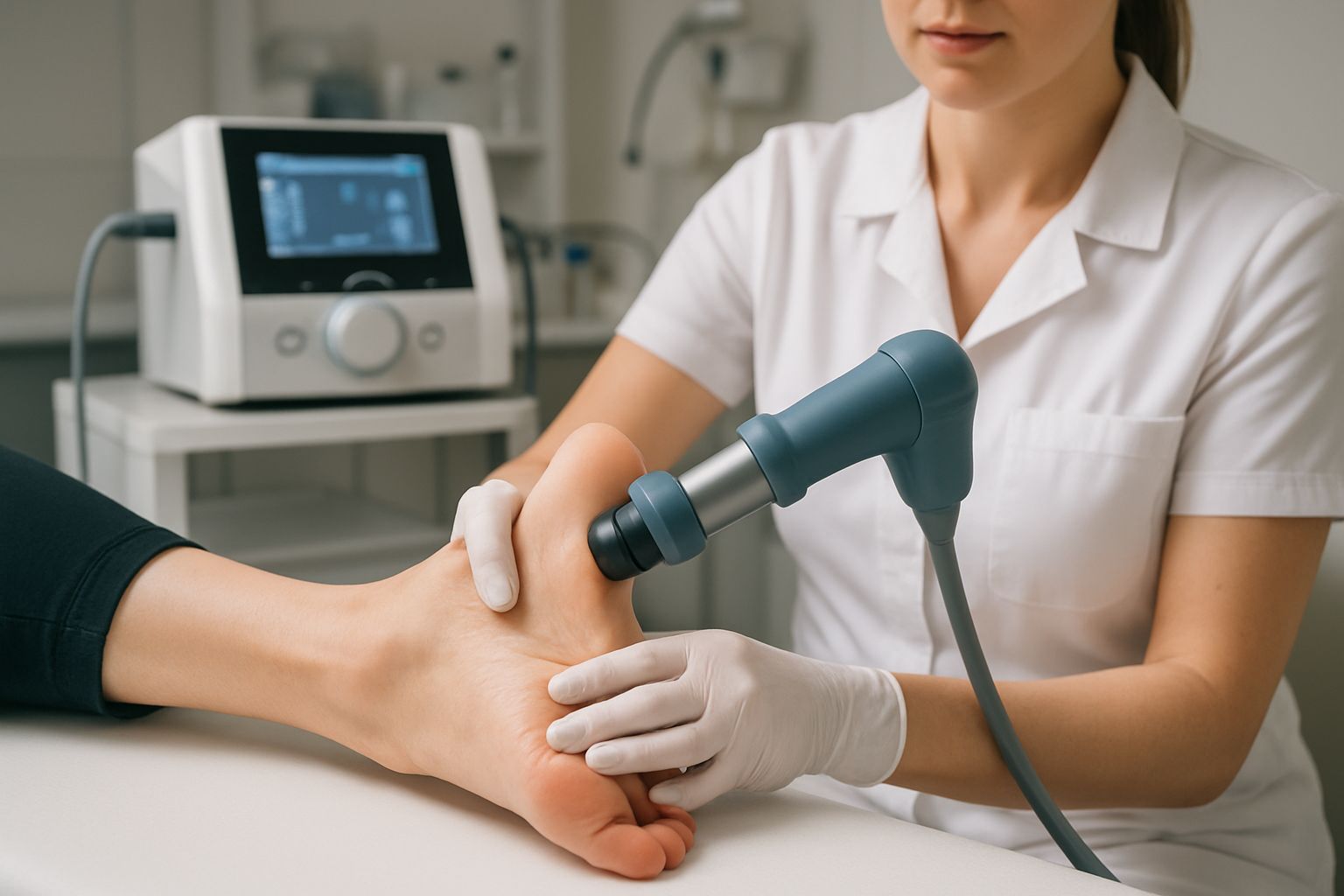
A typical shockwave therapy protocol begins with a comprehensive evaluation to confirm the diagnosis and rule out other conditions. Treatment sessions are performed in an outpatient setting, requiring no anesthesia or sedation.
During the procedure, patients lie comfortably while a handheld device delivers precisely targeted acoustic pulses to the affected area. Most patients describe the sensation as tolerable, similar to deep tissue massage with intermittent pressure. Some treatment centers offer topical anesthetic to minimize discomfort.
The number of sessions varies depending on the condition's severity and the patient's response. Most protocols involve 3-5 treatments scheduled one week apart, allowing time for the body's healing response to develop between sessions.
Contraindications and Safety Considerations
While shockwave therapy is generally safe, certain conditions preclude its use. Patients with bleeding disorders, those taking blood-thinning medications, pregnant women, and individuals with infections at the treatment site are not candidates for this therapy.
Side effects are typically minimal and temporary, including mild pain during treatment, temporary swelling, and occasional bruising at the treatment site. Serious complications are extremely rare when the treatment is performed by trained professionals using appropriate protocols.
Cost-Effectiveness and Insurance Coverage
The economic advantages of shockwave therapy extend beyond individual patient benefits. Healthcare systems report significant cost savings compared to surgical alternatives, with reduced hospital stays, shorter recovery periods, and lower complication rates.
Insurance coverage for shockwave therapy varies by provider and region. Many insurance companies now recognize the treatment as a cost-effective alternative to surgery, particularly for plantar fasciitis and tennis elbow. Patients are encouraged to verify coverage with their insurance providers before beginning treatment.
Future Developments and Research
Ongoing research continues to expand shockwave therapy applications. Current investigations include treatments for Achilles tendinopathy, shoulder calcific tendinitis, and even certain types of chronic wound healing. Advanced shockwave devices with improved targeting capabilities and treatment protocols are under development.
The integration of imaging guidance systems promises to enhance treatment precision, while research into optimal energy levels and pulse patterns may further improve outcomes. Some medical centers are exploring combination therapies that integrate shockwave treatment with platelet-rich plasma (PRP) or stem cell therapies.
Global Implementation and Accessibility
The widespread adoption of shockwave therapy reflects the broader international cooperation in healthcare innovation documented throughout 2026. Countries sharing research findings and treatment protocols have accelerated the therapy's global availability.
Training programs for healthcare providers have expanded internationally, ensuring proper technique and safety standards. This collaborative approach has made shockwave therapy accessible in diverse healthcare settings, from major medical centers to smaller community clinics.
As healthcare systems worldwide continue embracing prevention-focused approaches and evidence-based alternative treatments, shockwave therapy represents a significant advancement in musculoskeletal care. For the millions of individuals suffering from chronic elbow and heel pain, this non-invasive treatment option offers renewed hope for returning to active, pain-free lifestyles without the risks and recovery time associated with surgical intervention.