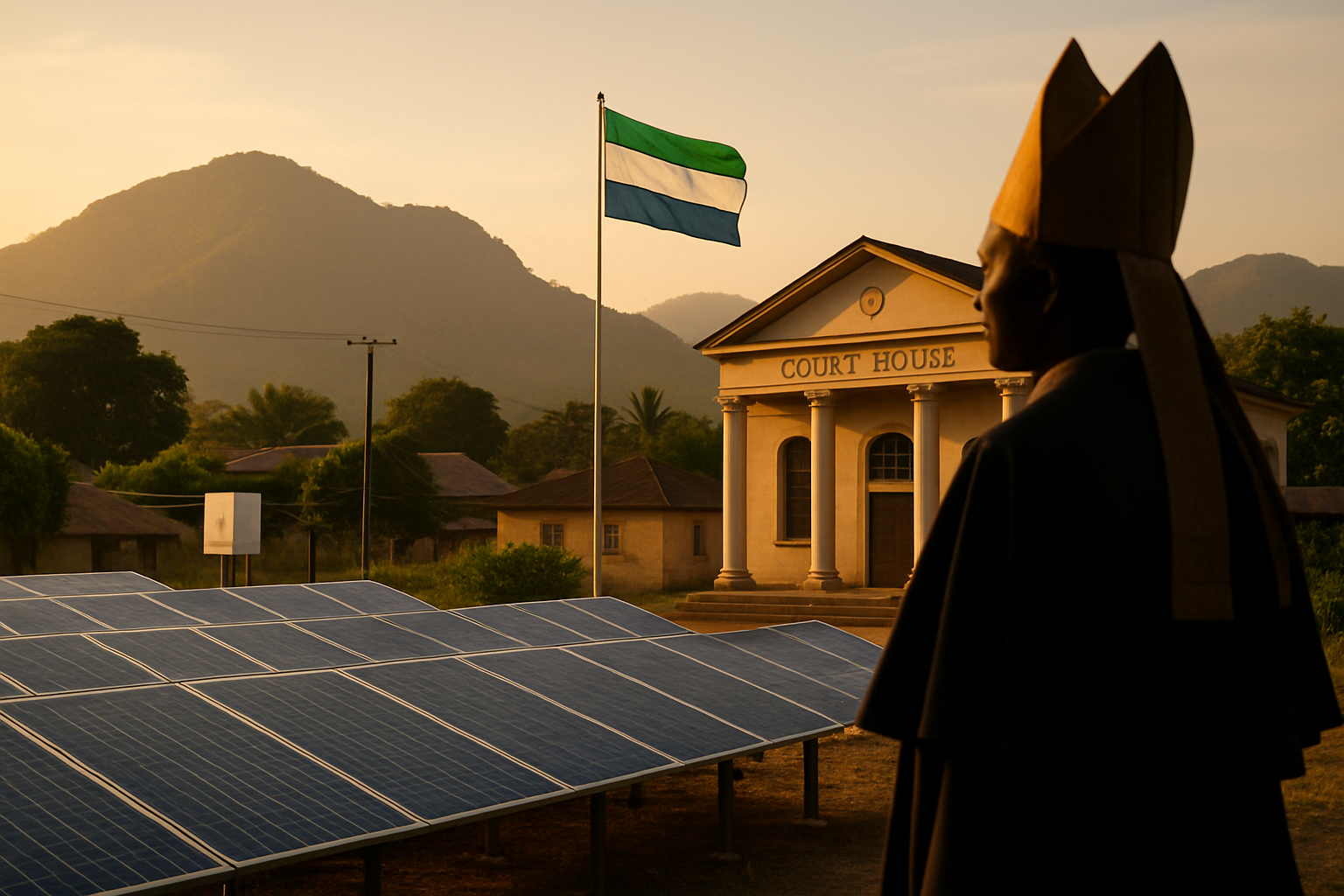
Sierra Leone has achieved a series of historic milestones that collectively demonstrate the West African nation's remarkable progress in governance, energy access, and religious leadership, signaling a new chapter in its post-conflict development trajectory.
Three major developments in March 2026 have positioned Sierra Leone as a model for comprehensive national development: the consecration of the country's first female bishop, the successful completion of a renewable energy project serving over 15,000 rural residents, and unprecedented judicial reforms that will bring appellate courts directly to regional communities for the first time.
Religious Leadership Breaks New Ground
The United Brethren in Christ (UBC) Sierra Leone Conference made history on February 15, 2026, by consecrating Reverend Elizabeth Eleanor Wuyah Sowa as its first-ever female bishop. The ceremony, held following her election on October 10, 2025, at the Henrietta School Compound in Kenema City, marked what church leaders described as "a defining moment for the conference."
The consecration ceremony drew ministers, delegates, ecumenical partners, and dignitaries from across Sierra Leone. Representatives from the Council of Churches in Sierra Leone, the Evangelical Fellowship of Sierra Leone, the Inter-Religious Council of Sierra Leone, sister denominations, and members of the wider Christian community gathered to witness this historic moment.
"This represents not just a milestone for our denomination, but a significant step forward for women's leadership in Sierra Leone's religious community."
— UBC Sierra Leone Conference Leadership
The electoral process that produced Reverend Sowa was characterized by church officials as thorough and transparent, reflecting broader trends toward inclusive governance across Sierra Leone's institutions.
Renewable Energy Transforms Rural Communities
Sierra Leone's commitment to sustainable development reached a significant milestone with the completion of the Project for Enhancing the Impact of Rural Renewable Energy, officially closed on February 27, 2026, at the UNDP Conference Room in Freetown.
The initiative, implemented by the United Nations Office for Project Services (UNOPS) in collaboration with Sierra Leone's Ministry of Energy and funded by Japan, represents a transformative investment in rural energy infrastructure. The project was carried out across six communities in Bo District and involved the installation of solar power plants and network grid distribution systems.
Japan's Ambassador to Sierra Leone, Hiroshi Yoshimoto (resident in Ghana), praised the project's successful completion, noting it was "delivered through patience, collaboration, and sustained commitment to improving the lives of Sierra Leone's rural communities." The five-year initiative, which commenced in 2021, ultimately benefited more than 15,000 residents.
Judicial System Reaches New Communities
In a groundbreaking move for Sierra Leone's justice system, the Judiciary announced that the Court of Appeal will sit in the South-East Region for the first time, hearing 24 appeals originating from the Southern and Eastern Provinces. The announcement, made on March 2, 2026, represents a landmark step in the ongoing judicial reform program.
The initiative aligns with Chief Justice Komba Kamanda's commitment to making justice "more accessible, affordable, and responsive to the needs of all citizens." The Court of Appeal commenced its historic circuit sittings on March 10, 2026, in Kenema City, covering appeals from the Southern Region including Bo, Moyamba, Bonthe, and Pujehun districts, as well as Eastern Region cases from Kono, Kenema, and Kailahun districts.
This decentralization of court services is designed to reduce litigation costs and bring justice closer to the people, addressing longstanding challenges in accessing higher courts that previously required expensive travel to the capital.
Context of Broader National Development
These achievements occur within the context of Sierra Leone's broader development momentum. The country has been implementing comprehensive reforms across multiple sectors, building on lessons learned from its post-conflict reconstruction and the challenges overcome during the Ebola crisis.
Sierra Leone's approach to development has increasingly emphasized community ownership, technological integration, and institutional capacity building. The renewable energy project exemplifies this approach, combining international partnership with local implementation and sustainable technology solutions.
The judicial reforms reflect a broader commitment to governance improvements that were highlighted in the recent appointment of Edmond Sylvester Alpha as new Electoral Commission Chairman, who emphasized professionalism, accountability, and institutional renewal in his presentation to Parliament.
Regional and International Significance
Sierra Leone's achievements resonate beyond its borders, contributing to broader West African development patterns. The country has been recognized as participating in international partnerships, including involvement in critical minerals cooperation frameworks that position African nations as strategic partners in global supply chain diversification.
The renewable energy project's success demonstrates the effectiveness of South-South cooperation, with Japan's technical expertise and funding combining with Sierra Leone's implementation capacity and UNOPS coordination to create lasting impact for rural communities.
"These milestones represent Sierra Leone's evolution from post-conflict recovery to proactive development leadership."
— Development Analyst
Challenges and Future Prospects
While celebrating these achievements, Sierra Leone continues to address ongoing development challenges. The success of the renewable energy project in Bo District creates a template for expansion to other regions, while the judicial reforms will require sustained political commitment and adequate resource allocation.
The consecration of the first female bishop occurs within broader conversations about inclusive leadership across Sierra Leone's institutions, reflecting gradual but meaningful progress in gender representation at senior levels.
Implementation Lessons and Sustainability
The success of these three initiatives offers valuable lessons for sustainable development implementation. The renewable energy project's five-year timeline demonstrates the importance of patient, long-term commitment to infrastructure development. The judicial reforms show how institutional innovation can address practical access challenges without requiring massive resource increases.
The religious leadership milestone reflects the importance of inclusive processes and community engagement in achieving meaningful social change. Each achievement required different forms of partnership – international cooperation for energy infrastructure, institutional reform for judicial access, and community consensus for religious leadership.
Looking ahead, Sierra Leone's experience provides a model for comprehensive national development that balances international partnership with local ownership, technical innovation with community needs, and institutional reform with practical service delivery. These historic milestones in March 2026 mark not an end point, but a foundation for continued progress across multiple dimensions of national development.