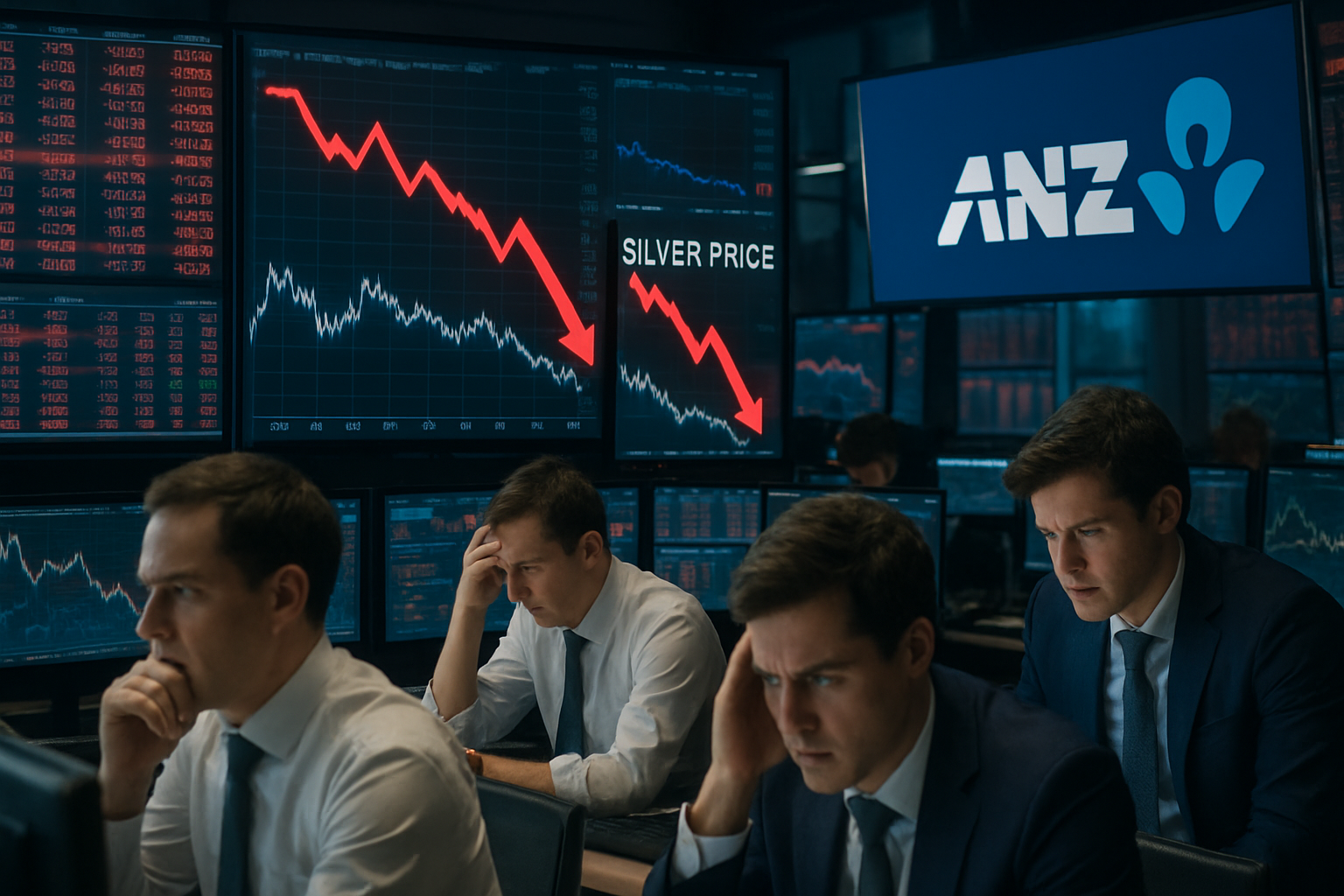
Financial markets continue to grapple with unprecedented volatility as silver prices exhibit wild swings reminiscent of meme stock frenzies, while major banking institutions like ANZ implement strategic rate adjustments to navigate the turbulent economic landscape.
The precious metals market has captured headlines for all the wrong reasons in early February 2026, with silver prices experiencing dramatic fluctuations that financial analysts are comparing to the notorious GameStop trading saga. According to Greek financial publication Naftemporiki, the recent trajectory of silver resembles less a traditional precious metal and more the collective madness that once sent GameStop shares soaring.
Silver's Roller Coaster Ride
Within just a few weeks, silver prices have experienced dramatic rises followed by equally spectacular collapses, creating a pattern that has left investors and analysts scrambling to understand the underlying dynamics. The volatility has drawn comparisons to speculative trading patterns that characterized the retail trading revolution of previous years.
This latest episode follows a historic precious metals crash on February 1, 2026, which industry experts dubbed the "decade's worst" market disruption. Silver plummeted 36% in a single day, marking the largest drop since the infamous Hunt Brothers collapse in March 1980. The metal opened at $105.93 during the crash, with the dramatic decline attributed to Chinese speculative capital withdrawal, options speculation, and Federal Reserve policy changes.
"The recent path of silver resembles less a traditional precious metal and more the collective frenzy that once sent GameStop stock soaring."
— Naftemporiki Analysis
Banking Sector Response: ANZ's Strategic Adjustments
Against this backdrop of market volatility, New Zealand's ANZ Bank has implemented strategic adjustments to its interest rate structure, signaling how financial institutions are adapting to the uncertain economic environment. The bank has increased longer-term fixed mortgage rates while simultaneously raising interest rates on Pie funds and term deposits.
These moves by ANZ reflect a broader trend among financial institutions seeking to balance risk management with competitive positioning in an increasingly volatile market environment. The simultaneous adjustment of mortgage rates and deposit returns suggests a calculated approach to managing both lending risk and deposit attraction in uncertain times.
Global Market Context
The current market turbulence extends far beyond precious metals, with interconnected global markets experiencing significant stress and recovery cycles. Recent data shows that Asian markets have led recovery efforts, with South Korea's KOSPI gaining over 4% and Japan's Nikkei rising 1,456 points (2.76%) in recent trading sessions.
The Philadelphia Semiconductor Index (SOX) gained 1.7%, leading a tech sector recovery that has provided some stability amid the commodity chaos. This sectoral rotation demonstrates investors' ability to differentiate between sector-specific risks and systemic financial threats.
Historical Parallels and Market Psychology
The comparison to GameStop is particularly striking given the role of retail investor sentiment and social media-driven trading in both phenomena. The original GameStop squeeze demonstrated how coordinated retail trading could drive extreme price movements in individual securities, creating massive volatility that challenged traditional market analysis.
Similarly, the current silver volatility appears to be driven by a combination of speculative trading, social media influence, and broader economic uncertainty. The pattern of rapid price appreciation followed by dramatic collapses mirrors the boom-bust cycles that have become increasingly common in markets influenced by retail investor sentiment.
Regulatory and Institutional Response
Financial institutions like ANZ are responding to this environment by adjusting their risk management strategies. The bank's decision to raise both mortgage rates and deposit rates suggests a careful balancing act between maintaining profitability and managing exposure to volatile market conditions.
The precious metals market disruption has also highlighted the interconnected nature of global financial markets. Russian markets experienced record 9 trillion ruble precious metals futures volumes in January before the crash, while Chinese speculative capital movements contributed significantly to the volatility.
Technical Analysis and Market Sentiment
From a technical perspective, the silver market has broken through several key support levels, with trading volumes reaching unprecedented heights during the most volatile periods. The psychological impact on investors has been significant, with sentiment swinging rapidly between euphoria and panic.
Swedish analysts have noted the "euphoria to panic" cycle but remain cautiously optimistic about potential recovery opportunities. The extreme oversold conditions in precious metals may create rebound opportunities for investors willing to navigate the continued volatility.
Implications for Investors and Financial Institutions
For retail investors, the silver volatility serves as a stark reminder of the risks associated with speculative trading and the importance of risk management. The GameStop comparison is particularly apt, as both situations involved rapid price movements that caught many investors unprepared for the scale and speed of potential losses.
Financial institutions face the challenge of adapting their strategies to an environment where traditional correlations and market relationships may not hold. ANZ's rate adjustments represent one approach to managing this uncertainty, but banks worldwide are grappling with similar challenges.
Looking Ahead
As markets continue to navigate this period of heightened volatility, the interplay between speculative trading, institutional responses, and regulatory oversight will be crucial in determining overall financial stability. The silver market's continued evolution will provide important insights into how modern financial markets handle extreme volatility in an era of social media-driven trading.
The resilience shown by other market sectors, particularly technology and banking stocks, suggests that investors are becoming more sophisticated in their ability to distinguish between isolated volatility and systemic risk. However, the interconnected nature of global markets means that continued monitoring and adaptive strategies will be essential for navigating the uncertain period ahead.