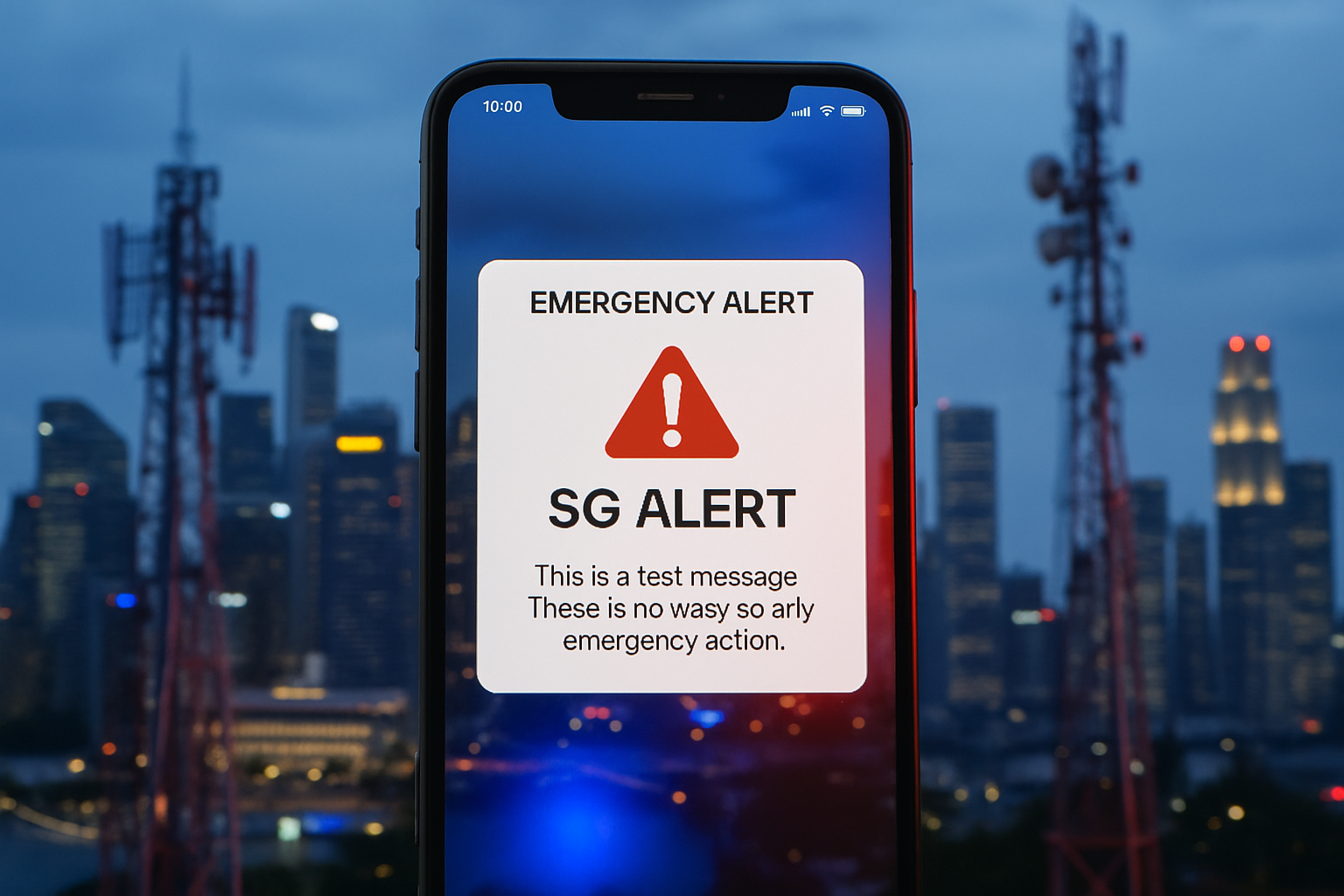
Singapore will launch SG Alert, a comprehensive mass emergency alert system for mobile phones starting in May 2026, positioning the city-state at the forefront of digital public safety innovation across Southeast Asia.
The ambitious emergency broadcast system will roll out in phases across major telecommunications providers, beginning with Singtel users in May 2026. The comprehensive implementation timeline extends through 2027, with StarHub users joining the system by the end of 2026, followed by M1 and Simba users by mid-2027.
Revolutionary Public Safety Technology
SG Alert represents Singapore's most significant advancement in emergency preparedness since the establishment of its national civil defense framework. The system will deliver critical emergency notifications directly to mobile devices, ensuring immediate communication during natural disasters, security threats, and public health emergencies.
The technology builds upon Singapore's existing smart city infrastructure, leveraging advanced telecommunications networks to reach every mobile phone user across the island nation. Unlike traditional emergency broadcasting systems that rely on television and radio, SG Alert will provide targeted, location-specific alerts to ensure maximum relevance and response efficiency.
Comprehensive Implementation Strategy
The phased rollout strategy reflects Singapore's methodical approach to critical infrastructure deployment. Singtel, as the nation's largest telecommunications provider, will serve as the pilot platform for system testing and optimization. This measured approach allows authorities to identify and resolve potential technical challenges before full-scale implementation.
The comprehensive timeline ensures minimal disruption to existing telecommunications services while maintaining Singapore's commitment to seamless digital experiences. Each telecommunications provider will undergo extensive system integration and testing phases to guarantee compatibility with diverse mobile devices and network configurations.
"This represents a fundamental transformation in how Singapore protects its citizens during emergencies. Every mobile phone becomes a lifeline."
— Singapore Emergency Preparedness Official
Regional Leadership in Crisis Management
Singapore's SG Alert initiative establishes new standards for emergency preparedness across Southeast Asia and beyond. The system's development occurred during a period of heightened global focus on emergency response capabilities, as demonstrated by recent crisis management challenges worldwide.
The timing of the launch coincides with Singapore's broader digital transformation initiatives and smart city development programs. The alert system integrates with existing emergency response protocols, creating a comprehensive safety network that extends from individual mobile devices to coordinated government response systems.
Regional neighbors have closely monitored Singapore's development process, with several Southeast Asian nations expressing interest in similar emergency alert capabilities. The SG Alert framework could serve as a template for regional emergency cooperation initiatives, potentially enabling cross-border alert coordination for transnational emergencies.
Technical Innovation and Accessibility
The system incorporates advanced targeting capabilities, allowing authorities to send location-specific alerts to designated areas without overwhelming the entire population with irrelevant notifications. This precision targeting ensures that residents receive only pertinent emergency information while maintaining system credibility and user trust.
SG Alert supports multiple languages reflecting Singapore's multicultural population, ensuring emergency information reaches all residents regardless of linguistic background. The system's accessibility features accommodate users with disabilities, incorporating text-to-speech capabilities and visual alert mechanisms.
The technology platform includes redundancy measures to maintain functionality during network congestion or partial telecommunications failures. Multiple transmission pathways ensure critical emergency information reaches intended recipients even under challenging technical conditions.
Global Context and Lessons Learned
Singapore's emergency alert system development has incorporated lessons from international emergency response experiences throughout 2026. Global events have highlighted the critical importance of rapid, reliable emergency communications, particularly during complex crises requiring immediate public response.
The system's design reflects analysis of emergency communication challenges observed in various international contexts, from natural disasters to security incidents. Singapore's approach emphasizes proactive rather than reactive emergency management, positioning the alert system as a cornerstone of comprehensive disaster preparedness.
The launch timeline allows for extensive public education and awareness campaigns, ensuring residents understand how to receive, interpret, and respond to emergency alerts effectively. Community preparation initiatives will accompany the technical implementation, creating a holistic emergency preparedness ecosystem.
Economic and Social Impact
The SG Alert system represents significant investment in Singapore's public safety infrastructure, demonstrating the government's commitment to protecting citizens through advanced technology. The economic implications extend beyond immediate implementation costs to long-term benefits through improved emergency response efficiency and reduced disaster impact.
Business continuity planning across Singapore will integrate SG Alert capabilities, enabling enterprises to coordinate emergency responses with official government communications. The system's reliability and comprehensive coverage support Singapore's position as a stable, secure destination for international business and investment.
Tourism and hospitality sectors particularly benefit from the enhanced safety communications, as visitors will receive the same emergency protections as residents. This capability reinforces Singapore's reputation as a secure travel destination while supporting the nation's economic recovery and growth objectives.
Future Expansion and Innovation
While the initial phase focuses on basic emergency notifications, future developments may incorporate more sophisticated features including multimedia alerts, interactive response capabilities, and integration with Internet of Things devices throughout Singapore's smart city infrastructure.
The system's architecture supports evolution and enhancement, positioning Singapore to adapt emergency communications to emerging technologies and changing threat landscapes. Continuous improvement processes will incorporate user feedback and technical advances to maintain system effectiveness and user satisfaction.
International cooperation opportunities may emerge through the SG Alert platform, potentially enabling emergency communication coordination with neighboring countries during regional crises or transnational emergencies requiring coordinated public response.
As Singapore prepares for the May 2026 launch, SG Alert represents more than technological advancement—it embodies the nation's commitment to citizen welfare through innovative, comprehensive emergency preparedness. The system's success will likely influence emergency communication strategies across Southeast Asia and beyond, establishing Singapore as a global leader in digital public safety innovation.