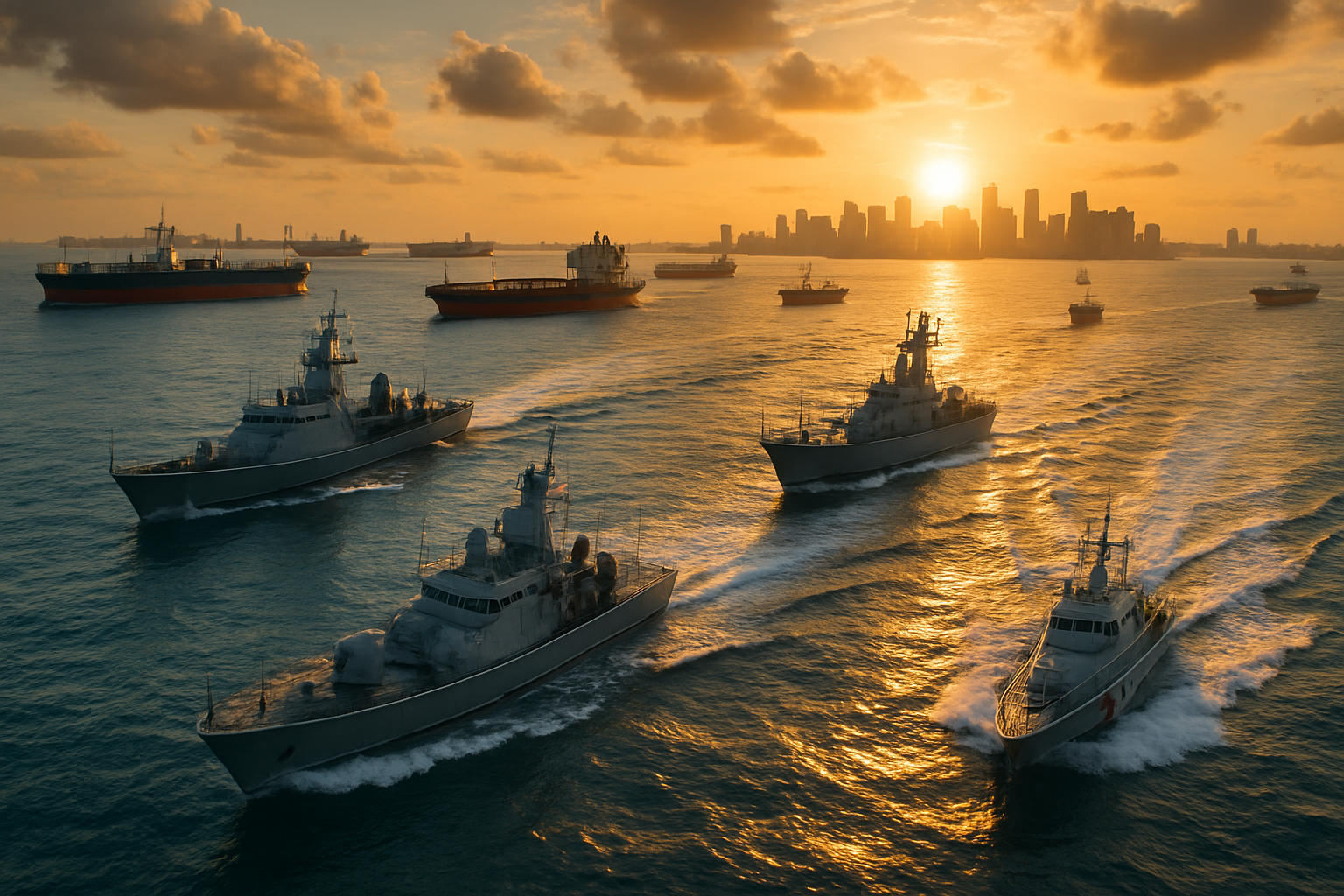
Singapore's Foreign Minister Vivian Balakrishnan has reaffirmed the strategic alignment between Singapore, Malaysia, and Indonesia in maintaining open access to the crucial Strait of Malacca, even as global shipping faces its most severe crisis in decades.
Speaking to CNBC, Dr. Balakrishnan emphasized the three nations' shared commitment to free maritime trade, stating: "We do not have tolls. All of us are trade-dependent economies. All of us know it is in our interest to keep it open." This declaration comes at a critical juncture as the world grapples with unprecedented disruptions to global shipping routes and energy supply chains.
Regional Unity Against Maritime Toll Proposals
The timing of Balakrishnan's statement is particularly significant, following Indonesia's Finance Minister's controversial suggestion that Jakarta controls "the largest share of the waterway" and could potentially implement passage fees. However, the coordinated response from all three nations demonstrates their understanding that free passage through these vital waterways is essential for regional and global economic stability.
The Strait of Malacca serves as one of the world's most critical maritime chokepoints, handling approximately 25% of global traded goods and serving as a primary route for oil tankers traveling between the Middle East and Asia-Pacific markets. Any disruption to this waterway would have catastrophic implications for global supply chains, particularly given the current crisis affecting other major shipping routes.
Learning from Global Maritime Disruptions
The Southeast Asian nations' commitment to keeping the Strait of Malacca open has gained renewed urgency following the devastating global maritime crisis of March 2026. The closure of the Strait of Hormuz, which handles 40% of global oil transit, created unprecedented disruptions that rippled through every sector of the global economy.
"The crisis exposed catastrophic vulnerabilities in global energy architecture, with the 21-mile Strait of Hormuz proving to be a dangerous single-point failure in modern logistics."
— Energy Security Analysis Report, March 2026
Oil prices reached historic peaks of $119.50 for Brent crude and $108.15 for WTI during the crisis, while the International Energy Agency deployed its largest strategic petroleum reserve release in 50 years. The aviation industry saw 18,000+ flights cancelled, and major shipping companies like Maersk and MSC suspended operations entirely in affected regions.
Strategic Importance of Cooperative Security
Against this backdrop of global maritime instability, the tri-nation cooperation in Southeast Asia represents a model for regional security coordination. Unlike the geopolitical tensions that led to the Hormuz crisis, Singapore, Malaysia, and Indonesia have maintained their commitment to multilateral cooperation despite occasional disagreements on specific issues.
The three nations have historically coordinated maritime security operations, sharing intelligence and resources to combat piracy, terrorism, and other threats to commercial shipping. This cooperation has been formalized through various frameworks, including coordinated patrols and information-sharing mechanisms that have proven highly effective in maintaining security along the approximately 550-mile strait.
Economic Interdependence as Security Foundation
The foundation of this maritime security partnership lies in the three countries' shared economic interests. Singapore serves as a major transshipment hub and financial center, Malaysia provides crucial geographic positioning and resources, while Indonesia's control over key maritime passages makes its cooperation essential for regional stability.
Dr. Balakrishnan's emphasis on their status as "trade-dependent economies" reflects a deeper understanding that emerged from the global shipping crisis: nations that rely heavily on international trade have fundamental shared interests in maintaining open sea lanes, regardless of other political differences.
Contrast with Global Maritime Tensions
The Southeast Asian approach stands in stark contrast to the weaponization of shipping routes witnessed during the Iran crisis. Where other regions saw maritime passages used as tools of geopolitical leverage, potentially threatening global economic stability, the Strait of Malacca partnership demonstrates how regional cooperation can serve both national and international interests.

The International Maritime Organization has repeatedly highlighted the Strait of Malacca cooperation as a model for other regions facing maritime security challenges. The partnership's success in reducing piracy incidents by over 90% since its establishment demonstrates the effectiveness of multilateral approaches to maritime security.
Technological and Operational Coordination
The three nations have invested significantly in modernizing their maritime surveillance and response capabilities. Enhanced satellite tracking, AI-powered monitoring systems, and real-time analytics have become standard features of their coordinated security operations. This technological advancement was accelerated by lessons learned from global supply chain vulnerabilities exposed during recent crises.
Singapore's advanced port automation and predictive maintenance systems, combined with Malaysia's strategic geographical positioning and Indonesia's extensive maritime domain awareness capabilities, create a comprehensive security network that protects one of the world's busiest shipping lanes.
Future Implications and Global Lessons
As the world continues to grapple with the long-term implications of the 2026 maritime crisis, the Strait of Malacca partnership offers important lessons for international maritime security. The crisis demonstrated that single-point failures in global logistics can have catastrophic worldwide effects, making cooperative approaches to maritime security not just regional necessities but global imperatives.
"The most severe energy security crisis in decades exposed single-chokepoint vulnerabilities that require fundamental transformation of global shipping security approaches."
— Samuel Ciszuk, Energy Security Analyst
The success of the Southeast Asian partnership in maintaining stability during global maritime turbulence positions these nations as leaders in demonstrating how regional cooperation can contribute to international economic security. Their commitment to keeping shipping lanes open without tolls or arbitrary restrictions provides a template for other critical maritime passages worldwide.
Economic Security and Regional Stability
The reaffirmation of the tri-nation commitment comes at a time when global supply chains are being fundamentally restructured. Companies worldwide are implementing route diversification strategies and enhanced risk assessment methodologies following the disruptions of 2026. The reliability of the Strait of Malacca partnership makes it an increasingly attractive alternative for international shipping operations seeking stable and secure passages.
Financial markets have responded positively to consistent messaging from Southeast Asian leaders about maintaining open shipping lanes. This stability contrast with the extreme volatility witnessed during the Hormuz crisis, when markets crashed globally and traditional monetary policy proved insufficient to address structural geopolitical disruptions.
Looking Ahead: Sustained Cooperation
As Dr. Balakrishnan's statement demonstrates, the three nations understand that their economic prosperity is fundamentally linked to maintaining free and secure maritime passage. This shared understanding has proven more durable than short-term political disagreements or attempts to weaponize critical infrastructure for geopolitical advantage.
The partnership's commitment to avoiding tolls and maintaining open access represents more than just regional policy – it reflects a recognition that in an interconnected world, the stability of global supply chains depends on the willingness of nations controlling critical chokepoints to prioritize collective security over narrow national interests.
The lessons learned from the 2026 global maritime crisis have reinforced the importance of this approach. As international organizations work to develop new frameworks for maritime security cooperation, the Southeast Asian model provides a proven example of how regional partnerships can contribute to global stability while serving each nation's economic interests.