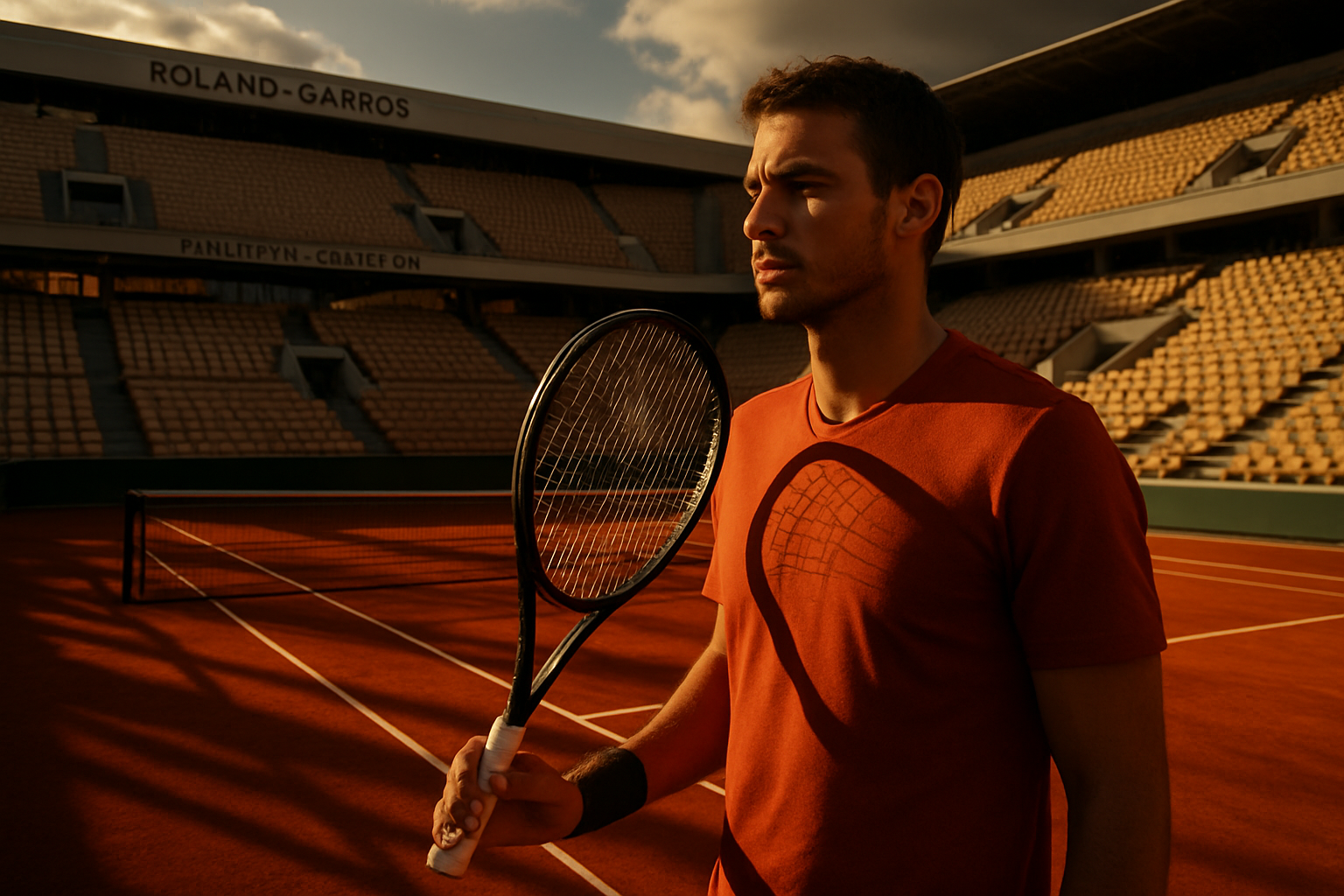
World number one Jannik Sinner has joined the chorus of well-wishers expressing disappointment over Carlos Alcaraz's withdrawal from the 2026 French Open, as the two-time defending champion confirmed he will be unable to compete at Roland Garros due to a persistent right wrist injury.
The tennis world was rocked on Friday when Alcaraz announced his withdrawal from the prestigious clay court tournament, ending weeks of uncertainty that had surrounded his participation following his defeat to Sinner in the Monte Carlo final and subsequent withdrawals from the Rome Masters 1000.
Sinner's Response to Major Rival's Absence
Speaking about his rival's absence, the Italian expressed his regret over missing what many anticipated would be another chapter in their captivating rivalry. Sinner, who defeated Alcaraz in their most recent encounter at Monte Carlo in April, had been looking forward to potentially facing the Spanish star on the clay courts of Paris where Alcaraz has dominated in recent years.
"It's always disappointing when a player of Carlos's caliber cannot defend his title," a source close to Sinner's camp indicated, reflecting the Italian's sentiment about the absence of his primary rival.
The Injury Timeline That Changed Everything
Alcaraz's withdrawal marks the culmination of a challenging period that began with his wrist injury during the Barcelona Open in mid-April. The 22-year-old Spanish star was forced to retire from his debut match at the tournament, setting off a chain of withdrawals that would ultimately cost him his chance at an unprecedented third consecutive French Open title.
Following Barcelona, Alcaraz withdrew from the Madrid Masters 1000, missing his home tournament for the second consecutive year. He also skipped the Italian Open in Rome as part of a conservative recovery approach recommended by his medical team.
"After the tests carried out today, it is more prudent to be cautious. This is a complicated moment for me."
— Carlos Alcaraz
Impact on Tournament Dynamics
Alcaraz's absence fundamentally alters the dynamics of the 2026 French Open, which is scheduled to begin on May 24. The withdrawal ends his bid for an unprecedented third consecutive title at Roland Garros, following his victories in 2024 and 2025 that had positioned him as the heir to Rafael Nadal's clay court legacy.
With the defending champion out, Sinner now emerges as the clear favorite for the title. The Italian's recent form on clay has been impressive, highlighted by his Monte Carlo Masters victory where he defeated Alcaraz in straight sets to claim his first clay court Masters 1000 title and reclaim the world number one ranking.
A Rivalry Put on Hold
The Sinner-Alcaraz rivalry has been one of the defining storylines of the 2026 tennis season, with both players trading the world number one ranking multiple times throughout the year. Their most recent meeting at Monte Carlo showcased Sinner's evolution as a clay court player, with the Italian winning 7-6(5), 6-3 in a match that demonstrated his tactical growth on the slower surface.
Prior to the wrist injury, the two players had captivated tennis fans with their contrasting styles – Sinner's methodical baseline precision versus Alcaraz's explosive shot-making ability. Their absence from facing each other at Roland Garros represents a significant disappointment for tennis enthusiasts who had anticipated another classic encounter.
Historical Significance of the Withdrawal
This marks Alcaraz's first Grand Slam withdrawal due to injury since his breakthrough on the professional tour. The decision reflects both the severity of his wrist injury and his maturity in prioritizing long-term career health over immediate competition at just 22 years of age.
The withdrawal also represents the end of a potential three-peat that would have placed Alcaraz among the most elite French Open champions in history. Only a select few players have managed to win three consecutive titles at Roland Garros, making this missed opportunity historically significant.
Medical Approach and Recovery Strategy
The conservative approach taken by Alcaraz's medical team highlights the particular challenges wrist injuries pose for tennis players. The repetitive stress placed on the wrist during serves and groundstrokes makes these injuries especially problematic, requiring extended recovery periods to prevent long-term damage.
Wrist injuries have historically been career-threatening for professional tennis players due to the fundamental role the joint plays in racket control and power generation. The decision to withdraw from multiple tournaments, including the French Open, demonstrates a commitment to comprehensive healing rather than risking further injury.
Looking Ahead to Wimbledon
The withdrawal raises questions about Alcaraz's preparation for Wimbledon, where he has won the last two titles (2023, 2024). The grass court season presents different physical demands that may offer a suitable return opportunity depending on his recovery progress.
The timing of his recovery will be crucial for the remainder of the 2026 season and his career trajectory. At 22, Alcaraz has already achieved remarkable success, including completing the career Grand Slam with his Australian Open victory earlier this year.
Tournament Proceeds Without Defending Champion
The 2026 French Open will proceed without its defending champion for the first time since 2023, creating an open field that many players will view as an opportunity. Sinner, with his recent clay court improvements and world number one ranking, enters as the heavy favorite.
Other contenders will likely include players who have shown strong clay court form throughout the season, though none carry the pedigree on the surface that both Sinner and Alcaraz have demonstrated in recent years.
Broader Context for Professional Tennis
Alcaraz's withdrawal is part of a broader pattern of injuries affecting elite tennis players throughout the 2026 season. The demanding year-round schedule and physical intensity of modern tennis continue to challenge player welfare, highlighting ongoing discussions about tournament structure and player health.
The incident reinforces the importance of player welfare management and the need for continued collaboration between medical professionals, players, and tournament organizers to ensure the sport's long-term sustainability.
As the tennis world adjusts to Alcaraz's absence from Roland Garros, attention will turn to Sinner's quest for his first French Open title and whether other players can rise to challenge the Italian's supremacy on clay. The tournament, while missing one of its biggest stars, promises to showcase the depth and competitive balance that has characterized professional tennis in 2026.