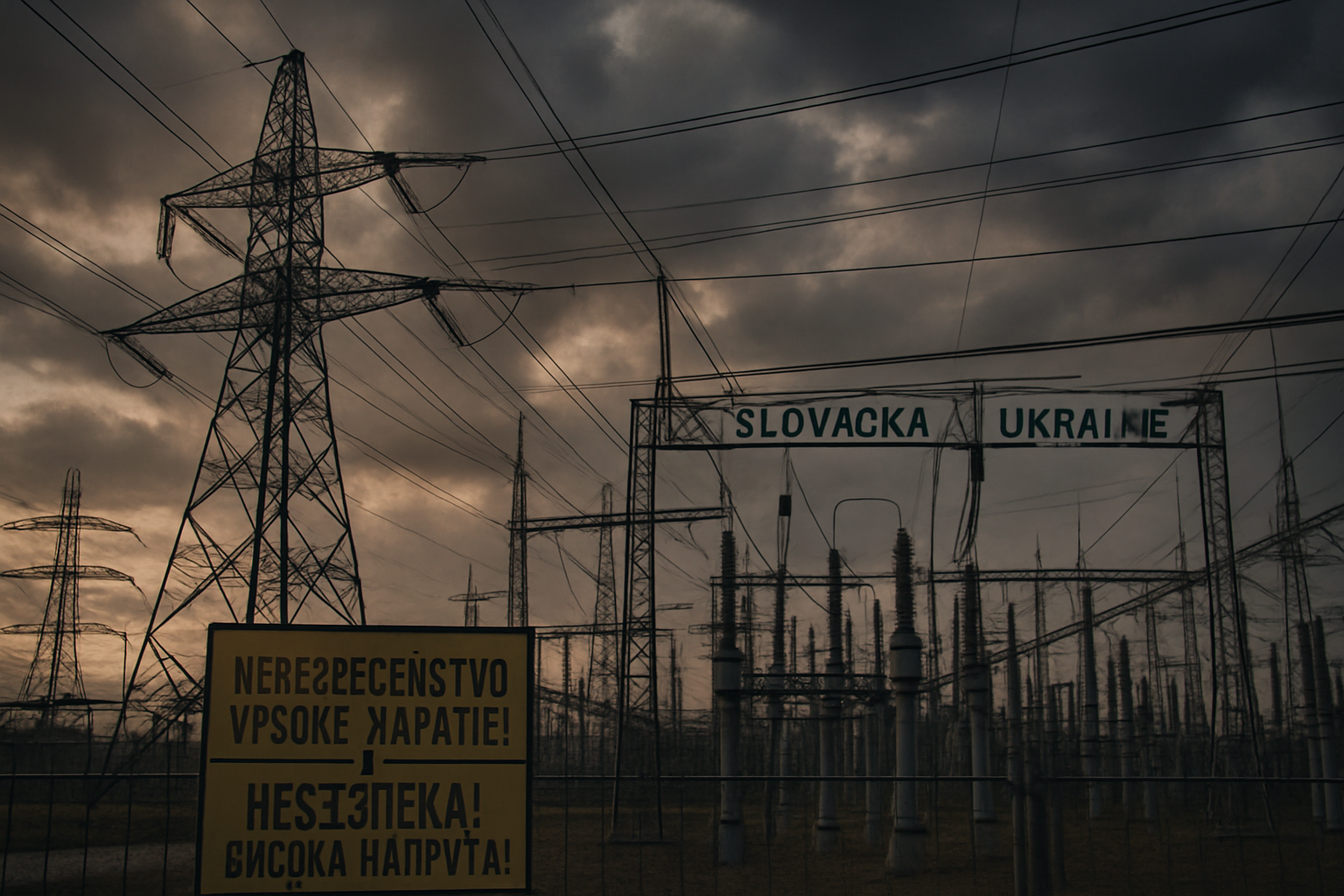
Slovakia has officially suspended emergency electricity supplies to Ukraine effective February 23, 2026, following through on Prime Minister Robert Fico's ultimatum over the halted Druzhba oil pipeline transit, escalating a dispute that threatens European energy solidarity during wartime.
The suspension, announced by Fico in a Facebook message Monday morning, represents the first concrete action taken after Slovakia's February 21 ultimatum expired without restoration of Russian oil transit through Ukraine. The move cuts a critical civilian lifeline during Ukraine's harsh winter while over 1,170 Kyiv buildings remain without heating in sub-zero temperatures.
Pipeline Dispute at Crisis Core
"Due to the seriousness of the situation and the oil emergency declared in Slovakia, we are forced to respond immediately with this first measure," Fico stated in his video address. "The suspension will be lifted as soon as oil transit to Slovakia resumes. Otherwise, we will respond with other measures."
The Druzhba pipeline, which normally carries Russian oil through Ukrainian territory to Slovakia and Hungary, has remained offline since January 27. Ukraine maintains the pipeline was damaged in Russian drone attacks requiring repairs, while Slovakia and Hungary claim Kyiv deliberately manipulated supply as "political blackmail."
Slovakia declared an oil emergency on February 18, releasing 250,000 tons from strategic reserves to the Slovnaft Bratislava refinery - representing approximately one month of operational capacity. The country has suspended diesel exports to Ukraine, prioritizing domestic supply while negotiating alternative Croatian routes for Mediterranean access.
Humanitarian Stakes During Winter Crisis
The electricity cutoff comes at a critical humanitarian moment for Ukraine. Russian "energy terrorism" attacks have left over 1,170 buildings in Kyiv without heating during temperatures reaching minus-30°C. Ukrainian nuclear plants were forced to halt electricity production for the first time in the conflict following systematic Russian attacks on energy infrastructure.
More than 17.8 million Ukrainians are currently accessing winter support programs as Russia continues its strategy of targeting civilian infrastructure during extreme weather conditions. The Slovak electricity supplies represent a crucial civilian lifeline during life-threatening cold conditions.
Hungarian Foreign Minister Péter Szijjártó joined the pressure campaign, announcing Budapest would also block the EU's historic €90 billion loan package to Ukraine until oil transit resumes. "We cannot allow Ukraine to blackmail Hungary and Slovakia," Szijjártó declared at a press conference Monday.
"From today, there is a rule: if the Ukrainian side turns to Slovakia with a request for help in stabilizing the Ukrainian power grid, it will not receive such help."
— Robert Fico, Slovak Prime Minister
EU Solidarity Under Pressure
The crisis exposes fundamental tensions within the European Union between national energy interests and collective support for Ukraine during wartime. Slovakia and Hungary remain the only two EU countries still dependent on Russian oil under special sanctions exemptions, creating ongoing vulnerabilities in European energy architecture.
Lithuanian Foreign Minister Kestutis Budrys condemned the action, declaring that "the EU cannot become Budapest's hostage" as Hungary threatens broader European interests. The dispute demonstrates how energy interdependence can be weaponized even among allies, testing EU institutional mechanisms during international crises.
European Council President Antonio Costa has issued an unprecedented letter demanding Hungary honor previous commitments, as the crisis threatens European unity on the fourth anniversary of Russia's full-scale invasion.
Technical and Political Complexities
Ukraine has proposed the Odessa-Brody pipeline as a replacement route via European Commission coordination, while Croatia offers Mediterranean route assistance exclusively for non-Russian crude. However, implementation would require months or years to establish alternative infrastructure.
The dispute occurs amid significant diplomatic momentum following the Abu Dhabi trilateral talks that achieved a historic 314-prisoner exchange and restored US-Russia military communications after a four-year suspension. The timing raises questions about regional priorities during ongoing peace negotiations with a June 2026 deadline set by the Trump administration.
Natural gas prices have surged 24% across Europe amid the broader energy infrastructure crisis, while Slovakia faces domestic political pressures with continued Russian energy dependence highlighting Central European vulnerabilities despite years of diversification efforts.
Precedent-Setting Energy Weaponization
The Slovak action establishes a dangerous precedent for using essential infrastructure as diplomatic leverage during active conflict. Energy experts warn that success in forcing Ukrainian compliance could encourage similar tactics by other nations facing energy disputes.
Russia's systematic targeting of Ukrainian energy infrastructure during winter months has been condemned internationally as "energy terrorism," yet Slovakia's decision to cut electricity supplies during the same crisis demonstrates how energy can become weaponized even among traditional allies.
The crisis tests European decision-making capacity under wartime conditions and affects the credibility of deterrence against further Russian expansion. Resolution requires balancing technical pipeline solutions with preserving Ukrainian financial and humanitarian support during critical winter months.
Regional and International Implications
The dispute extends beyond bilateral relations to fundamental questions about European integration under pressure. Enhanced cooperation alternatives are being explored within EU mechanisms, but would represent a significant departure from consensus decision-making principles.
With 89% of Europeans demanding greater EU unity according to recent Eurobarometer surveys, the crisis highlights persistent East-West divisions over burden-sharing and collective commitments. The outcome will influence future EU institutional mechanisms and member state obligations during international conflicts.
International observers note the crisis occurs during Geneva peace talks momentum, with recent diplomatic breakthroughs providing hope for comprehensive conflict resolution. However, European divisions may signal weakening resolve to Moscow, potentially affecting Ukraine's negotiating position in future territorial discussions.
The resolution of this energy standoff will determine whether European solidarity can withstand national interest pressures during wartime, setting crucial precedents for 21st-century conflict management and alliance cooperation under extreme conditions.