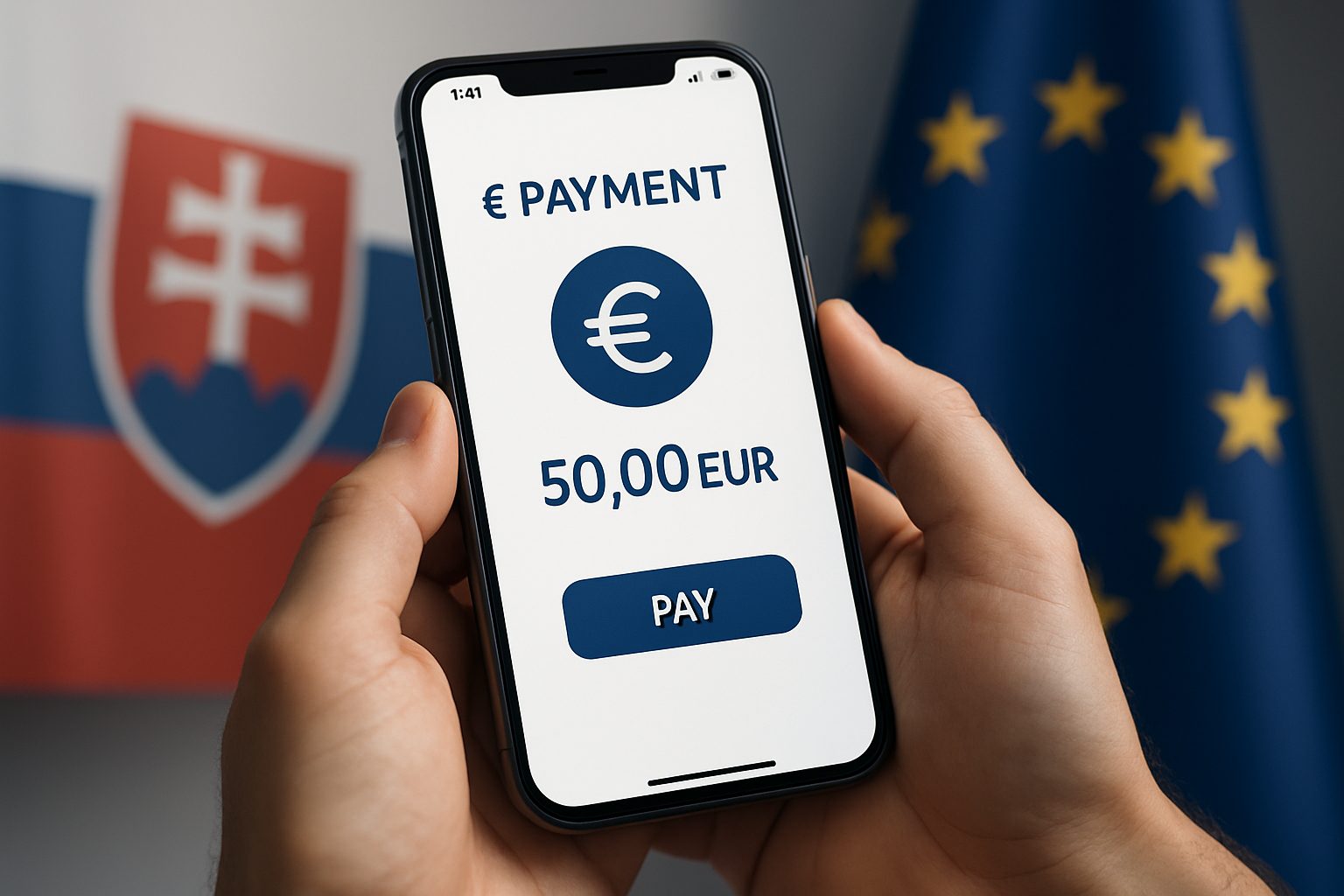
Slovakia has unveiled plans for a €1.3 billion digital euro infrastructure project that could fundamentally transform how the nation's 5.4 million citizens conduct financial transactions, positioning itself as a pioneer in the European Union's monetary digitalization efforts.
The ambitious initiative, announced through Slovakia's prominent tech publication Startitup.sk, represents one of the most significant digital payment transformations in Central Europe. The project aims to establish comprehensive infrastructure for the digital euro, the European Central Bank's planned central bank digital currency (CBDC), years ahead of its official EU-wide rollout.
Revolutionary Payment Infrastructure
According to Slovak financial technology experts, the digital euro system will operate as a state-backed digital equivalent of physical currency, fundamentally different from cryptocurrencies like Bitcoin. Unlike volatile digital assets that have experienced dramatic crashes—Bitcoin recently plummeted 50% from its October 2025 peak of $126,199—the digital euro will maintain stable value backed by the European Central Bank.
The Slovak implementation will integrate with existing banking systems while creating new possibilities for instant, low-cost transactions between citizens, businesses, and government entities. This aligns with broader European trends toward financial digitalization, as evidenced by recent developments across the continent where digital payment adoption has accelerated significantly.

European Context and Timing
Slovakia's announcement comes at a critical moment for European monetary policy. The European Central Bank recently maintained its deposit rate at 2% during its February policy meeting, citing stabilizing inflation trends across the eurozone. With eurozone inflation declining to 1.7% in January 2026—the lowest since 2021 and below the ECB's 2% target—the timing appears optimal for implementing new digital payment infrastructure.
The digital euro project represents a strategic response to the growing importance of digital payments in the global economy. Recent data from neighboring regions shows C2B (consumer-to-business) payments projected to nearly double by 2027 in some markets, while B2B SME payments are rising from 5-10% to 15-20% in the same period.
Technical Implementation and Security
Slovak officials emphasize that the digital euro will incorporate advanced security features including biometric authentication and encrypted transaction protocols. Unlike the current regulatory uncertainty surrounding cryptocurrencies—which has contributed to Congressional legislation stalling in the United States—the digital euro will operate within established legal frameworks with clear consumer protections.
The €1.3 billion investment will fund the development of digital wallets, merchant payment terminals, government service integration, and cybersecurity infrastructure. This comprehensive approach contrasts sharply with the fragmented cryptocurrency ecosystem, where recent exchange operational errors have highlighted infrastructure vulnerabilities.
"The digital euro represents the future of European monetary sovereignty in an increasingly digital world."
— Slovak Digital Economy Initiative
Impact on Daily Life
For ordinary Slovak citizens, the digital euro will enable instant payments without traditional banking delays, reduced transaction fees, and seamless integration with government services. Citizens will be able to pay taxes, receive benefits, and conduct business transactions using the same digital infrastructure.
The system will operate alongside existing payment methods rather than replacing them, ensuring that citizens who prefer traditional banking or cash transactions can continue using familiar systems. This inclusive approach addresses concerns about digital divides while modernizing the nation's payment infrastructure.
Economic and Strategic Implications
Slovakia's early adoption of digital euro infrastructure positions the country as a testing ground for broader European implementation. The project could attract financial technology companies and create new employment opportunities in the digital economy sector.
The initiative also demonstrates Slovakia's commitment to European integration during a period when some EU members have shown reluctance to participate in continental initiatives. Unlike the recent situation where Slovakia, Czech Republic, and Hungary refused to participate in the EU's €90 billion Ukraine loan financing, this digital currency project shows proactive European cooperation.
Regional Competition and Innovation
Slovakia's digital euro project occurs alongside other significant European digital payment innovations. Recent developments include revolutionary ticketless travel systems implemented by Slovak State Railways (ZSSK), where passengers activate journeys via mobile apps with automatic fare calculation based on distance traveled.
These innovations place Slovakia at the forefront of practical financial technology implementation, emphasizing real-world utility and financial inclusion over speculative trading. This approach has proven particularly resilient during the recent cryptocurrency market turmoil that has eliminated hundreds of billions in market value.
International Implications
The Slovak digital euro implementation will be closely watched by other EU member states and global financial institutions. Success could accelerate digital currency adoption across Europe, while challenges could inform refinements before broader implementation.
The project occurs as international cooperation on digital payments expands, with recent examples including the planned April 2026 launch of cross-border QR payment systems between South Korea and Indonesia, demonstrating global momentum toward government-backed digital payment solutions.
Timeline and Implementation Phases
While specific implementation timelines remain under development, Slovak officials indicate the infrastructure project will roll out in phases throughout 2026 and 2027. Initial phases will focus on government services and large business transactions, gradually expanding to retail and individual consumer use.
The phased approach allows for testing and refinement while minimizing disruption to existing financial systems. This methodical implementation strategy contrasts with the volatility and uncertainty that has characterized cryptocurrency markets, where sudden price movements and technical failures have undermined confidence.
Slovakia's €1.3 billion digital euro initiative represents more than a technological upgrade—it embodies a vision of European monetary sovereignty and digital inclusion that could reshape how citizens interact with money itself. As the project moves forward, Slovakia may well establish itself as the digital payment capital of Central Europe, setting standards that influence continental policy for decades to come.