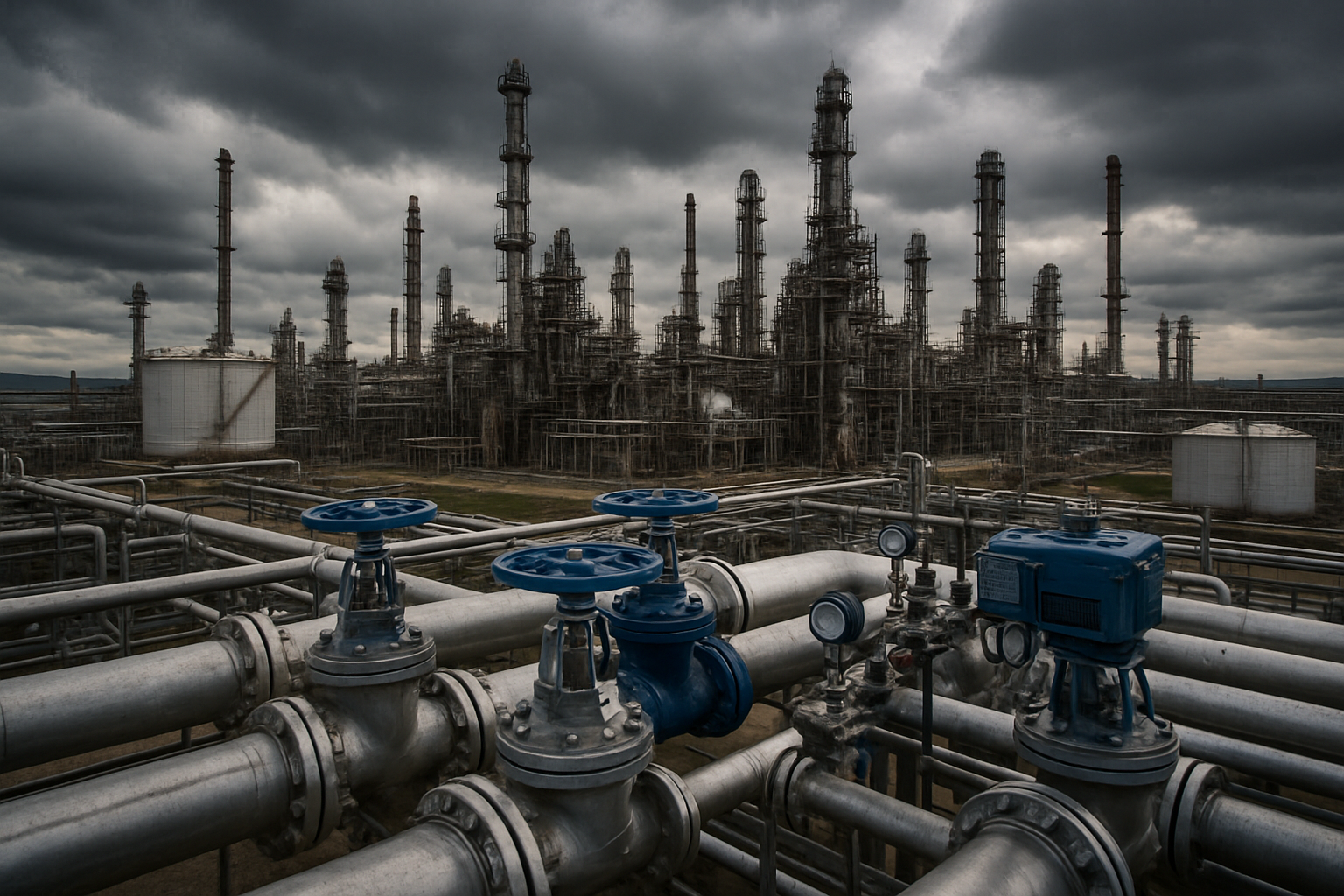
Slovakia's government declared a state of oil emergency on February 18, 2026, as critical supply disruptions from the Druzhba pipeline force the nation to tap strategic reserves to maintain energy security and domestic fuel supplies.
The emergency declaration comes after weeks of suspended oil deliveries through the Druzhba pipeline, one of Europe's most crucial energy arteries connecting Russian oil fields to Central European refineries. The Slovak government announced it will release 250,000 tons of oil from strategic reserves to Slovnaft's Bratislava refinery, providing approximately one month of operational capacity.
Pipeline Crisis Forces Emergency Response
The Druzhba pipeline has been offline for several days, leaving Slovakia and neighboring Hungary scrambling to secure alternative oil supplies. State energy officials confirmed that the reserve allocation will ensure continued refinery operations while authorities pursue long-term solutions to the supply crisis.
"The provision of oil from state reserves will cover at least one month of operation of the Bratislava refinery," Slovak authorities stated, emphasizing the government's commitment to maintaining energy security during this critical period.
In response to the crisis, Slovnaft announced the suspension of diesel exports to Ukraine, prioritizing domestic market supply. The company stated this decision directly results from the interrupted pipeline deliveries, marking a significant shift in regional energy flows.
Central European Energy Vulnerabilities Exposed
The current crisis highlights the energy vulnerabilities facing Central European nations, particularly their dependence on pipeline infrastructure for oil supplies. Slovakia and Hungary have jointly requested exemptions from European Union restrictions on Russian oil imports, demonstrating the complex geopolitical dimensions of energy security.
Historical context from my analysis reveals this is part of a broader pattern of energy disruptions affecting the region. Previous crises have shown that Slovakia maintains 90-day strategic reserves and has been actively negotiating alternative supply routes, including potential access through Croatian infrastructure to Mediterranean supply chains.
"Slovakia continues Russian energy dependency vulnerabilities with Druzhba pipeline disruptions affecting oil supplies."
— Energy Security Assessment, February 2026
The crisis occurs against a backdrop of elevated energy prices across Europe. Natural gas prices have surged 24% in European markets, while broader energy infrastructure faces ongoing pressures from geopolitical tensions and supply chain disruptions.
Regional Cooperation and Alternative Solutions
Slovakia's response demonstrates the importance of regional cooperation in addressing energy crises. The country has been working with EU coordination mechanisms and regional partners, particularly Hungary, which faces similar supply disruptions from the same pipeline system.
Croatian route negotiations represent a key potential solution for Slovakia's long-term energy security. These discussions focus on establishing alternative supply chains through Mediterranean ports, reducing dependence on single pipeline systems and diversifying energy import routes.
The crisis has accelerated discussions about energy security diversification throughout Central Europe. Estonia leads continental renewable development with 88% renewable electricity generation in 2024 and Europe's largest battery storage facility serving 90,000 households, providing a model for energy independence.
Strategic Reserve Management
Slovakia's decision to release strategic reserves demonstrates the critical role of emergency stockpiles in maintaining energy security. The 250,000-ton allocation provides breathing room while authorities work on permanent solutions to the supply disruption.
Energy experts note that strategic reserve management has become increasingly important as European nations face supply chain vulnerabilities. The ability to quickly deploy reserves while negotiating alternative arrangements shows proactive crisis management in the face of energy infrastructure attacks and supply disruptions.
The broader European context includes a 24% natural gas price surge and ongoing energy infrastructure challenges affecting regional stability. Slovakia's response demonstrates the importance of strategic reserves and proactive alternative sourcing in energy crisis management.
Implications for European Energy Security
The Druzhba pipeline disruption underscores fundamental challenges facing European energy security. Critical infrastructure vulnerabilities have become apparent through systematic disruptions affecting multiple countries simultaneously.
European energy transformation efforts continue despite these immediate challenges. Hungary is advancing the Paks II nuclear construction project with €39.1 billion investment and International Atomic Energy Agency backing, while Romania is developing a €1 billion Battery Energy Storage System with 2,500 MW capacity.
However, supply chain crises threaten long-term energy goals. China controls 60% of production and 90% of refining capacity for lithium, cobalt, and rare earth elements essential for renewable energy infrastructure. Memory chip prices have increased sixfold, affecting renewable energy control systems and grid management technology.
Looking Forward: Energy Diversification Strategies
The current crisis reinforces the urgent need for energy diversification strategies that balance immediate security needs with long-term decarbonization goals. The US-EU-Japan Critical Minerals Partnership, involving 55 countries and seven African alternative suppliers, represents one approach to addressing supply chain vulnerabilities.
Slovakia's experience provides crucial lessons for European energy transformation amid accelerating climate change and geopolitical volatility. The window for effective action is narrowing, requiring unprecedented coordination across technological innovation, international cooperation, and financial commitment.
As Slovakia navigates this energy emergency, the crisis serves as a stark reminder of the complex challenges facing European nations in their transition toward energy independence and security. The successful management of this crisis could provide valuable templates for future energy security planning across the continent.