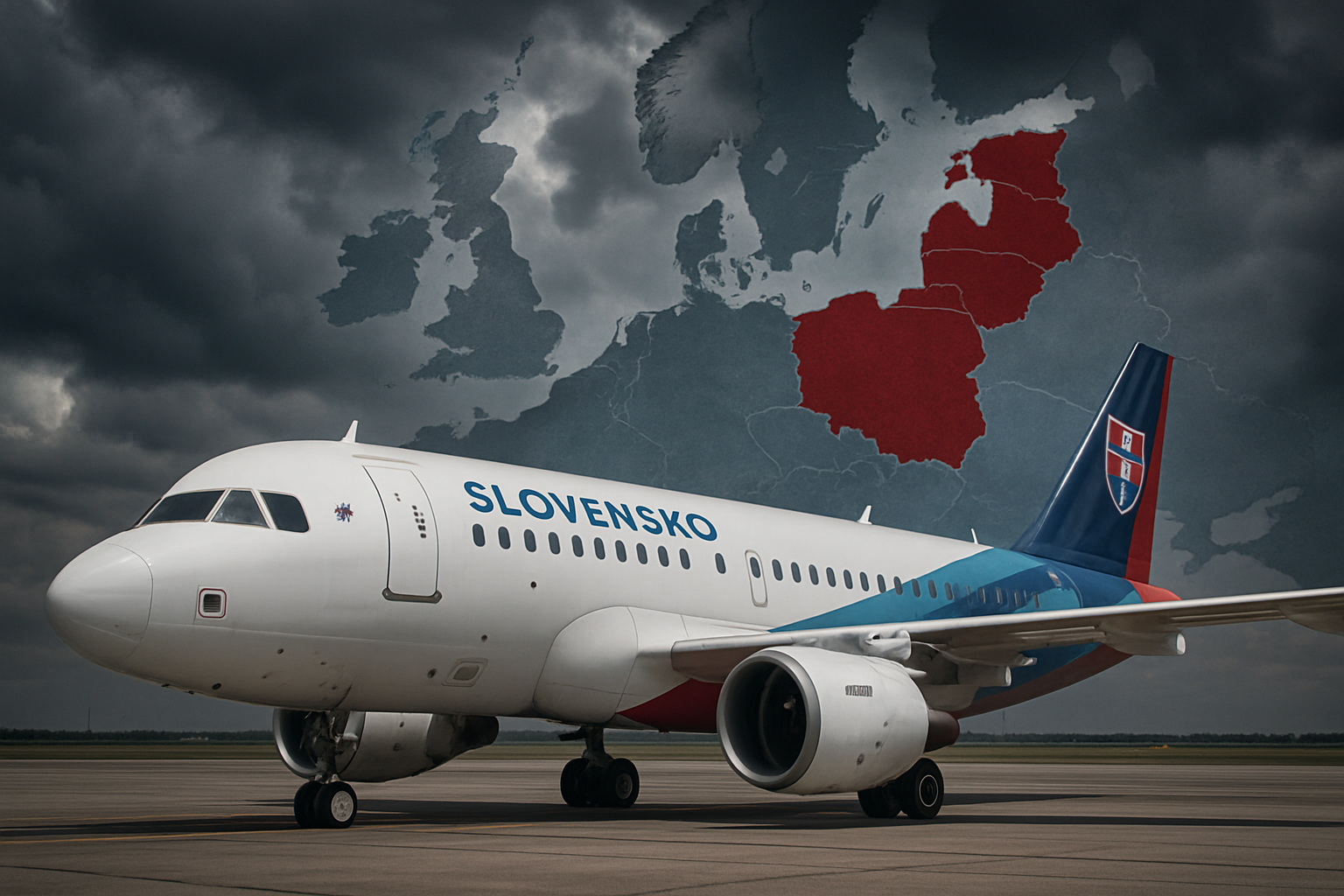
Slovakian Prime Minister Robert Fico announced he will seek alternative flight routes to Moscow for Victory Day celebrations after Lithuania and Latvia denied his aircraft access to their airspace, marking the second consecutive year the Baltic states have blocked his travel to Russia.
Speaking in a video message on social media, Fico confirmed that Lithuania and Latvia would not permit his aircraft to overfly their territories en route to Moscow's Victory Day parade on May 9. The Slovak leader emphasized that "another route will be found," echoing his response to similar restrictions imposed in 2025.
Repeat of 2025 Airspace Restrictions
According to sources from both Bosnia and Herzegovina and Romania, Fico faced identical airspace denials from the three Baltic states last year. In 2025, his aircraft was forced to take a circuitous route through Hungary, Romania, and Georgia to reach Moscow, significantly extending the journey and highlighting the diplomatic tensions surrounding his pro-Russian stance.
The restrictions reflect the Baltic states' firm position on limiting high-level political engagement with Russia, particularly during symbolically significant events like Victory Day, which Moscow uses to project military strength and historical legitimacy.
Baltic Security Concerns and Regional Context
The airspace denials come amid heightened security concerns across the Baltic region. Intelligence assessments from Lithuania warn that Russia could be ready for "limited military conflict" within 3-5 years if current geopolitical conditions persist. The region has experienced a 23% increase in Russian military reconnaissance activities since Sweden and Finland joined NATO.
Recent incidents have underscored these tensions. In March 2026, Russian drones struck Estonia's Auvere power station and crashed in Latvia's Krāslava region, marking the most serious Baltic security breach since NATO expansion. These provocations were part of a broader pattern including submarine incursions, GPS jamming, and underwater cable sabotage.
"The EU cannot become Budapest's hostage," warned Lithuanian Foreign Minister, referring to similar pro-Russian positions taken by Hungary's Viktor Orbán.
— Lithuanian Foreign Minister, on European unity
Fico's Controversial Moscow Relations
Prime Minister Fico has maintained consistently pro-Moscow positions throughout the Ukraine conflict, distinguishing Slovakia alongside Hungary as the only two EU countries still dependent on Russian oil under special sanctions exemptions. His government has repeatedly threatened to cut emergency electricity supplies to Ukraine over pipeline disputes and has blocked significant EU aid packages.
In February 2026, Fico issued a dramatic ultimatum threatening to cut electricity supplies to Ukraine unless Russian oil transit through the Druzhba pipeline resumed, demonstrating his willingness to use energy as a diplomatic weapon even during Ukraine's winter crisis.
Enhanced Baltic Cooperation Framework
The Baltic states have strengthened their security cooperation through the NATO Arctic Sentry mission, which includes enhanced intelligence sharing, satellite surveillance, and maritime patrols. This unprecedented cooperation extends beyond traditional military frameworks to include cultural institutions, with Baltic national libraries agreeing to collaborate on protecting cultural heritage and supporting democratic resilience.
Estonia has emerged as a regional technology leader, achieving 88% renewable electricity production and hosting continental Europe's largest battery storage facility. The country has also established a €10 million HIMARS maintenance center, the first such advanced systems facility in the region, while hosting the Tallinn Cyber Diplomacy Winter School with participants from 33 countries.
Nuclear Policy Transformation
The security environment has prompted significant nuclear policy shifts across the Nordic-Baltic region. Finland is moving to lift its comprehensive nuclear weapons ban "as soon as possible," with Defense Minister Antti Häkkänen stating current legislation is inadequate for NATO requirements. Similarly, Sweden has indicated willingness to host wartime nuclear weapons, breaking an 80-year Nordic taboo.
These developments occur against the backdrop of the New START treaty's expiration in February 2026, marking the first time in over 50 years without US-Russia nuclear constraints and creating unprecedented nuclear governance challenges.
Energy Weaponization Concerns
Fico's Moscow trip occurs as global energy markets face severe volatility due to Middle East conflicts. Oil prices have surged past $100 per barrel for the first time since 2022, with the International Energy Agency deploying its largest strategic petroleum reserve release in 50-year history – 400 million barrels from 32 countries.
Slovakia's continued dependence on Russian energy supplies, particularly through the disputed Druzhba pipeline, makes the country vulnerable to supply disruptions while simultaneously providing Moscow with leverage over European energy security.
European Unity Under Pressure
The airspace restrictions highlight broader European divisions over Russia policy. While the Baltic states maintain unwavering opposition to Russian aggression, countries like Slovakia and Hungary have pursued more accommodating approaches, creating tensions within EU decision-making processes.
These divisions have practical consequences for European security architecture. Enhanced cooperation mechanisms are being explored to bypass unanimity requirements when member states prioritize national interests over collective security, fundamentally altering how the EU manages crisis situations.
"Another route will be found," Fico stated, demonstrating his determination to maintain Moscow relations despite diplomatic obstacles.
— Robert Fico, Slovak Prime Minister
Regional Spillover Effects
The Baltic region continues to experience spillover effects from broader geopolitical tensions. Ukrainian military drones have inadvertently entered Baltic airspace during operations targeting Russian energy infrastructure, creating complex navigation challenges and requiring sophisticated diplomatic coordination to distinguish between hostile and friendly aircraft.
These incidents have prompted the development of new protocols and early warning systems, with Finland planning mobile phone apps and text message systems for air threat alerts by 2028, while Estonia and Ukraine already utilize multiple threat notification methods.
Looking Forward
Prime Minister Fico's determination to attend Moscow's Victory Day celebrations despite airspace restrictions reflects the persistent divisions within European approaches to Russia. As Baltic security concerns intensify and regional cooperation deepens, Slovakia's pro-Russian orientation increasingly isolates it from broader European consensus.
The incident serves as a microcosm of larger questions about European unity, sovereignty, and security in an era of renewed great power competition. How European institutions adapt to manage these divergent national positions while maintaining collective security will significantly influence the continent's stability and effectiveness in addressing 21st-century challenges.
The success or failure of Baltic states in maintaining their security-first approach, while accommodating diplomatic diversity within the EU framework, will provide a template for managing similar challenges across Europe as geopolitical tensions continue to evolve.