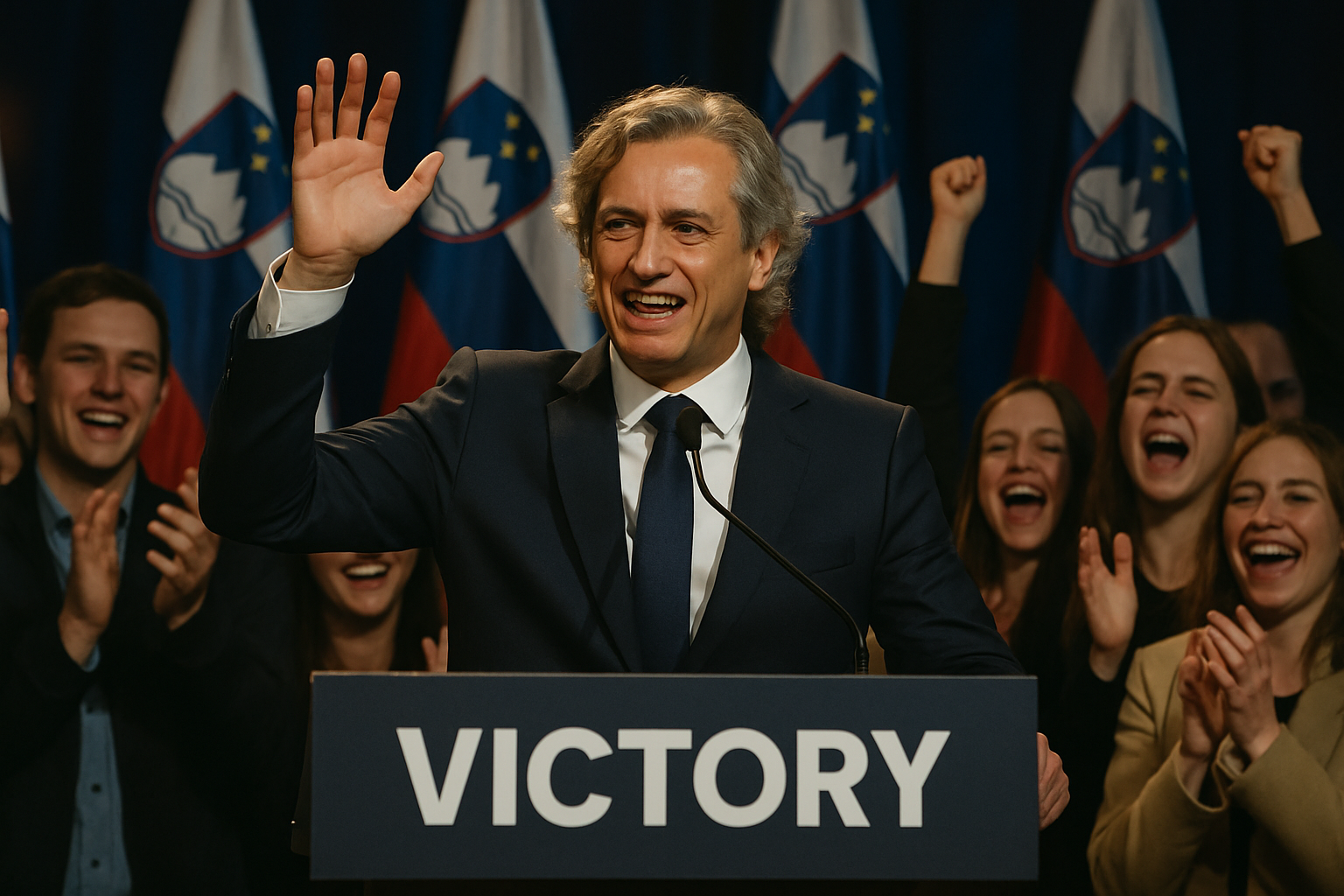
Slovenian Prime Minister Robert Golob claimed victory in Sunday's parliamentary elections after his Freedom Movement secured a narrow win over conservative challenger Janez Janša, ending a campaign overshadowed by explosive allegations of foreign interference by an Israeli private security firm.
With 99.85% of votes counted across 2,987 polling stations, Golob's center-left Freedom Movement (Gibanje Svoboda) obtained 28.6% of the vote, translating to 29 seats in the 90-member parliament. The opposition right-wing Slovenian Democratic Party (SDS) led by former Prime Minister Janež Janša secured 28.03% and 28 seats, marking one of the closest electoral margins in Slovenian history.
The razor-thin victory margin of just 0.57 percentage points – approximately 11,400 votes – represents a significant shift from pre-election polls that had shown Janša's party maintaining a lead throughout much of the campaign period. Voter turnout reached 69.06%, demonstrating strong democratic engagement despite the controversy surrounding the election.
Foreign Interference Scandal Rocks Campaign
The election was dramatically overshadowed by allegations that Israel's Black Cube private intelligence firm conducted covert operations to influence the outcome in favor of Janša, who has positioned himself as a strong supporter of Israel and admirer of Donald Trump. The allegations emerged in the final weeks of the campaign, creating what observers described as a "spy scandal" that potentially derailed Janša's frontrunner status.
According to reports, the firm was allegedly behind the circulation of videos suggesting government corruption, part of a broader pattern of foreign interference that has raised serious questions about the integrity of European electoral processes. The timing of these revelations, just weeks before voting, created unprecedented uncertainty and may have influenced voter behavior in the crucial final stretch.
The allegations have particular resonance given Golob's vocal criticism of Israeli policies, having accused the Jewish state of "genocide" in Gaza. This stark contrast with Janša's pro-Israel stance created an additional geopolitical dimension to what was already a highly polarized domestic contest.
Coalition Mathematics and Governance Challenges
Beyond the Freedom Movement and SDS, three additional parties crossed the 4% threshold required for parliamentary representation. The coalition "Nova Sloveniya" secured 9.31% and 9 seats, while the "Slovenian People's Party" and "Focus" also gained representation, creating a fragmented parliament that will require careful coalition negotiations.
Following his victory declaration Sunday evening, Golob announced he would meet with all parliamentary parties to discuss forming a new coalition government. The narrow margin and fragmented result mean the Prime Minister will need to build consensus across multiple political groups to maintain a stable governing majority.
The electoral outcome represents both continuity and change for Slovenia. While Golob retains the prime ministership he has held since 2022, his party lost significant ground from its previous 41 seats to 29 seats, while Janša's SDS actually gained one seat from 27 to 28. This dynamic suggests a more evenly balanced political landscape that will require sophisticated coalition management.
Strategic Alpine Democracy Under Pressure
Slovenia's election takes place within the broader context of what observers have described as the most serious challenge to European democracy since World War II. The small Alpine nation's strategic location between Austria and the Balkans makes its political stability crucial for regional security and EU enlargement policy.
The campaign featured a stark ideological choice between Golob's pro-European Union liberal agenda and Janša's nationalist conservative platform, which critics have compared to Hungarian Prime Minister Viktor Orbán's authoritarian model. Brussels quietly welcomed the results given concerns that a Janša victory could have undermined EU unity on key policy issues.
International observers provided unprecedented oversight of the electoral process amid the broader European democratic crisis, which has seen foreign interference allegations, coalition instabilities, and violent political confrontations across multiple EU member states. The successful conduct of credible elections despite external pressures demonstrates Slovenia's democratic resilience.
European Implications and Democratic Resilience
The Slovenian results come as European democracy faces unprecedented strain, with 89% of Europeans demanding greater EU unity according to Eurobarometer polling, while political reality shows increasing fragmentation and sovereignty assertions across member states. Slovenia's ability to conduct free and fair elections despite interference allegations provides a template for other European democracies managing similar challenges.
The election's outcome ensures continued political tension in Slovenia, requiring careful governance during a complex period for European integration. The narrow margin and need for coalition building highlight the sophisticated political management required in contemporary European democracies facing external pressures.
Slovenia's success in maintaining democratic institutions while conducting credible elections during heightened external pressure offers hope for democratic governance capacity in the 21st century. The peaceful transfer of power and acceptance of results by all parties demonstrates the strength of Slovenian democratic culture despite the challenging circumstances.
Looking Forward: Coalition Building and Regional Stability
As Golob begins coalition negotiations, he faces the complex task of building a stable government while addressing the underlying issues that made the election so competitive. Economic challenges, including inflation and energy costs, will require careful policy coordination with EU partners.
The election results also have implications for Slovenia's role in Western Balkans integration, a key EU priority where stability and democratic governance in member states is crucial for regional progress. Golob's victory maintains Slovenia's commitment to European integration and multilateral cooperation.
The foreign interference allegations, while not proven definitively, have highlighted the vulnerability of small European democracies to external manipulation. This will likely prompt discussions about strengthening electoral security and defending democratic processes against sophisticated foreign influence operations.
Slovenia's 2026 parliamentary elections will be remembered not only for their narrow margin but for demonstrating that European democratic institutions can withstand external pressures while maintaining legitimacy and popular support. As the country moves forward with coalition building, it provides a case study in democratic resilience during an era of unprecedented challenges to liberal democratic governance.