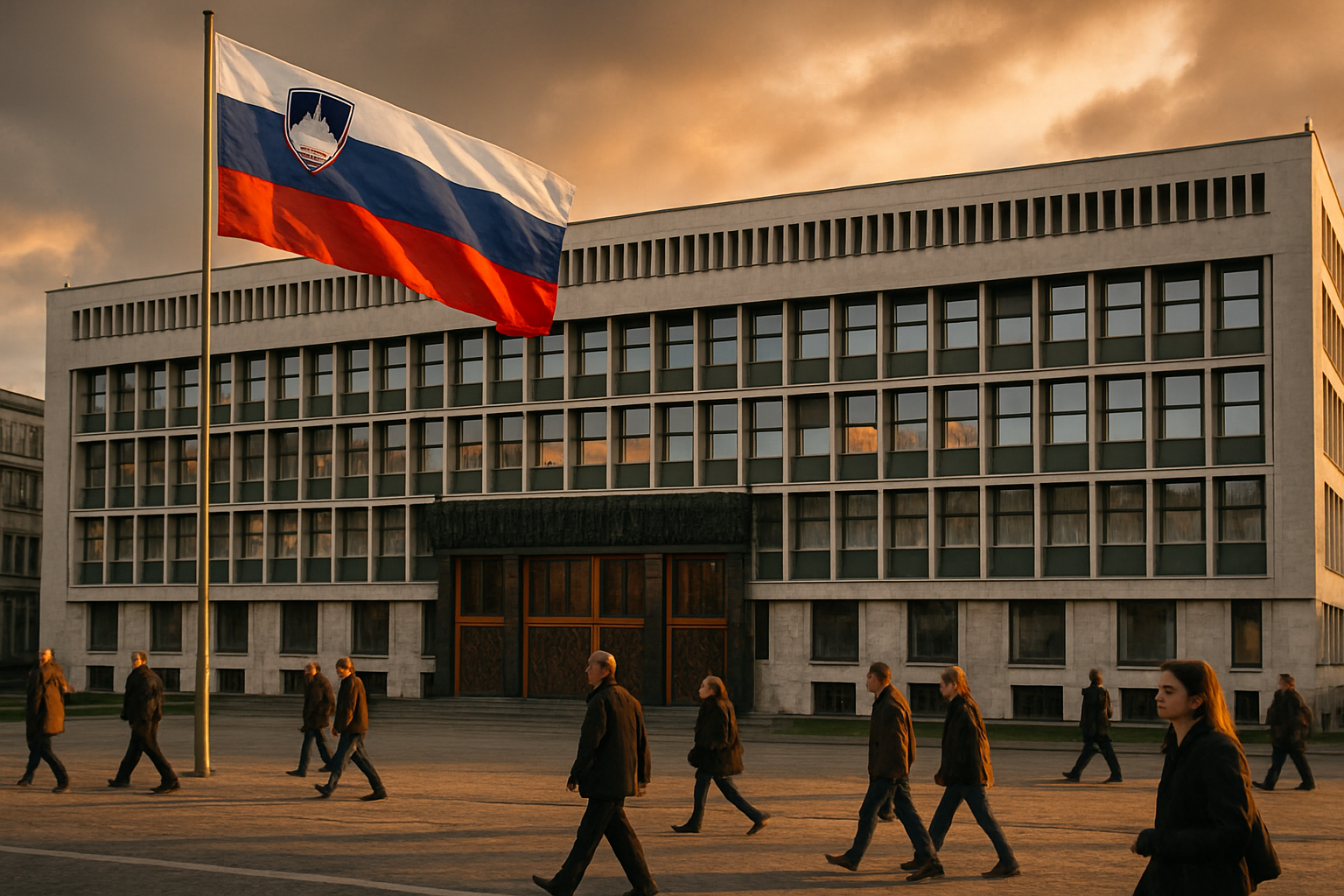
Slovenia's Prime Minister Robert Golob claimed victory in the nation's closest parliamentary election since independence, with his Freedom Movement securing 28.54% of the vote compared to 28.17% for Janez Janša's conservative Democratic Party, a margin of just 0.37 percentage points that translates to 29 seats versus 28 in the 90-seat parliament.
The March 22, 2026 election results represent the smallest victory margin in Slovenia's electoral history and mark the first time since 2000 that a sitting prime minister has won re-election. However, the razor-thin advantage leaves Golob facing significant challenges in forming a stable government, as his party lost 12 seats compared to the previous election while Janša's SDS gained one.
Historic Margins and Coalition Mathematics
With 99.9% of votes counted across Slovenia's 2,987 polling stations, the Freedom Movement's victory came down to approximately 7,400 votes out of more than 1.7 million cast. The result gives Golob's liberal party 29 seats, a significant drop from the 41 seats it held previously, while Janša's Democratic Party (SDS) secured 28 seats.
Five additional parties crossed the 4% threshold to enter parliament, creating a fragmented political landscape that will complicate coalition-building efforts. The narrow margin ensures continued political tension and requires careful coalition management for effective governance.
European Crisis Context
Slovenia's election unfolded against the backdrop of the most severe European political crisis since World War II, with multiple EU member states experiencing simultaneous institutional stress. The campaign was overshadowed by explosive allegations of foreign interference involving an Israeli private security firm allegedly favoring Janša, creating what observers termed a "spy scandal" that undermined public confidence in democratic processes.
International election monitors provided unprecedented oversight, reflecting global concerns about electoral integrity under external pressure. The allegations of foreign meddling emerged in the final weeks of campaigning, derailing what had been Janša's frontrunner status and contributing to the ultimately tight result.
"This election represents a fundamental test of Slovenia's democratic resilience under contemporary pressures," said a senior EU official monitoring the vote. "The narrow margin ensures continued political tension requiring careful coalition management."
— Senior EU Official
Strategic Alpine Democracy Under Pressure
Slovenia's strategic location between Austria and the Balkans makes political stability crucial for regional security and EU enlargement efforts. The small Alpine nation of 2.1 million people has emerged as a bellwether for democratic capacity in conducting credible elections despite external pressures and internal divisions.
The election featured a stark choice between Golob's pro-EU liberal agenda and Janša's nationalist conservative platform, which observers compared to Viktor Orbán's model in Hungary. The campaign reflected deeper societal divisions over European integration, migration policy, and democratic norms that mirror broader trends across the continent.
Brussels quietly welcomed the results, given concerns about the potential impact of a Janša victory on EU unity. The former prime minister, often described as a "mini-Trump" and Orbán ally, had positioned himself as seeking a return to power after Golob's green-liberal governance since 2022.
Coalition Building Challenges Ahead
Despite claiming victory, Golob faces the complex task of forming a government with significantly reduced parliamentary strength. The fragmented result, with 15 parties and coalitions competing, reflects the polarized political landscape that has emerged in recent years.
The new parliament will require coalition negotiations to achieve a governing majority, with no single party coming close to the 46 seats needed for absolute control. Golob's Freedom Movement must now build alliances with other parties while managing expectations from voters who supported his liberal European agenda.
Political analysts note that the narrow victory margin provides little mandate for major policy changes, suggesting Slovenia may face a period of cautious governance focused on maintaining stability rather than pursuing ambitious reforms.
Democratic Institutions Prove Resilient
Despite the challenges posed by foreign interference allegations and intense polarization, Slovenia's democratic institutions demonstrated their resilience by conducting what international observers deemed a credible and fair election. The peaceful transfer of power and acceptance of results by all major parties reinforced democratic norms during a period of significant pressure.
The election proceeded with high democratic standards despite the Lyon-style political violence that has affected other European nations, administrative controversies, and coalition crises. This success provides a template for managing political challenges through legal and democratic channels rather than extra-legal means.
Regional and International Implications
Slovenia's election outcome carries implications far beyond its borders, serving as a test case for European democracy's ability to withstand contemporary pressures while maintaining institutional integrity. The success in conducting free and fair elections despite external interference attempts provides encouragement for other small EU states facing similar challenges.
The results may influence the broader European political landscape, particularly regarding how democratic institutions can address underlying concerns about inequality, immigration, and sovereignty while maintaining the institutional frameworks that have underpinned European success since 1945.
For the Western Balkans region, Slovenia's democratic stability serves as a positive example of institutional resilience and could influence democratic development patterns in neighboring countries pursuing EU membership.
Looking Forward
As Slovenia enters a period of coalition negotiations and government formation, the narrow election result ensures that political engagement will remain high and that democratic accountability mechanisms will face continued testing. The success of Golob's government will depend on its ability to address citizens' concerns while maintaining the country's European orientation and democratic values.
The election represents both a victory for democratic processes and a reminder of the ongoing challenges facing European democracies in the 21st century. Slovenia's experience may well serve as a template for other nations navigating similar pressures while working to preserve democratic governance in an increasingly complex global environment.