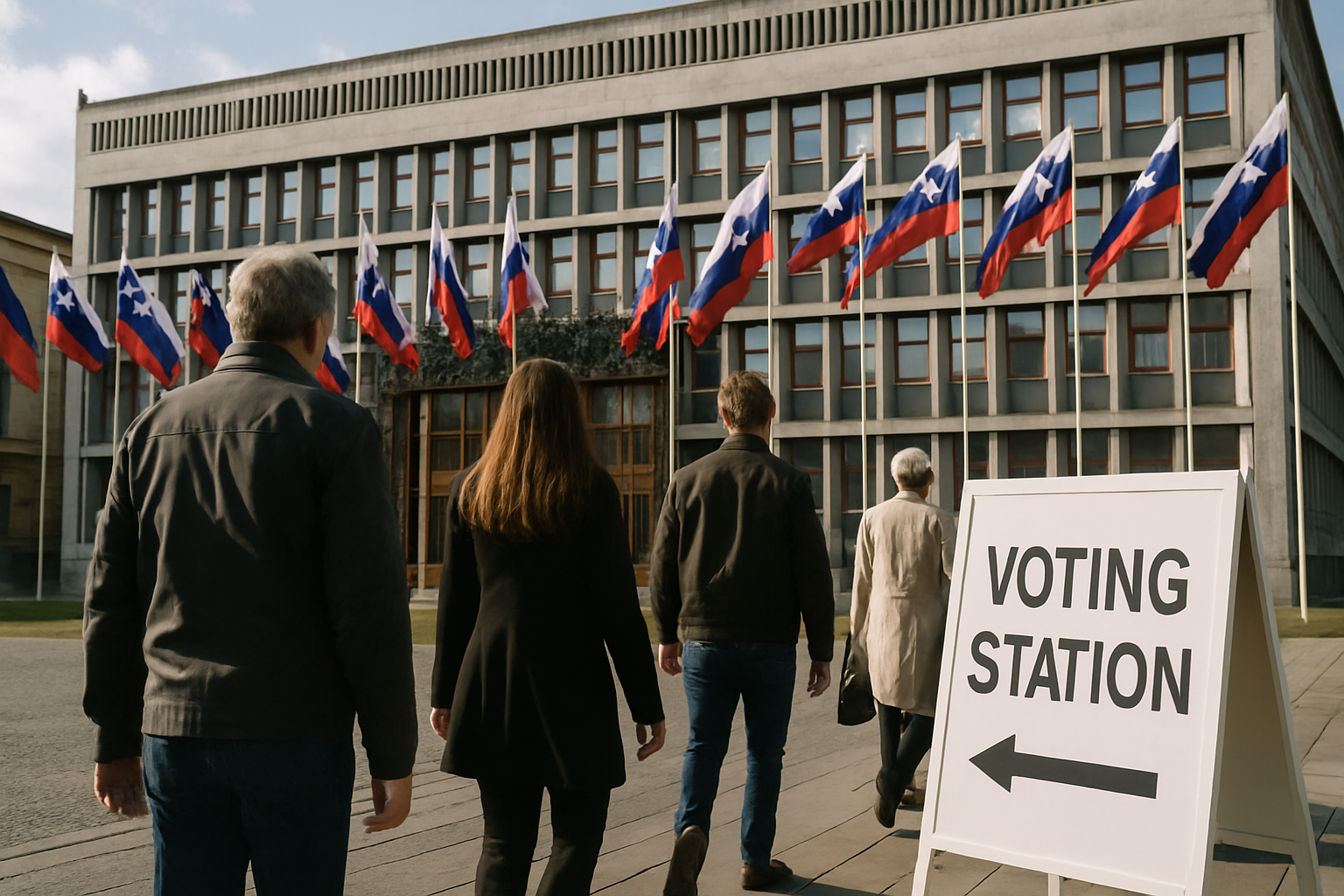
Slovenia held its 10th parliamentary election since independence on March 22, 2026, in a crucial vote that will determine whether the small Alpine nation continues on its liberal, EU-friendly path or shifts toward the populist model exemplified by neighboring Hungary under Viktor Orbán.
The election presented voters with a stark choice between incumbent Prime Minister Robert Golob's Freedom Movement party and Janez Janša's conservative Slovenian Democratic Party (SDS), with polls showing an extremely tight race that could reshape Slovenia's political landscape for years to come.
High Stakes Electoral Battle
Approximately 1.7 million eligible voters across 2,987 polling stations faced a consequential decision between two fundamentally different visions for Slovenia's future. Golob, representing four years of green-liberal governance, campaigned on maintaining Slovenia's pro-European trajectory and democratic institutions. His opponent, Janša—described by some as a "mini-Trump" figure—sought a return to power after previous tenures marked by controversial policies and authoritarian tendencies.
The election occurred against the backdrop of the most severe political crisis across EU member states since World War II, with far-right movements gaining ground across Europe and traditional coalition mathematics breaking down in multiple countries.
"This election will determine whether Slovenia follows the path of liberal democracy or slides toward the Hungarian model,"
— Finnish media analysis, YLE
Janša, who has positioned himself as an ally of Donald Trump and Viktor Orbán, long appeared to be the frontrunner in polling. However, his campaign faced significant headwinds in the final weeks due to explosive allegations of foreign interference that dominated media coverage and raised questions about electoral integrity.
Foreign Interference Allegations Rock Campaign
The electoral campaign was overshadowed by allegations of Israeli private security firm operations attempting to influence the vote in favor of Janša's conservative coalition. These claims, which emerged in the final weeks of campaigning, created a spy scandal that undermined public confidence in the democratic process and became a defining issue of the election.
German media reported that opposition leader Janša, who had been widely viewed as the likely winner, saw his campaign derailed by these foreign meddling accusations. The scandal highlighted growing concerns about sophisticated international operations targeting electoral processes across Europe, particularly during periods of heightened political tensions.
Intelligence sources noted that such interference operations have become increasingly effective at exploiting domestic divisions and amplifying existing polarization rather than creating artificial conflicts from scratch. Slovenia's election served as a bellwether for democratic institutions' capacity to conduct credible elections despite such allegations.
European Democratic Context
The Slovenian vote took place during what observers have characterized as unprecedented strain on European democratic institutions. Recent months have witnessed Sweden's Liberal Party entering into cooperation with the far-right Sweden Democrats, France grappling with political violence, and multiple EU member states experiencing coalition instability.
Despite these broader challenges, Slovenia's election proceeded with high democratic standards, providing a template for managing political interference allegations through legal channels while maintaining electoral integrity. The conduct of the vote demonstrated the resilience of democratic institutions even under pressure from foreign interference claims and intense political polarization.
"Slovenia represents a critical test of European democratic capacity to navigate 21st-century pressures while preserving fundamental values,"
— European political analyst
The outcome carries implications far beyond Slovenia's borders, as the country's strategic location between East and West, along with its role in EU and NATO, makes political stability crucial for regional security and European integration efforts.
Campaign Dynamics and Key Issues
Throughout the campaign, Golob emphasized his government's achievements in maintaining democratic norms and European integration while addressing economic challenges. His Freedom Movement positioned itself as the guardian of liberal democratic values against what it characterized as authoritarian populism.
Janša's SDS campaign focused on concerns about immigration, national sovereignty, and criticism of EU policies, echoing themes successful for populist movements across Europe. The party sought to capitalize on voter frustration with economic pressures and social changes while promising a more assertive defense of Slovenian interests.
The election featured 15 different parties and coalitions competing for seats in the National Assembly, reflecting the fragmented nature of contemporary Slovenian politics. This fragmentation mirrors broader European trends where traditional left-right divisions have evolved into more complex multi-dimensional competition involving questions of national identity, European integration, and governance effectiveness.
International Implications and Regional Stability
Slovenia's democratic stability serves as a positive example for the Western Balkans region, where several countries continue to work toward EU membership and democratic consolidation. The successful conduct of elections despite interference allegations strengthens Slovenia's position as a regional democratic anchor.
The results will influence Slovenia's approach to key European issues, including Ukraine support, EU integration, and relations with Russia. Janša's historically closer ties to Moscow and criticism of EU sanctions created concerns among European partners about potential policy shifts under SDS leadership.
International observers monitored the election closely, recognizing its significance as a test case for democratic resilience under pressure. The peaceful conduct of voting and acceptance of results, regardless of outcome, would provide valuable precedents for other European nations facing similar challenges.
Historical Significance
As Slovenia's 10th parliamentary election since gaining independence in 1991, this vote represented a crucial moment in the young nation's democratic evolution. The choice between continuing the liberal democratic path established since EU accession in 2004 or potentially shifting toward more authoritarian models successful elsewhere in Central and Eastern Europe carried profound implications for Slovenia's future trajectory.
The election outcome will determine not only domestic policy directions but also Slovenia's role within European institutions and its contribution to addressing continental challenges from climate change to democratic backsliding. Success in maintaining democratic norms while addressing voter concerns could provide a template for other European democracies facing similar pressures.
Results are expected to be announced following the completion of vote counting, with the winning party or coalition needing to form a government that can address Slovenia's challenges while maintaining the democratic institutions that have served the country well since independence.