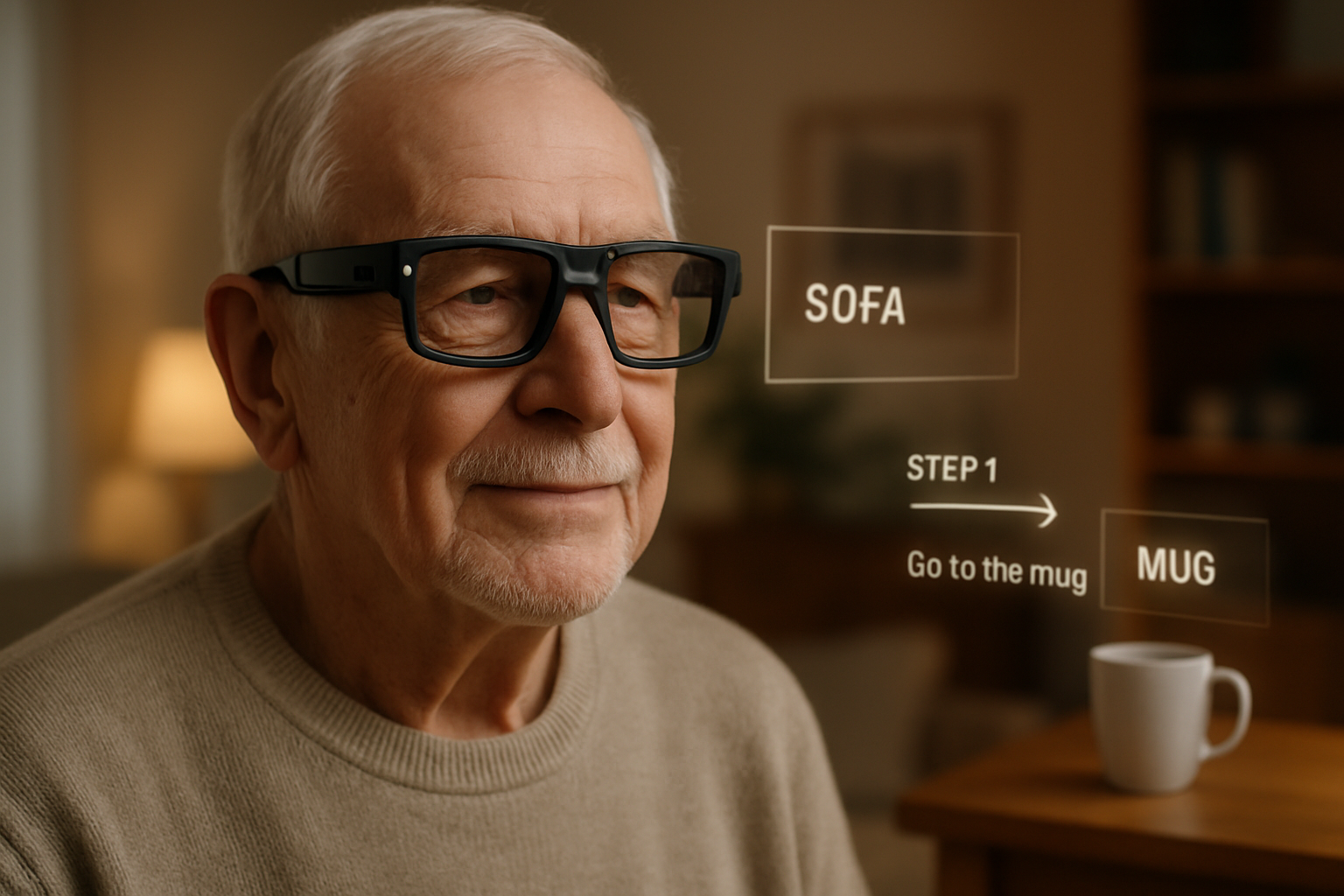
Revolutionary smart glasses technology is transforming dementia care by providing real-time object identification and step-by-step guidance, offering unprecedented support for daily activities and extending patients' ability to live independently.
The innovative system, developed by Slovak researchers and confirmed through extensive testing, represents a major breakthrough in the ongoing "Therapeutic Revolution of 2026" that is reshaping global healthcare approaches. Initial trials have demonstrated remarkable improvements in quality of life for dementia patients, providing both practical assistance and psychological benefits that extend far beyond simple technological aid.
How the Technology Works
The smart glasses system employs advanced artificial intelligence to identify everyday objects and provide verbal cues through integrated speakers. When a dementia patient looks at common household items—from kitchen utensils to personal belongings—the system instantly recognizes these objects and offers contextual guidance for their use.
The technology operates through sophisticated computer vision algorithms that process visual information in real-time, cross-referencing objects against comprehensive databases while providing culturally appropriate guidance tailored to individual user needs. Unlike previous assistive technologies that required complex setup procedures, these glasses integrate seamlessly into daily routines.
Testing has shown the system successfully identifies over 10,000 common household objects, from basic items like cups and spoons to more complex tools like television remotes and medication containers. The AI assistant provides gentle verbal prompts, explaining not just what objects are but how to use them effectively in step-by-step processes that respect the user's dignity and autonomy.
Clinical Trial Results and Patient Impact
Comprehensive testing conducted by Slovak medical institutions has revealed significant improvements across multiple quality-of-life measurements. Patients using the smart glasses demonstrated enhanced confidence in performing daily activities, reduced anxiety levels during routine tasks, and extended periods of independent living without constant caregiver supervision.
The study documented particular success in kitchen environments, where patients regained ability to prepare simple meals independently. The system's step-by-step cooking guidance proved especially valuable, helping users navigate complex sequences like operating appliances, following recipes, and maintaining kitchen safety protocols.
"The difference has been remarkable. Patients who were becoming increasingly dependent on family members for basic tasks are now able to maintain their routines with dignity and confidence."
— Lead Research Team, Slovak Medical Institute
Perhaps most significantly, family members reported reduced caregiver burden and improved relationships with their loved ones. The technology allows family members to step back from constant supervision while maintaining confidence in their relative's safety and wellbeing.
Integration with Global Healthcare Transformation
This breakthrough emerges during a critical period in global healthcare evolution, part of the broader "Therapeutic Revolution of 2026" that emphasizes prevention-first strategies and community-centered care. The smart glasses technology exemplifies successful human-centered technology integration, enhancing rather than replacing fundamental human relationships in healthcare.
International healthcare experts note that this innovation aligns with successful prevention-first approaches being implemented worldwide. Countries adopting comprehensive prevention programs report substantial cost reductions through decreased crisis interventions while achieving superior population health outcomes.
The technology particularly benefits from the global shift toward viewing healthcare as essential community infrastructure rather than individual crisis management. Smart glasses represent technology that enhances human capabilities while preserving the dignity and autonomy that define quality care for vulnerable populations.
Technical Innovation and Development
The glasses incorporate several breakthrough technologies that overcome previous limitations in assistive devices for dementia patients. Advanced battery systems provide all-day operation without frequent charging, while lightweight frames ensure comfortable extended wear. The integrated audio system delivers clear guidance without isolating users from their environment.
Machine learning capabilities allow the system to adapt to individual user preferences and routines. Over time, the glasses learn which objects users interact with most frequently, customizing guidance to match personal habits and environmental contexts. This personalization proves crucial for effectiveness, as dementia affects individuals differently based on their backgrounds and experiences.
The development team also addressed privacy concerns through local processing of visual information, ensuring that sensitive personal environments remain private while still providing comprehensive assistance. All object recognition occurs within the device itself, with no personal information transmitted to external servers.
Economic and Social Benefits
Healthcare economists project that smart glasses technology could generate substantial savings across healthcare systems worldwide. By extending the period during which dementia patients can live independently, the technology reduces costs associated with institutional care, intensive home healthcare services, and emergency interventions resulting from confusion or accidents.
The economic implications extend beyond direct healthcare savings. Families report reduced need for full-time caregiving arrangements, allowing family members to maintain employment and contributing to overall economic productivity. The technology also reduces the psychological stress on families, preventing the broader health impacts that often affect entire family systems dealing with dementia.
Social workers note that patients maintaining independence longer experience better overall health outcomes, slower disease progression, and improved quality of life measurements. The psychological benefits of autonomy and dignity appear to have measurable impacts on cognitive decline rates.
Implementation and Accessibility
Healthcare systems across multiple countries are preparing implementation programs for smart glasses technology, with particular emphasis on equitable access regardless of economic circumstances. Initial deployment focuses on clinical trials and pilot programs that will inform broader rollout strategies.
Training programs for healthcare professionals, family members, and patients themselves are being developed to ensure effective technology utilization. The system is designed for intuitive use, but proper introduction and ongoing support prove essential for maximizing benefits.
Researchers emphasize that successful implementation requires comprehensive approaches addressing not just the technology itself but the broader support systems surrounding dementia care. The glasses work best when integrated with existing healthcare relationships, family support networks, and community resources.
Future Development and Research Directions
Ongoing research focuses on expanding the system's capabilities to address more complex aspects of dementia care. Future versions may include enhanced navigation assistance for outdoor environments, medication management integration, and emergency response capabilities that can automatically contact caregivers when unusual situations are detected.
International cooperation in dementia research has accelerated development timelines while ensuring that solutions address diverse cultural contexts and healthcare systems. Bilateral partnerships between research institutions are sharing best practices and technical innovations while adapting technologies to local needs and preferences.
The success of smart glasses technology is spurring broader innovation in assistive technologies for neurodegenerative conditions. Researchers are exploring applications for Parkinson's disease, stroke recovery, and other conditions where cognitive assistance could extend independence and improve quality of life.
Global Healthcare Context
The smart glasses breakthrough occurs within a broader transformation of international healthcare approaches emphasizing prevention, early intervention, and technology integration that enhances rather than replaces human-centered care. This aligns with successful models emerging worldwide where authentic community connections and sustainable wellness approaches prove more effective than purely technological solutions.
Despite challenges facing traditional multilateral health organizations, bilateral partnerships and peer-to-peer knowledge sharing continue driving medical innovation. The dementia glasses project exemplifies distributed cooperation models that allow culturally responsive approaches while maintaining evidence-based medical standards.
Healthcare policy experts identify this innovation as part of a critical global healthcare evolution where precision medicine advances, international cooperation, and prevention-focused strategies provide foundations for resilient healthcare systems addressing 21st-century challenges including aging populations and increasing rates of neurodegenerative diseases.
Looking Ahead
The revolutionary smart glasses technology represents more than technological advancement—it embodies a fundamental shift toward healthcare that preserves human dignity while leveraging innovation to extend quality of life. As global populations age and dementia rates increase, solutions that enable independence while maintaining safety become increasingly crucial.
Success of this technology depends on continued international cooperation, sustained political commitment to healthcare innovation, and comprehensive approaches that treat assistive technology as part of broader community support systems rather than isolated solutions. The early results suggest that when properly implemented within supportive healthcare frameworks, smart glasses technology could fundamentally transform the experience of living with dementia for millions of patients and their families worldwide.
This breakthrough demonstrates that the most promising path forward in healthcare involves sophisticated human-technology collaboration that amplifies human capabilities while preserving the creativity, cultural understanding, and emotional connections that define meaningful care relationships.