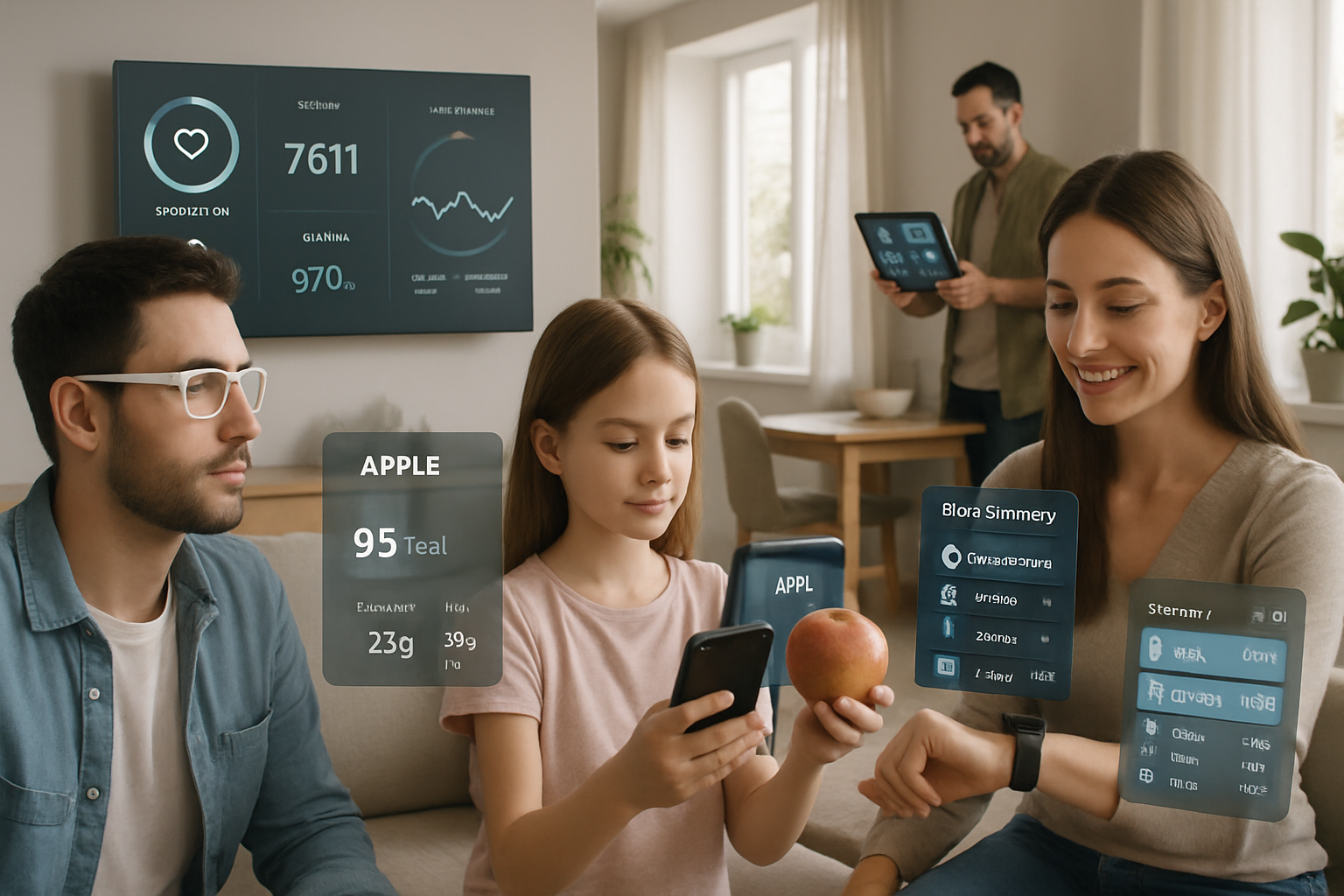
The integration of smart technology into daily life has reached unprecedented levels in 2026, with revolutionary developments spanning from dementia care through intelligent glasses to sophisticated apps that help millions avoid ultra-processed foods, fundamentally transforming how humans interact with technology for health and wellness.
Two groundbreaking developments from Europe illustrate this transformation: Norwegian startup technology that has attracted thousands of users seeking to avoid ultra-processed foods, and Slovakian research into smart glasses that provide step-by-step guidance for dementia patients navigating everyday tasks.
Revolutionary Food Technology Gains Global Traction
A Norwegian entrepreneur has developed an innovative mobile application that thousands of users now employ to identify and avoid ultra-processed foods, addressing a growing global health concern. The app represents a significant shift toward preventive health technology, empowering consumers to make informed dietary choices in real-time.
Ultra-processed foods have become a central topic of conversation "on buses, in stores, at lunch and dinner tables," reflecting widespread public awareness of their potential health impacts. The Norwegian founder has developed what he describes as a "simple method" for avoiding these foods, leveraging technology to democratize nutritional knowledge that was previously accessible only to specialists.
The application's success reflects broader trends in health technology, where sophisticated algorithms and databases are being made accessible through intuitive user interfaces. This approach exemplifies the "human-centered technology integration" that experts identify as crucial for successful digital health interventions.
Smart Glasses Transform Dementia Care
Meanwhile, researchers in Slovakia have developed revolutionary smart glasses that represent a paradigm shift in dementia care. The technology navigates patients through daily activities by identifying objects and providing step-by-step guidance, addressing one of healthcare's most challenging conditions through innovative technological solutions.
Initial testing has revealed significant improvements in patients' quality of life, with the system helping individuals maintain independence longer while reducing caregiver burden. The glasses integrate advanced computer vision, artificial intelligence, and augmented reality to create what researchers describe as a "comprehensive daily living assistance system."
This breakthrough occurs within the broader context of what mental health professionals are calling the "Therapeutic Revolution of 2026," where prevention-first healthcare approaches are demonstrating superior cost-effectiveness compared to traditional crisis-response models.
The Human-Centered Technology Revolution
These developments reflect a fundamental evolution in technology design philosophy. Rather than creating solutions that replace human judgment, successful applications are enhancing human capabilities while preserving essential human elements of decision-making and relationship-building.
The Norwegian food app succeeds because it empowers users with information while respecting their food choices and cultural preferences. Similarly, the Slovakian smart glasses maintain patient dignity by providing assistance rather than control, allowing individuals to retain autonomy in their daily lives.
This approach contrasts sharply with technology implementations that create what experts call the "wellness paradox," where digital solutions designed to improve health actually create anxiety, dependence, or social isolation.
Prevention-First Healthcare Economics
Both technologies exemplify prevention-first healthcare strategies that are showing superior economic outcomes globally. Countries implementing comprehensive prevention programs report substantial cost reductions through decreased crisis interventions, improved community resilience, and enhanced workplace productivity.
The food application prevents diet-related health problems before they require medical intervention, potentially saving healthcare systems significant resources. The dementia assistance glasses help patients maintain independent living longer, reducing the need for expensive institutional care while improving quality of life for both patients and families.
Economic analyses demonstrate that prevention-focused strategies create multiplier effects extending beyond healthcare savings to improved educational outcomes, reduced social service demands, and enhanced international competitiveness through healthier populations.
Cultural Adaptation and Global Implementation
The success of these technologies highlights the importance of cultural adaptation in global technology deployment. The Norwegian app must account for different dietary traditions and food availability across regions, while the dementia glasses need to recognize culturally specific objects and activities.
Evidence-based practices integrated with local wisdom consistently yield better outcomes than standardized Western frameworks imposed globally. This principle applies not only to the technology itself but also to implementation strategies, user education, and support systems.
Mental health professionals emphasize that authentic community connections remain more effective than performance-based metrics, suggesting that successful technology integration requires maintaining human relationships rather than replacing them with digital alternatives.
Digital Wellness in the Modern Era
These developments occur amid growing recognition of digital wellness challenges, particularly among young people. Research shows that 96% of children aged 10-15 use social media, with 70% experiencing harmful content exposure, highlighting the need for thoughtful technology design that prioritizes user wellbeing.
The Norwegian and Slovakian innovations demonstrate how technology can enhance daily life without contributing to digital overwhelm or addiction. Both applications focus on specific, practical tasks rather than engaging users in endless scrolling or social comparison.
This approach aligns with emerging concepts of "digital wisdom," where people learn to navigate technology in ways that preserve rather than diminish their humanity. The most successful interventions emphasize sustainable wellness approaches that accommodate human struggle and imperfection.
International Cooperation and Knowledge Sharing
The development of these technologies benefits from international cooperation and knowledge sharing networks that have emerged despite traditional funding challenges facing multilateral health organizations. Bilateral partnerships and peer-to-peer knowledge sharing continue driving innovation through distributed cooperation models.
Smaller nations like Norway and Slovakia are contributing valuable research methodologies and practical applications, while larger countries offer technological infrastructure and implementation resources. This collaborative approach allows for culturally responsive solutions while maintaining evidence-based standards.
The success of these technologies may influence broader technology governance frameworks, particularly as governments worldwide grapple with balancing innovation encouragement and user protection, especially for vulnerable populations.
Future Implications for Society
The integration of smart technology into daily life represents more than individual convenience—it reflects a fundamental shift toward organizing society around human flourishing rather than merely treating illness or problems after they arise.
Success requires sustained political commitment beyond electoral cycles, comprehensive professional training in prevention approaches, and robust community engagement that respects cultural contexts. Most importantly, it demands that technology enhance rather than replace human therapeutic relationships and community connections.
As we advance into 2026, the convergence of evidence-based prevention strategies, cultural adaptation insights, technological innovation, and international cooperation provides unprecedented opportunities for comprehensive wellness promotion. The Norwegian and Slovakian innovations represent promising templates for addressing 21st-century challenges through coordinated human-centered technological development.
The ultimate measure of success will be whether these technologies contribute to communities and individuals thriving across generations, establishing psychological and physical wellbeing as fundamental infrastructure comparable to transportation, education, and economic development.