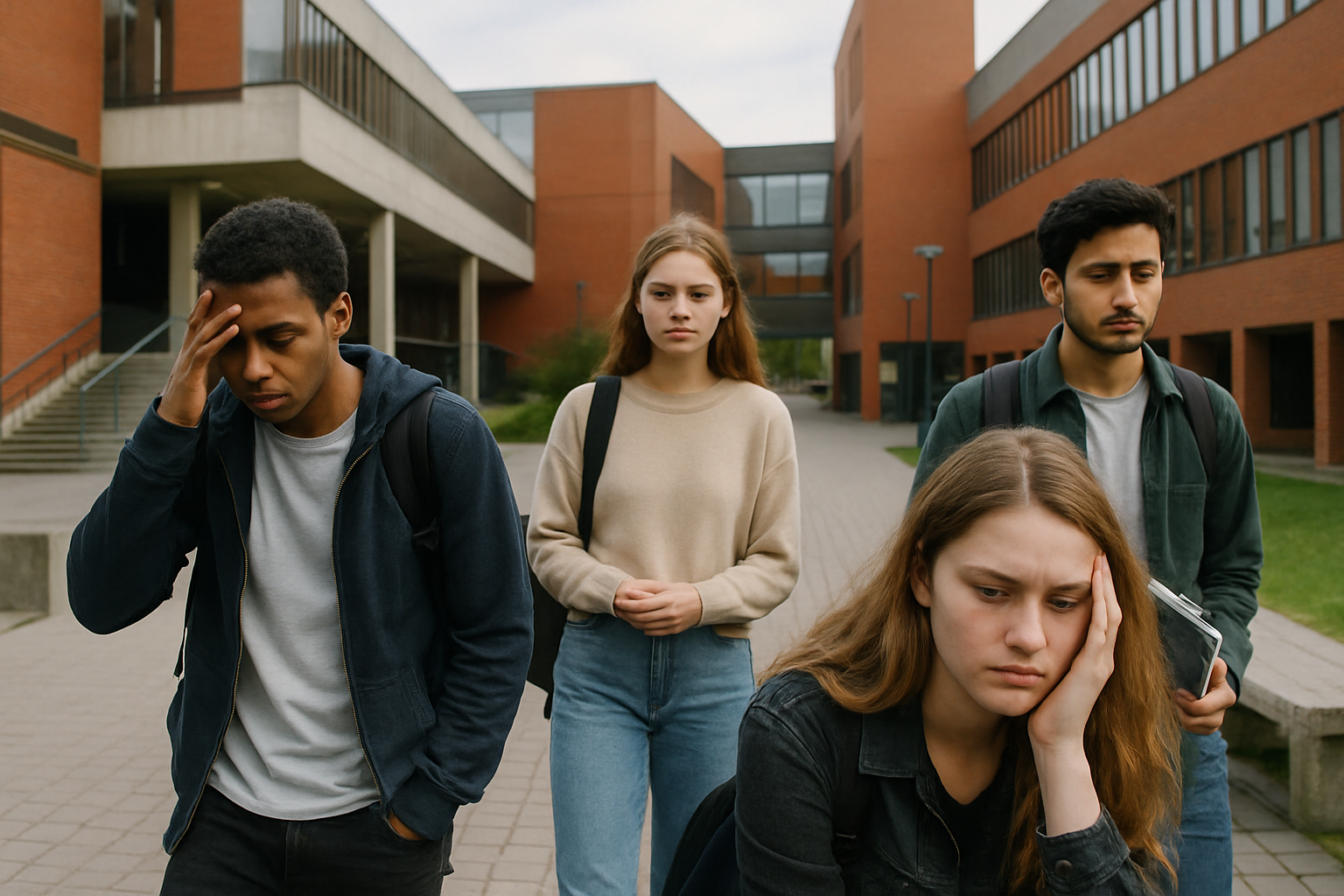
Finnish health officials are sounding unprecedented alarm bells over a surge in social anxiety disorders among university students, warning that the crisis could have far-reaching implications for the nation's future leadership and societal development.
According to new research findings released in March 2026, students currently enrolled in Finnish higher education institutions are experiencing social situation anxiety at rates that far exceed historical norms. The phenomenon, characterized by intense fear and discomfort in social interactions, is particularly pronounced among students who required extensive mental health services during their childhood years.
Dr. Ylilääkäri Marja Korhonen, Finland's leading authority on student mental health, expressed deep concern about the findings during a press conference in Helsinki. "We are witnessing an unprecedented crisis in our universities. The students we see struggling with social anxiety today are the leaders, innovators, and decision-makers of tomorrow. This is not just a health issue—it's a societal emergency."
The Scope of the Crisis
The latest data reveals that current university cohorts demonstrate significantly higher rates of social anxiety compared to previous generations. These students, many of whom experienced mental health challenges during their formative years, are now struggling to navigate the complex social dynamics of higher education.
Research indicates that students affected by this trend show marked difficulty in participating in group discussions, presenting research findings, networking with peers, and engaging in collaborative academic projects—all critical skills for future leadership roles.
"What we're seeing is a generation that needed extensive psychological support as children now facing even greater challenges as they prepare to enter professional life. The implications are staggering."
— Dr. Marja Korhonen, Chief Medical Officer for Student Health Services
Global Context: Finland's Challenge Within a Worldwide Crisis
Finland's university mental health crisis occurs within the broader context of what researchers have termed the "Therapeutic Revolution of 2026"—a global paradigm shift in mental healthcare approaches. However, Finland's situation is particularly acute given the nation's traditionally strong educational system and relatively comprehensive social support networks.
International research demonstrates that 96% of children aged 10-15 now use social media platforms, with 70% experiencing harmful content exposure and over 50% encountering cyberbullying. Dr. Ran Barzilay from the University of Pennsylvania has documented how early smartphone exposure—particularly before age 5—creates lasting neurological patterns affecting sleep, cognitive development, and social interaction capabilities well into adulthood.
These digital-age factors appear to be compounding in Finland's university environment, where students who already experienced childhood mental health challenges are finding themselves particularly vulnerable to social anxiety in academic settings.
The Academic Performance Impact
Finnish university professors report observable changes in classroom dynamics over the past several years. Students are increasingly reluctant to participate in seminars, avoid eye contact during lectures, and show elevated stress responses to collaborative assignments.
Professor Antti Virtanen from the University of Helsinki's Psychology Department notes: "We're seeing students who are academically brilliant but cannot function in the social aspects of university life. They excel in individual assignments but become paralyzed when required to work in teams or present their findings."
The implications extend beyond academic performance to career preparation. Finnish universities have traditionally prided themselves on producing confident, socially adept graduates ready for leadership roles in both domestic and international contexts. This new trend threatens that reputation and Finland's competitive advantage in the global knowledge economy.
Understanding the Root Causes
Mental health professionals identify several interconnected factors contributing to the crisis. The "wellness paradox," increasingly recognized in 2026 research, suggests that constant pressure for self-improvement and optimization creates psychological exhaustion rather than genuine well-being.
Finnish students, raised in a culture that values both academic achievement and social equality, may be particularly susceptible to this phenomenon. The pressure to excel academically while maintaining social connections creates a complex psychological burden that manifests as social anxiety in university settings.
Additionally, the generation now entering universities grew up during unprecedented global uncertainty—including the COVID-19 pandemic, climate change concerns, and economic instability. These macro-level stressors, combined with individual mental health histories, create what researchers call "compound anxiety" in social situations.
The Leadership Implications
Finland's concern about its future leaders reflects the nation's understanding that university students today will occupy critical positions in government, business, academia, and civil society within the next decade. Social anxiety among this population could significantly impact Finland's capacity to address complex challenges requiring collaborative leadership and international cooperation.
"We're not just talking about individual student welfare," explains Dr. Korhonen. "We're discussing the social capital of our entire nation. Leadership in the 21st century requires precisely the social skills that we're seeing eroded by anxiety disorders."
The crisis is particularly acute in programs that traditionally produce Finland's leadership class—political science, international relations, business administration, and public policy. Students in these programs report feeling overwhelmed by networking requirements, group projects, and presentation expectations that previous generations navigated with relative ease.
Prevention-First Approaches Show Promise
Drawing on global best practices from the 2026 therapeutic revolution, Finnish universities are beginning to implement prevention-first mental health strategies. These approaches, proven successful in countries like Montana (which achieved an 80% reduction in police mental health calls through proactive community intervention), emphasize early identification and support rather than crisis response.
Several Finnish universities have launched peer counseling programs similar to those pioneered at the University of Applied Sciences Campus Wien. These programs train students to provide initial support to peers experiencing social anxiety, creating authentic community connections that traditional counseling services sometimes struggle to achieve.
The University of Turku has introduced "social skills integration" courses that help students develop professional networking abilities, public speaking confidence, and collaborative work techniques in a supportive, non-judgmental environment.
Technology's Double-Edged Role
Finnish educators are grappling with technology's complex relationship to student social anxiety. While digital tools can provide valuable mental health resources—following Germany's successful Digital Therapeutics Program, which prescribes over 50 mental health apps through public insurance—they can also contribute to social isolation and comparison-driven anxiety.
Universities are implementing "technology human-centered integration" approaches that use digital tools to enhance rather than replace face-to-face social interactions. Virtual reality therapy sessions help students practice social interactions in low-stakes environments, while mindfulness apps provide anxiety management techniques specifically designed for academic settings.
International Cooperation and Learning
Despite funding challenges affecting international organizations, Finnish universities are actively participating in peer-to-peer knowledge sharing with institutions worldwide facing similar challenges. The country is learning from Malaysia's 97.82% teacher placement success and comprehensive mental health training programs, while sharing its own innovations in student support services.
Finland's approach emphasizes cultural adaptation—ensuring that mental health interventions respect Finnish values of equality, authenticity, and academic rigor while addressing the specific needs of socially anxious students.
Economic and Societal Stakes
The economic implications of the crisis extend far beyond individual student outcomes. Finland's knowledge-based economy relies heavily on collaborative innovation, international partnerships, and leadership capacity—all areas potentially compromised by widespread social anxiety among university graduates.
Research demonstrates that prevention-first mental health approaches generate substantial economic returns through reduced crisis intervention costs, improved workplace productivity, and enhanced international competitiveness. Finnish policymakers are viewing student mental health investment as strategic infrastructure rather than optional programming.
Looking Forward: A Critical Juncture
March 2026 represents what Finnish health officials characterize as a critical juncture for the nation's future. The decisions made now regarding student mental health support will determine whether Finland can maintain its position as a global leader in education, innovation, and social development.
The challenge requires unprecedented coordination between universities, healthcare providers, technology companies, and policymakers. Success depends on sustained political commitment, adequate resource allocation, and continued international cooperation despite global funding pressures.
"We have a window of opportunity to address this crisis before it becomes irreversible. The students struggling with social anxiety today will be making decisions that affect millions of people tomorrow. We cannot afford to fail them or our society."
— Dr. Marja Korhonen, Chief Medical Officer
Finnish officials emphasize that addressing university social anxiety requires treating mental health as fundamental community infrastructure rather than individual crisis management. The approach must balance scientific precision with cultural sensitivity, individual treatment with community support, and technological innovation with authentic human connections.
The success or failure of Finland's response may serve as a model for other nations grappling with similar challenges, making this crisis not just a national concern but a global test case for 21st-century mental health policy in educational settings.