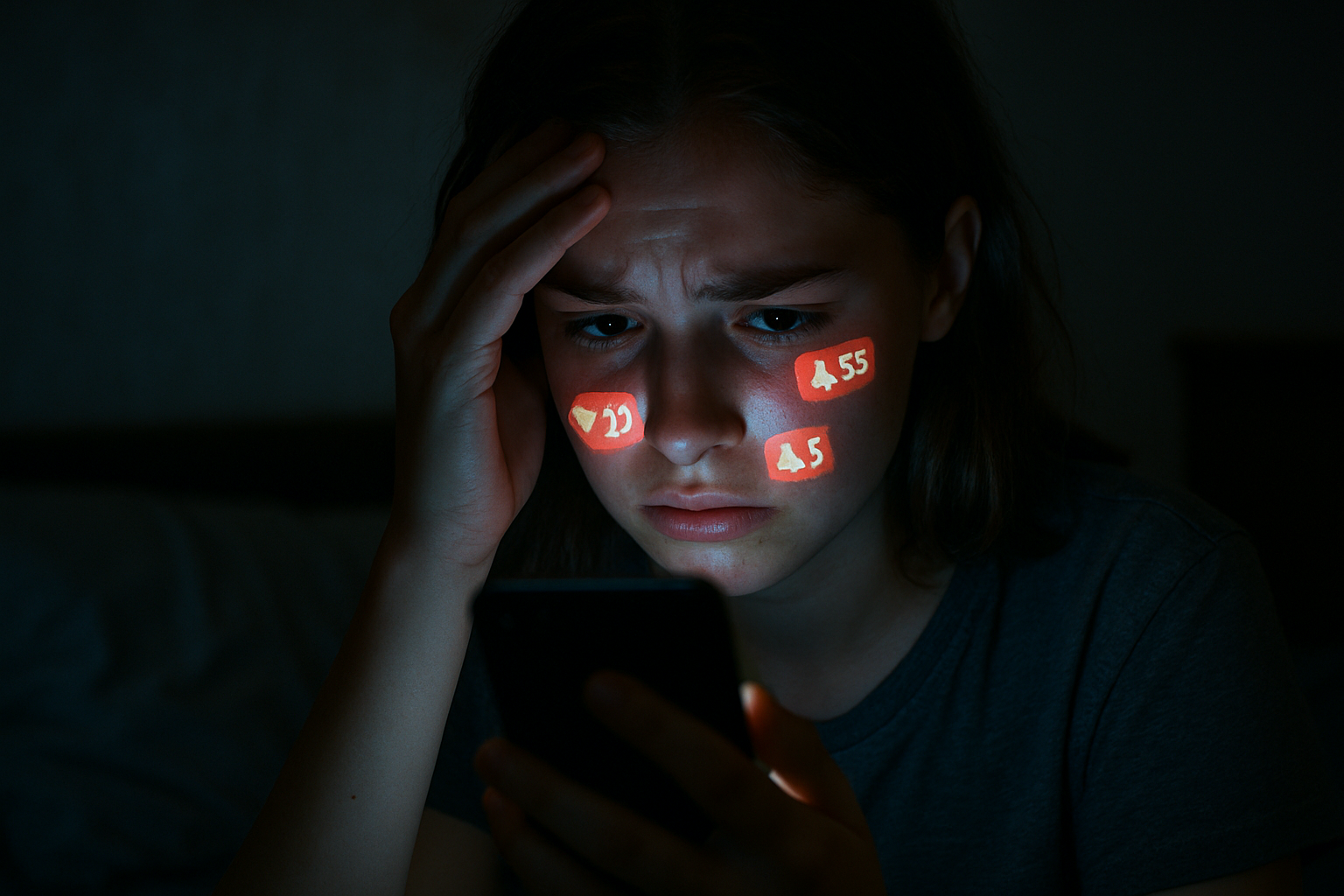
A groundbreaking UK study has established a direct link between children's social media usage and increased rates of depression and anxiety during their teenage years, with researchers identifying sleep disruption as a critical factor driving these alarming mental health trends.
The research, conducted by leading UK institutions, reveals that children who spend more than three hours per day on social media platforms are significantly more likely to develop depression and anxiety disorders as they progress into adolescence. The study particularly emphasizes the pronounced impact on girls, who show higher vulnerability to these mental health challenges.
Sleep Disruption as Primary Driver
According to the researchers, the mental health impact appears to be primarily linked to sleep disruption caused by late-night social media use. Children who engage with platforms during evening hours experience disrupted sleep patterns, which fundamentally affects their psychological development and emotional regulation capabilities.
This finding aligns with broader research from Dr. Ran Barzilay at the University of Pennsylvania, whose comprehensive studies demonstrate that early smartphone exposure before age 5 causes persistent sleep disorders, cognitive decline, and weight problems that extend well into adulthood. The neurological impact of digital devices on developing brains has become a critical area of international research.
"The link between social media use and mental health challenges is becoming undeniable, particularly when we examine sleep disruption patterns in young people."
— Lead UK Researcher, Mental Health Study
Global Context of Youth Mental Health Crisis
The UK findings contribute to mounting evidence of what experts are calling the "Therapeutic Revolution of 2026" – a worldwide paradigm shift from crisis-response to prevention-first mental healthcare approaches. Current statistics paint a stark picture of the digital age's impact on young minds:
- 96% of children aged 10-15 use social media regularly
- 70% experience harmful content exposure
- Over 50% report cyberbullying experiences
- Children spending 4+ hours daily on screens face a 61% increased depression risk
These statistics represent an unprecedented global emergency affecting an entire generation's psychological wellbeing. The University of Macau has published definitive research proving that short-form video consumption damages cognitive development, leading to social anxiety and academic disengagement.
Neurological Mechanisms Behind the Crisis
Recent Austrian neuroscience research reveals that children's reward systems are particularly vulnerable to smartphone stimulation while their impulse control remains underdeveloped until age 25. This creates what researchers describe as a "perfect storm" for addiction and long-term psychological damage.
Dopamine-driven reward cycles from likes, comments, and shares interfere with the brain's natural motivation systems, making traditional learning activities seem less engaging. Blue light from screens suppresses melatonin production, disrupting sleep patterns crucial for adolescent brain development.
International Regulatory Response
The mental health crisis has prompted the most significant social media regulation wave in internet history. Australia's under-16 social media ban successfully eliminated 4.7 million teen accounts in December 2025, proving technical feasibility for youth protection measures.
Spain has implemented the world's first criminal executive liability framework, creating imprisonment risks for technology executives whose platforms harm children. European coordination across Greece, France, Denmark, Austria, and the UK prevents jurisdictional shopping by platforms seeking to avoid regulations.
The European Commission has found TikTok in violation of Digital Services Act provisions, specifically citing "addictive design" features including unlimited scrolling, autoplay, and personalized recommendations. The platform faces penalties potentially reaching 6% of global revenue – billions of dollars.
Platform Industry Resistance
Technology executives have escalated their opposition to protective measures. Elon Musk has characterized European regulations as "fascist totalitarian" overreach, while Telegram's Pavel Durov warns of "surveillance state" implications. This resistance has been cited by governments as evidence supporting the necessity of stronger regulatory intervention.
Mark Zuckerberg's historic court testimony in February 2026 revealed internal Meta documents from 2014-2015 showing explicit goals to increase user engagement time, contradicting public statements about prioritizing user wellbeing. The "SaaSpocalypse" of February 2026 eliminated hundreds of billions in technology market capitalization amid regulatory uncertainty.
Prevention-First Success Models
Several jurisdictions have demonstrated the effectiveness of prevention-first approaches to youth mental health. Montana's mobile crisis teams achieved an 80% reduction in police mental health calls through proactive community intervention. Finland has implemented educational reforms that balance academic achievement with psychological wellbeing, preventing depression patterns that typically emerge from excessive academic pressure.
Hong Kong's 2026-27 budget allocates 60% of recurrent spending to health, social welfare, and education, positioning mental health as an immediate economic priority with HK$2.9 billion in surplus funding directed toward mental health infrastructure.
Alternative Approaches and Philosophical Divides
Not all nations favor regulatory enforcement. Malaysia emphasizes parental responsibility through digital safety campaigns, with officials advocating for parents to control device access rather than using tablets and phones as "digital babysitters." Oman has implemented "Smart tech, safe choices" educational initiatives focusing on conscious digital awareness.
This represents a fundamental philosophical divide in digital governance: government intervention versus individual agency, collective protection versus personal responsibility, and democratic oversight approaches.
The Wellness Paradox
Mental health professionals have identified what they term the "wellness paradox" – where constant pursuit of feeling better creates psychological exhaustion rather than genuine healing. The most successful interventions emphasize accepting difficult emotions, normalizing struggle as an essential component of psychological health, and prioritizing authentic community connections over performance metrics.
The movement toward sustainable wellness approaches accommodates human imperfection and integrates cultural wisdom with modern psychological insights, representing a significant evolution in therapeutic thinking.
Economic Benefits of Prevention
Countries implementing prevention-focused strategies have demonstrated substantial economic benefits through decreased crisis interventions, reduced law enforcement involvement in mental health situations, improved educational outcomes, and enhanced workplace productivity. These economic multiplier effects extend beyond immediate healthcare savings to include community resilience improvements and reduced social service demands.
Implementation Challenges
Real age verification for social media platforms requires sophisticated biometric authentication systems, raising significant privacy and surveillance concerns. The Netherlands experienced a data breach affecting 6.2 million individuals, demonstrating the vulnerabilities inherent in centralized personal data repositories.
A global semiconductor crisis has created sixfold increases in memory chip prices, constraining the technical infrastructure needed for verification systems until new facilities come online in 2027. Cross-border enforcement of protective measures requires unprecedented international cooperation.
March 2026: A Critical Inflection Point
Mental health experts characterize March 2026 as a critical inflection point for global digital governance. The convergence of evidence-based prevention strategies, cultural adaptation insights, technological innovation, and international cooperation provides unprecedented opportunities for comprehensive wellness promotion.
Success in implementing effective youth protection measures could establish criminal liability as a global standard, while failure might strengthen anti-regulation arguments and condemn an entire generation to neurological damage for corporate profit.
The fundamental question remains: Can democratic institutions effectively regulate multinational technology platforms while preserving the beneficial aspects of digital connectivity? The stakes include not only the psychological wellbeing of an entire generation but also the fundamental conditions that enable democratic societies to thrive.
Looking Forward
The UK study represents just one piece of a global puzzle documenting the intersection of digital technology and mental health. As researchers continue to uncover the mechanisms by which social media platforms affect developing minds, policymakers face urgent decisions about how to protect children while preserving digital innovation and connectivity.
The "Therapeutic Revolution of 2026" offers hope for creating societies organized around human flourishing rather than merely treating illness. Success will require sustained political commitment, comprehensive professional training, robust community engagement, and continued international cooperation despite traditional funding constraints.
Most critically, it demands treating mental wellness as fundamental community infrastructure comparable to transportation, education, and economic development – essential elements for thriving 21st-century societies navigating the complex challenges of the digital age.