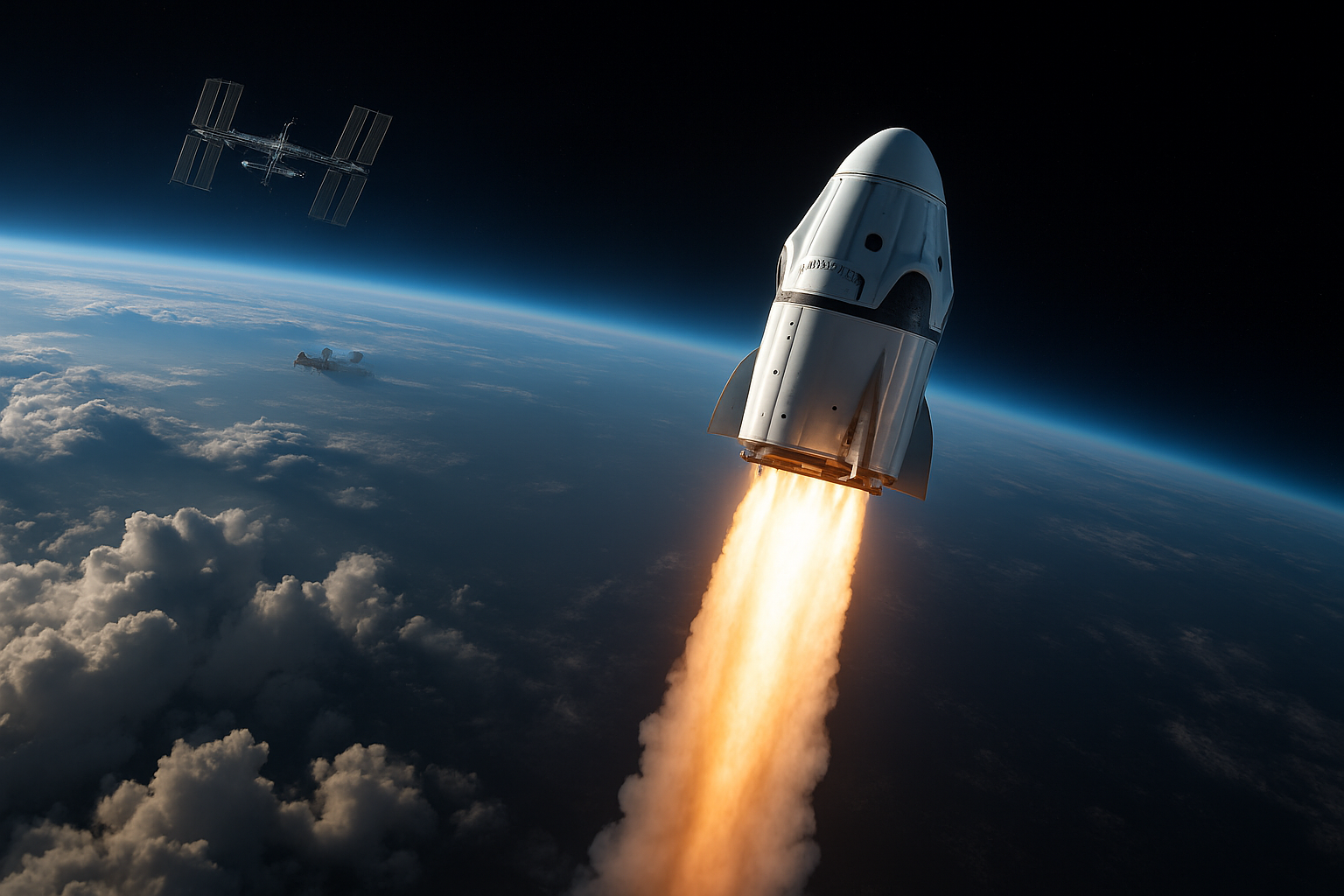
Sophie Adenot launched to the International Space Station on February 13, 2026, at 11:15 AM Central European Time, becoming the first French female astronaut to reach the ISS and only the second French woman to travel into space, marking a historic milestone for both France and the European Space Agency.
The 43-year-old experienced helicopter pilot embarked on what will become an eight-month stay aboard the International Space Station, setting a record for the longest European astronaut mission duration. Her launch comes as part of NASA's Crew-12 mission, which proceeds after overcoming recent technical delays and weather challenges that have affected ISS operations.
Historic Achievement for French Space Exploration
Adenot's journey to space fulfills a childhood dream that began three decades ago. She follows in the footsteps of Claudie Haigneré, who became the first French woman to travel to space in the 1990s. The significance of this mission extends beyond national pride, representing a crucial moment for European space exploration capabilities and international cooperation in space.
As an experienced engineer and helicopter pilot, Adenot brings unique skills to the ISS crew. Her background in aviation and engineering provides essential expertise for the complex operations aboard the space station, where crew members conduct scientific experiments, maintain critical systems, and support ongoing research initiatives.
Mission Context and International Cooperation
The Crew-12 mission represents a critical crew rotation for the International Space Station, replacing astronauts who departed early due to an unprecedented medical evacuation - the first in the station's operational history. This rotation ensures continuity of operations aboard the ISS, where international crews conduct vital scientific research in microgravity environments.
Adenot's mission occurs during a particularly dynamic period in space exploration. The launch follows recent delays to NASA's Artemis II lunar mission, now scheduled for March 2026, and coincides with broader developments in commercial space operations, including SpaceX's strategic pivot toward lunar settlement development.
Scientific Research and Extended Mission Duration
During her eight-month stay, Adenot will participate in numerous scientific experiments designed to advance human understanding of microgravity effects on biological systems. These research efforts include lung tissue cultivation studies, which are crucial for understanding human tissue behavior in space environments - research that directly supports future lunar settlements and Mars exploration missions.
The extended mission duration represents both an opportunity and a challenge. While longer stays enable more comprehensive research, they also present medical challenges including Space-Associated Neuro-Ocular Syndrome (SANS), a condition affecting astronaut vision during extended spaceflight. Portuguese scientists and other international researchers continue studying these effects to develop countermeasures for future deep space missions.
Technical Achievements and Safety Preparations
The successful launch demonstrates the maturity of current space transportation systems. Recent safety reviews and technical assessments have reinforced confidence in crew rotation capabilities, following NASA's safety-first approach that prioritizes thorough preparation over schedule adherence.
Adenot's mission benefits from enhanced Orion capsule security systems and advanced Space Launch System engineering, representing the convergence of traditional rocket technology with modern safety systems. These improvements include redundant safety systems, advanced life support capabilities, and robust communication systems essential for deep space operations.
European Space Agency's Growing Role
As the first ESA professional astronaut of her class to reach the ISS, Adenot represents the European Space Agency's expanding capabilities in human spaceflight. Her mission occurs as European nations increase their participation in international space operations, with Germany expanding rocket testing facilities and emerging nations like Pakistan preparing for missions to China's Tiangong station.
The timing of Adenot's mission coincides with broader shifts in global space exploration strategy. While SpaceX pivots from Mars colonization toward more pragmatic lunar settlement goals, European space capabilities continue developing through international partnerships and technological innovation.
Looking Forward: Space Economy and International Competition
Adenot's historic mission occurs during what experts describe as the transition from the "AI revolution" to the "space economy golden age." With SpaceX preparing for a potential June 2026 IPO valued over $1 trillion, commercial space enterprises increasingly lead innovation beyond traditional government programs.
The mission represents the continuing importance of international cooperation through ISS operations, even as competitive dynamics intensify with China's Shenlong reusable spacecraft advancement and other nations developing independent space capabilities. These developments demonstrate how space exploration has evolved from national prestige projects to essential components of economic and technological competitiveness.
Personal Journey and Professional Legacy
For Adenot personally, reaching the ISS represents the culmination of years of preparation and dedication to space exploration. Her background as both an engineer and helicopter pilot provided unique qualifications for the demanding requirements of spaceflight, where crew members must master complex technical systems while adapting to the physical and psychological challenges of extended space habitation.
Her eight-month mission will contribute valuable data to ongoing research into human space adaptation, directly supporting future missions to the Moon and eventually Mars. As space agencies worldwide prepare for the next phase of human exploration beyond Earth orbit, missions like Adenot's provide essential experience and scientific foundation for these ambitious goals.
The successful launch and ongoing mission demonstrate how international cooperation in space continues advancing human knowledge and capabilities, establishing foundations for humanity's expanding presence beyond Earth. Adenot's historic achievement stands as both personal triumph and symbol of human space exploration's bright future.