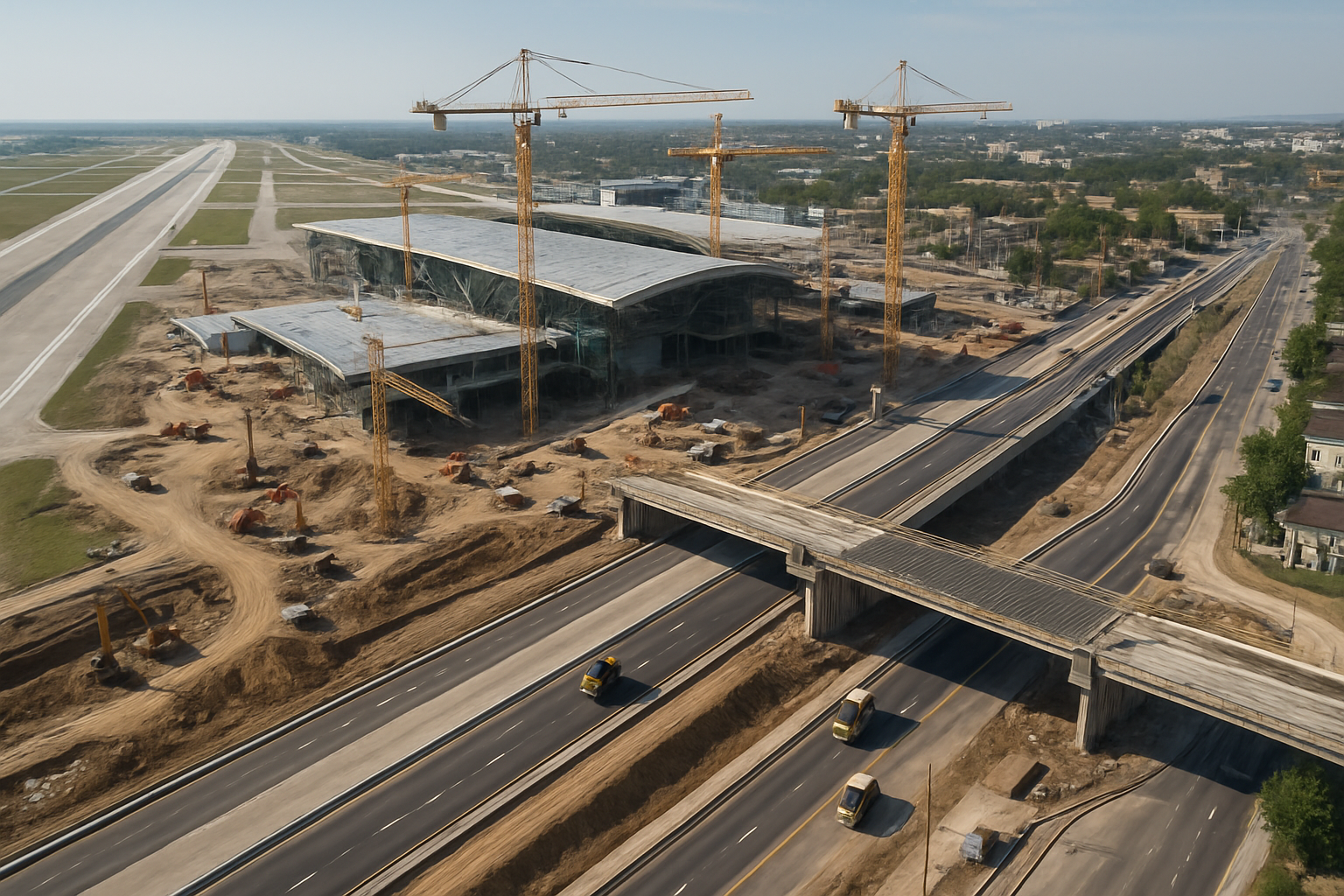
Major infrastructure development projects across Bolivia and Paraguay are demonstrating remarkable progress, contributing to a broader South American transportation renaissance that forms part of an unprecedented $570+ billion global infrastructure investment surge.
Technical inspections conducted this week reveal significant advancement in critical transportation infrastructure across the region, with airport modernization and highway connectivity projects serving as cornerstones of economic development and regional integration efforts.
Bolivia's Airport Modernization Reaches Milestone
The Villazón-Lampaya airport modernization project has achieved a substantial 52% completion rate, according to a technical inspection conducted by specialists from the Unidad Técnica Aeroportuaria (UTA). This comprehensive evaluation represents a crucial milestone in Bolivia's national plan to review and upgrade the country's aviation infrastructure.
During the inspection, the technical team verified construction progress on a new passenger terminal spanning approximately 500 square meters. The facility will include modern built areas and integrated garden spaces, reflecting contemporary airport design principles that prioritize both functionality and environmental aesthetics.
The airport enhancement project extends beyond terminal construction to include significant runway improvements. The existing 1,500-meter runway is being expanded to 2,300 meters in length, a substantial increase that will optimize aviation operations and accommodate larger aircraft for improved connectivity.
"The 52% progress represents a significant achievement in our commitment to modernizing Bolivia's aviation infrastructure network."
— Juan Navia, Mayor of Villazón
Mayor Juan Navia confirmed the progress percentage following the official visit, which included participation from Martha Tito, Director of Planning at the Ministry of Public Works, along with specialized technical personnel. The inspection also encompassed ongoing work on the control tower and future developments planned for adjacent areas.
Paraguay Advances Critical Highway Connections
Paraguay is simultaneously pursuing ambitious road infrastructure projects that promise to transform regional connectivity and economic opportunities. The PY21 highway project, connecting the Itakyry junction with Puerto Indio, has surpassed 73% completion, directly benefiting more than 30,000 residents of the Alto Paraná department.
This strategic corridor serves a crucial role in Paraguay's agricultural economy, particularly in the northern Alto Paraná region known for high agricultural production. The area generates substantial quantities of soybeans, corn, and other grains destined for export through ports along the Paraná River, making reliable transportation infrastructure essential for international commerce.
The paving project operates across two distinct segments: the first extends from the Itakyry junction to General Díaz, covering 27 kilometers, while the second continues the route to Puerto Indio. This comprehensive approach ensures seamless connectivity for both daily population movement toward urban centers and vital international trade operations.
Urban Infrastructure Strengthening Through International Partnership
The municipality of Itakyry exemplifies Paraguay's commitment to comprehensive infrastructure development through its participation in the Plan 1000 km initiative. This ambitious program, promoted by the Government of Paraguay and financed by Itaipú Binacional, focuses on urban infrastructure enhancement through asphalt paving and stone paving projects.
Current progress includes completion of 15,708 square meters of infrastructure improvements within the urban center, demonstrating tangible results from the international partnership model. The Itaipú Binacional financing arrangement represents a successful public-private cooperation framework that other regional development initiatives are studying for potential replication.
Regional Integration and Economic Impact
These infrastructure developments align with broader regional integration objectives supporting the AfCFTA framework and bioceanic connectivity initiatives. The Paraguay highway improvements specifically support the strategic Bioceanic Corridor concept, facilitating trade between Atlantic and Pacific markets through enhanced overland transportation networks.
Economic multiplier effects extend beyond immediate construction employment to include long-term benefits through reduced transportation costs, improved market access, and enhanced competitiveness for agricultural exports. The Bolivia airport expansion positions the facility to serve as a regional aviation hub, potentially attracting tourism and business development.
Regional connectivity improvements also support broader South American integration goals, building on recent infrastructure milestones including Mexico's completed El Insurgente train and Paraguay's advancing Bioceanic Bridge project, which is nearing completion with only 118 meters remaining in the central span construction.
Technology Integration and Modern Standards
Contemporary infrastructure projects across the region incorporate advanced technology integration, including digital monitoring systems, climate-resilient design standards, and environmental sustainability considerations. The Bolivia airport project includes modern navigation systems and energy-efficient terminal design, while Paraguay's highway projects feature improved drainage systems and weather-resistant paving materials.
Smart infrastructure elements enable real-time monitoring, predictive maintenance capabilities, and adaptive management responding to changing usage patterns and environmental conditions. These technological advances reflect lessons learned from earlier infrastructure development where long-term sustainability requirements were not adequately addressed during initial construction phases.
Implementation Challenges and Success Factors
Infrastructure project success requires sophisticated coordination across multiple government levels, international financing partners, and community stakeholders. Environmental compliance, community engagement, and transparent procurement processes have become increasingly critical for project approval and sustainable implementation.
Climate adaptation considerations now influence infrastructure design standards, recognizing that modern transportation networks must serve future climate conditions rather than historical patterns. Projects incorporate enhanced drainage, extreme weather resilience, and renewable energy integration as standard requirements rather than optional features.
International cooperation models, particularly the Paraguay-Itaipú Binacional partnership, demonstrate effective approaches to infrastructure financing that maintain local ownership while accessing international technical expertise and capital resources.
Future Development Trajectory
The February 2026 infrastructure developments establish important precedents for regional transportation network expansion. Success in current projects could catalyze additional investment and international cooperation, creating positive development cycles that strengthen national capabilities and regional integration frameworks.
The coordinated advancement of airport, highway, and urban infrastructure projects provides comprehensive connectivity improvements supporting economic development, social integration, and international competitiveness. These initiatives position South America as an increasingly important participant in global transportation networks and international trade systems.
As global infrastructure investment reaches unprecedented levels, the South American projects demonstrate sophisticated project management capabilities, effective international cooperation, and commitment to sustainable development principles that could influence infrastructure planning strategies worldwide for decades ahead.