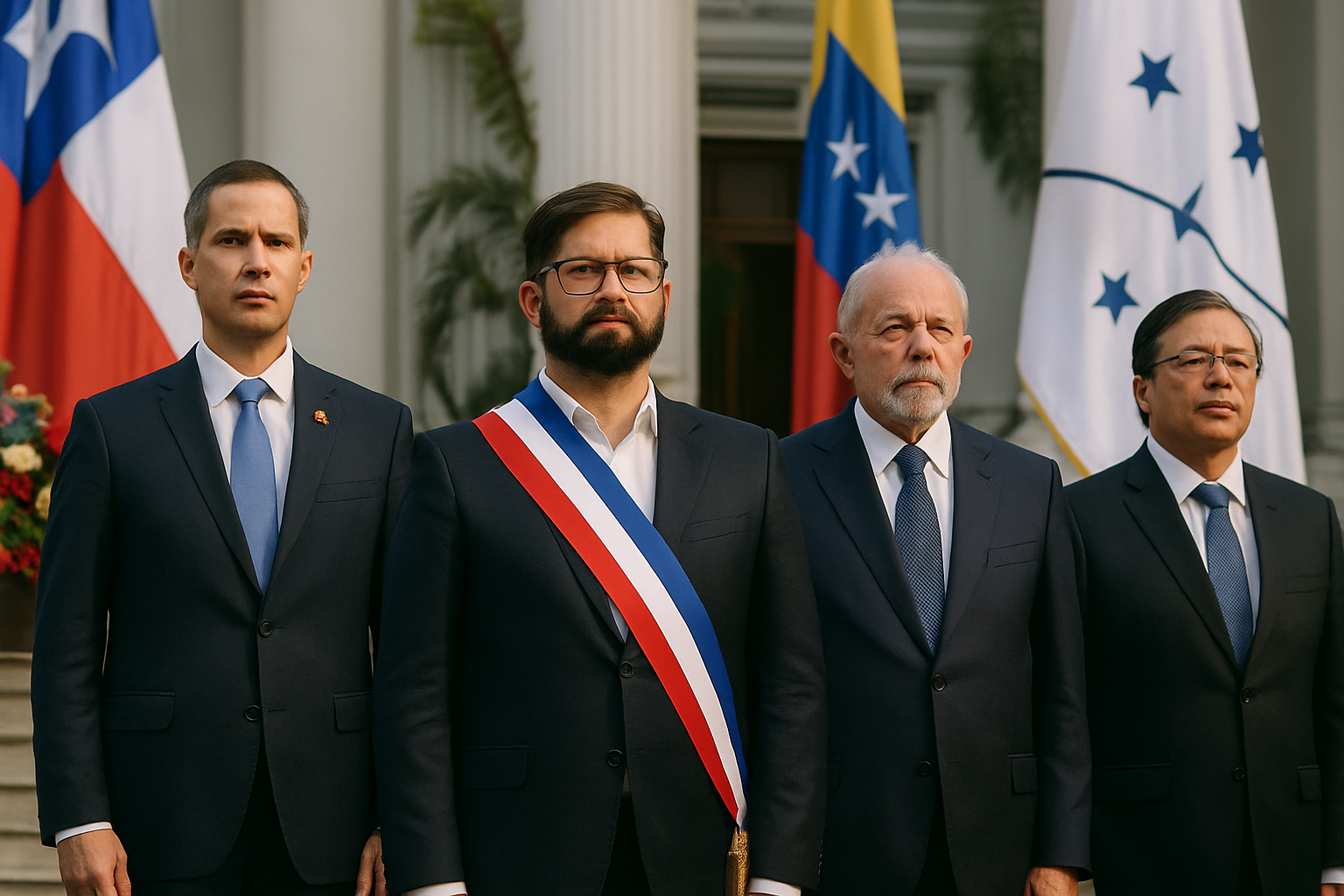
South America is experiencing a wave of unprecedented political transformations as multiple nations navigate presidential transitions, electoral campaigns, and shifting diplomatic relationships that are fundamentally altering the continent's political landscape.
The most significant development centers on Chile, where José Antonio Kast officially assumes the presidency on March 11, 2026, exactly 36 years after the end of Augusto Pinochet's military dictatorship. The inauguration draws international attention not only for its historical timing but also for Kast's controversial stance as the first Chilean president to publicly defend aspects of the military regime.
Chile's Controversial Presidential Transition
International delegations from across the Americas converge on Santiago for Kast's inauguration ceremony at the National Congress in Valparaíso. Dominican Republic President Luis Abinader and Armenian President Vahagn Khachaturyan are among the high-profile attendees, demonstrating the global significance of this political transition.
The inauguration takes place amid concerns from Venezuelan expatriates in Chile, who represent 42% of the country's estimated 2 million migrants. Kast's far-right platform has created uncertainty within the Venezuelan community about their future status in Chile, particularly given his hardline immigration positions during the campaign.
Adding complexity to the transition, El Salvador has announced that President Nayib Bukele will visit Chile in May 2026 to continue discussions on security cooperation that began during Kast's Central American tour as president-elect. This partnership signals a potential alignment of conservative populist leaders across Latin America.
Colombia's Historic Electoral Development
Colombia's political landscape is undergoing its own transformation as leftist Senator Iván Cepeda, the frontrunner in the country's presidential race, announced Senator Aída Quilcué as his running mate for the May 2026 elections. This selection is historically significant as Quilcué, a 53-year-old indigenous leader, could become Colombia's first indigenous vice president.
Quilcué's selection represents more than symbolic progress. As a longtime leader with the Regional Indigenous Council of Cauca (CRIC) and the National Indigenous Organization of Colombia (ONIC), she brings decades of experience in social struggle and democratic construction. Her political journey has been marked by extraordinary challenges, including surviving an assassination attempt, experiencing brief kidnapping, and losing her husband in 2008 when soldiers opened fire on his car.
Cepeda praised his running mate's organization for its "resistance, social struggle and construction of a just and democratic country," signaling a campaign platform that prioritizes indigenous rights and social justice. This partnership could significantly impact Colombia's political trajectory, particularly in regions with substantial indigenous populations.
Regional Diplomatic Realignments
The political transitions extend beyond individual countries to encompass broader regional realignments. El Salvador's announcement of Bukele's planned visit to Chile demonstrates how conservative leaders across Latin America are building new cooperative frameworks, particularly focused on security and governance approaches.
This cooperation stands in contrast to the traditional left-leaning regional blocs that dominated South American politics in the early 2000s. The emergence of conservative partnerships, exemplified by the Kast-Bukele relationship, suggests a fundamental shift in regional political dynamics.
"This is one of the commitments that President Bukele has on his agenda. We expect it will be within the framework of celebrations that Chile has in that period, and President Bukele will gladly be present here to continue that dialogue with President Kast."
— Félix Ulloa, Vice President of El Salvador
Historical Context and International Implications
These developments occur against the backdrop of broader South American political evolution. Recent years have witnessed significant changes across the continent, from Venezuela's post-Maduro transition to Peru's ongoing institutional challenges, creating a complex regional environment where traditional alliances are being reconsidered.
The timing of Kast's inauguration—precisely 36 years after Pinochet's departure—carries profound symbolic weight. Italian media has noted this historical parallel, describing Kast as the first Chilean president to justify aspects of the dictatorship, a stance that differentiates him from previous conservative leaders who maintained critical distance from the military regime.
Colombia's indigenous political representation through Quilcué's candidacy reflects broader continental trends toward greater inclusion of historically marginalized communities in national politics. This development could influence similar movements across Latin America, where indigenous populations have increasingly sought political representation commensurate with their demographic significance.
Economic and Migration Dimensions
The political transitions carry significant economic implications, particularly regarding migration patterns and trade relationships. Chile's large Venezuelan immigrant population—approximately 840,000 people—faces uncertainty under Kast's administration, given his campaign promises to strengthen immigration controls.
This situation reflects broader regional challenges as South American countries manage substantial migration flows while undergoing political transitions. The decisions made by new administrations regarding immigration, trade, and regional cooperation will significantly impact economic development and social stability across the continent.
Looking Forward: Regional Stability and Democratic Governance
As South America navigates these political transformations, several key questions emerge about the future of regional cooperation and democratic governance. The success of these transitions—whether Chile's controversial presidential change or Colombia's potential indigenous representation breakthrough—will influence broader continental political patterns.
The international community watches carefully as these developments unfold, understanding that South American political stability affects global trade, migration patterns, and international cooperation frameworks. The outcomes of these transitions will establish precedents for democratic governance and political inclusion that extend far beyond individual national boundaries.
The coming months will be crucial in determining whether these political changes lead to enhanced regional cooperation or increased fragmentation. The success or failure of leaders like Kast in managing domestic challenges while maintaining international relationships will significantly impact South America's role in global affairs and its internal democratic development.