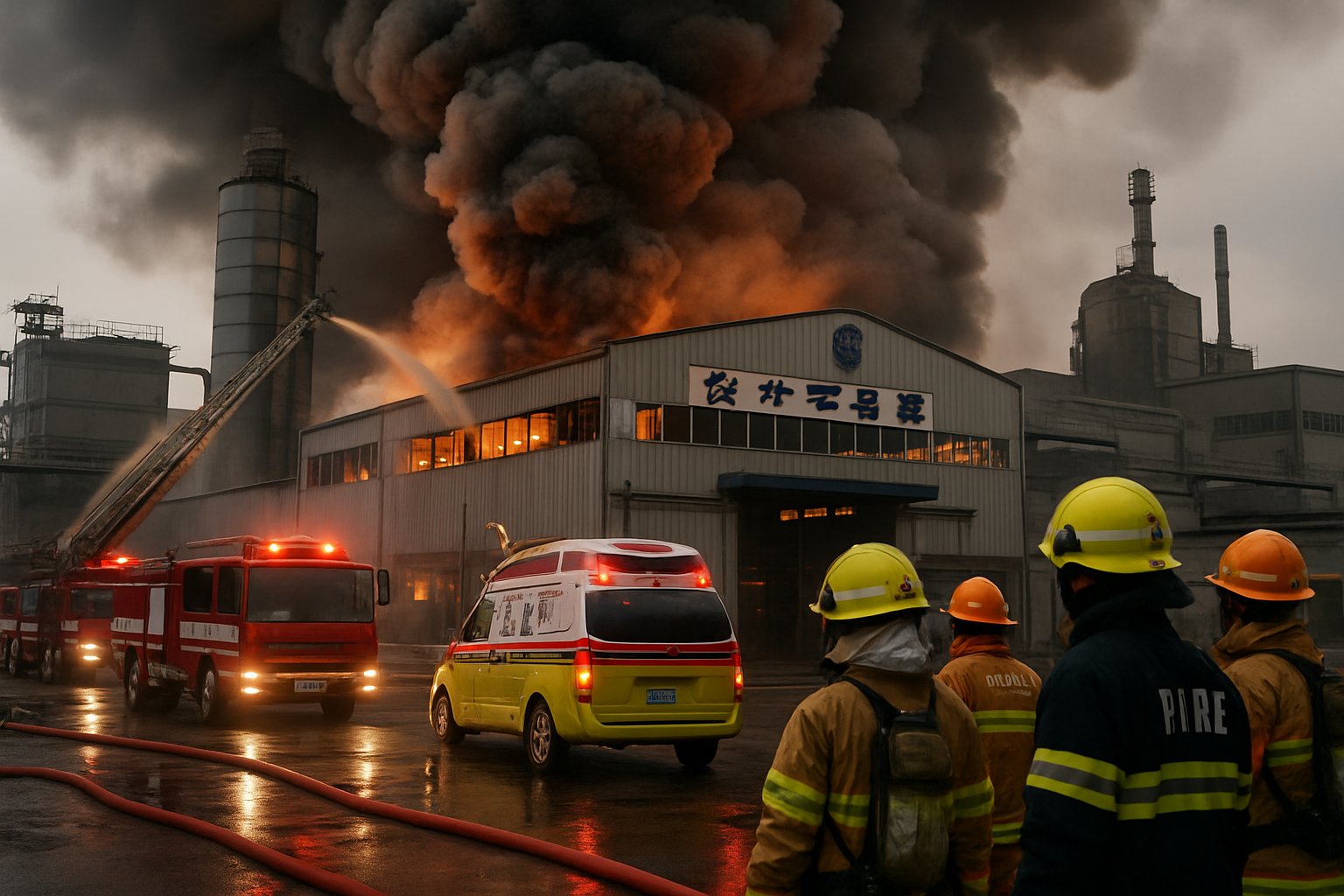
A catastrophic fire at an automotive parts manufacturing facility in Daejeon, South Korea, has killed 10 workers and injured 59 others, with several people still reported missing in one of the country's deadliest industrial accidents this year.
The blaze erupted at approximately 1:00 PM local time (4:00 AM GMT) on Friday, March 20, 2026, when about 170 workers were present at the car parts factory located in South Korea's central city of Daejeon. Emergency responders arrived at the scene to find thick gray smoke billowing from the industrial complex, with dramatic videos and photographs showing some workers jumping from windows to escape the rapidly spreading flames.
Rescue Operations and Emergency Response
Fire and emergency services deployed multiple units to combat the blaze, with rescue operations complicated by the intensity of the fire and the structure of the industrial building. Videos from the scene captured by witnesses and emergency personnel showed thick plumes of gray smoke rising high above the factory complex, visible from several kilometers away.
The most harrowing footage revealed workers jumping from building windows in desperate attempts to escape the flames, underscoring the severity of the emergency situation. Emergency medical teams treated the injured at the scene before transporting them to local hospitals, with several victims reported in critical condition.
Industrial Safety Concerns
The tragedy occurs during a period of heightened scrutiny over workplace safety standards in South Korea's manufacturing sector. The automotive parts industry, which employs thousands of workers across the country, has faced increasing pressure to improve safety protocols and emergency preparedness measures.
South Korean labor authorities have launched a comprehensive investigation into the incident, focusing on potential safety violations, emergency evacuation procedures, and compliance with fire prevention regulations. Preliminary reports suggest the investigation will examine the adequacy of safety equipment, employee training protocols, and the building's emergency exit systems.
Context of South Korea's Industrial Challenges
This latest industrial accident comes as South Korea continues to grapple with workplace safety challenges across its manufacturing sector. The country's rapid industrialization and emphasis on manufacturing competitiveness have sometimes come at the cost of comprehensive safety measures, particularly in smaller and mid-sized facilities.
The incident also occurs against the backdrop of South Korea's strong economic performance, with the country recently achieving record export numbers of $67.45 billion in February 2026, representing a 29% growth driven largely by semiconductor and automotive component exports. However, this industrial success has brought renewed attention to the need for enhanced workplace safety standards.
Government Response and Investigation
South Korean authorities have promised a thorough investigation into the cause of the fire and have begun reviewing safety protocols at similar industrial facilities across the country. The Ministry of Employment and Labor is expected to announce enhanced inspection procedures for automotive manufacturing plants, particularly focusing on fire prevention and emergency evacuation systems.
Local government officials in Daejeon have established a crisis response center to coordinate rescue operations and provide support to victims' families. The city administration has also announced plans for a comprehensive review of industrial safety regulations in the region.
Impact on Workers and Families
The tragic incident has devastated the local community, with families of the missing workers gathering at the factory site and local hospitals seeking information about their loved ones. Support services have been established to provide counseling and assistance to affected families and survivors.
Labor unions have called for immediate improvements to workplace safety standards, demanding stronger enforcement of existing regulations and more comprehensive emergency preparedness training for industrial workers. The incident has reignited debates about the balance between industrial productivity and worker safety in South Korea's competitive manufacturing environment.
Broader Industrial Safety Context
This factory fire represents part of a broader pattern of industrial safety challenges facing South Korea and other rapidly industrializing nations. While South Korea has made significant strides in workplace safety over recent decades, incidents like this highlight the ongoing need for vigilance and continuous improvement in safety protocols.
The automotive parts manufacturing sector, in particular, faces unique safety challenges due to the use of various chemicals, high-temperature processes, and complex machinery. Industry experts stress that proper ventilation, fire suppression systems, and regular safety training are essential components of comprehensive workplace safety programs.
International Safety Standards
The incident also raises questions about the implementation of international safety standards in South Korean industrial facilities. As the country continues to be a major player in global manufacturing supply chains, ensuring that local facilities meet or exceed international safety benchmarks becomes increasingly important for both worker welfare and economic competitiveness.
Safety experts point to successful models from other industrialized nations where comprehensive safety regulations, regular inspections, and strong enforcement mechanisms have significantly reduced workplace accidents and fatalities in manufacturing environments.
Looking Forward
As the investigation into the Daejeon factory fire continues, the incident serves as a stark reminder of the human cost of inadequate workplace safety measures. The tragedy underscores the critical importance of prioritizing worker safety alongside economic growth and industrial competitiveness.
The South Korean government faces mounting pressure to implement more stringent safety regulations and enforcement mechanisms to prevent similar tragedies in the future. The response to this incident may well shape the country's approach to industrial safety for years to come, potentially serving as a catalyst for comprehensive reforms in workplace safety standards across the manufacturing sector.
The investigation results are expected to be released within the coming weeks, with authorities promising full transparency and accountability in determining the cause of this devastating industrial accident that claimed ten lives and injured dozens more.